Is Your Grass Cool-season or Warm-season?
A quick way to narrow down your grass type is to look at your climate and the season when the lawn grows fastest.
Cool-season grasses grow best during spring and fall, usually when temperatures are around 16–24°C. Summer heat may slow their growth, while cooler weather brings stronger growth. Common examples include Kentucky bluegrass, tall fescue, perennial ryegrass, and fine fescue.
Warm-season grasses grow most strongly during late spring and summer, often around 27–35°C. They handle heat well and usually turn tan or brown during cold-weather dormancy. Bermudagrass, zoysiagrass, St. Augustinegrass, centipedegrass, bahiagrass, and buffalograss fall into this group.
Use the seasonal growth pattern as a first clue, then confirm it by checking blade shape, texture, and how the grass spreads. Lawns in mixed-climate areas or overseeded yards may contain more than one type.
How Do You Identify Grass by Blade, Texture, and Growth Pattern?
After using climate and growing season as your first filter, inspect healthy grass from several parts of the lawn. A good identification should come from several matching features rather than one detail alone.
First Confirm It Is Lawn Grass
Before comparing grass species, make sure the plant is actually turfgrass rather than a sedge or another grass-like weed. Sedges often have solid, three-sided stems and leaves arranged in three directions. Gently roll the stem between your fingers; a clearly triangular shape is a strong clue that you are looking at sedge.
This distinction also helps explain
what a lawn is: a managed area of turfgrass or similar ground cover, not every green plant growing between the grass.
Check the Blade Width and Tip Shape
Compare several healthy, mature blades. Fine fescue has very narrow, hairlike leaves, while tall fescue has broader blades with visible ribs. St. Augustinegrass has wide, flat leaves.
Kentucky bluegrass often has a smooth, boat-shaped tip, while perennial ryegrass and tall fescue usually have more pointed tips.
Compare the Texture and Color
Run a blade between your fingers and check both surfaces. Perennial ryegrass often has a glossy underside, while zoysiagrass feels stiff and slightly prickly.
Use color only as a supporting clue because watering, shade, fertilizer, and stress can change how the same grass looks.
Look at How the Grass Spreads
Growth habit is often one of the strongest clues. Tall fescue and perennial ryegrass usually grow in bunches. Kentucky bluegrass spreads through underground rhizomes, while St. Augustinegrass uses thick surface stolons. Bermudagrass and zoysiagrass spread through both.
Check the edge of a healthy patch where runners and new shoots are easiest to see. Aim for at least three matching clues before confirming the grass type.
Common Lawn Grass Types Table
Use this chart to narrow down your lawn grass type. Compare several healthy samples and confirm the result through blade shape, texture, growing season, and spreading habit.
|
Grass type
|
Season
|
Blade and tip
|
Growth habit
|
Distinctive clue
|
|
Kentucky bluegrass
|
Cool
|
Medium-fine blade; boat-shaped tip
|
Underground rhizomes
|
Blue-green turf that fills small gaps
|
|
Tall fescue
|
Cool
|
Medium to broad blade; pointed tip and visible ribs
|
Bunch-forming
|
Upright, durable growth with a slightly coarse feel
|
|
Perennial ryegrass
|
Cool
|
Fine to medium blade; pointed tip
|
Bunch-forming
|
Glossy underside and fast germination
|
|
Fine fescue
|
Cool
|
Very narrow, hairlike blade
|
Bunches or short rhizomes
|
Soft texture and good shade tolerance
|
|
Bentgrass
|
Cool
|
Very fine, narrow blades
|
Mainly surface stolons
|
Dense turf that tolerates very low mowing; common on golf greens
|
|
Bermudagrass
|
Warm
|
Fine to medium blade; pointed tip
|
Stolons and rhizomes
|
Aggressive summer growth and visible runners
|
|
Zoysiagrass
|
Warm
|
Fine to medium, stiff blades
|
Stolons and rhizomes
|
Dense, carpet-like turf with slow spring green-up
|
|
St. Augustinegrass
|
Warm
|
Very broad blade; rounded or blunt tip
|
Thick stolons
|
Coarse texture and easily visible surface runners
|
|
Centipedegrass
|
Warm
|
Medium blade; pointed tip
|
Stolons
|
Light green, low-growing lawn with slow spread
|
|
Bahiagrass
|
Warm
|
Coarse, folded blades
|
Bunches and short rhizomes
|
Open turf and tall V-shaped seedheads
|
|
Buffalograss
|
Warm
|
Fine, blue-green blades
|
Stolons
|
Low-growing, drought-tolerant turf common in the Great Plains
|
What If You Still Cannot Identify Your Lawn Grass?
If region, blade shape, texture, and growth habit still do not give you a clear match, use photos or identification apps as a second check. For close lookalikes, inspect finer plant details or ask a local turf expert.
Photograph the whole patch: Take one wider image showing color, density, and how the grass grows across the lawn.
Capture a healthy blade: Place one complete blade on a plain background and photograph its width, tip shape, and upper and lower surfaces.
Show the base and spread: Include the crown, roots, surface runners, or underground stems so the app can assess growth habit.
Add scale: Place a coin or ruler beside the sample to show blade size.
Compare several results: Check more than one app or online guide, then match the suggestions with your region and growing season.
If two grasses still look similar, inspect the crown and collar area where the leaf blade meets the sheath. A ligule, small auricles, hairs, or a distinct collar shape can help separate close lookalikes.
Also check how a new leaf emerges. It may be folded flat or rolled inside the shoot. These details can separate grasses that look similar from above, such as ryegrass, bluegrass, and fescue.
Use a magnifying glass or phone camera if necessary. Compare several shoots because damage, mowing, and immature growth may hide the features on one sample.
Do not rely on one photo alone. If the clues still conflict, take a fresh sample with roots attached to a county extension office or turf specialist.
Mixed lawns are common after overseeding, sod repairs, or years of natural spread. If clearly different patches show different blade or growth traits, identify them separately before changing mowing height, buying seed, or applying herbicide.
How Should You Care for the Lawn After Identifying It?
Different
types of lawns need different mowing, watering, feeding, and weed-control schedules, so use the identified grass’s natural growth pattern to set each part of the routine.
-
Set the correct mowing height: Match the mower setting to the species instead of using one height for every lawn. Tall fescue and St. Augustinegrass generally stay higher than Bermudagrass. Never remove more than one-third of the blade in a single cut.
-
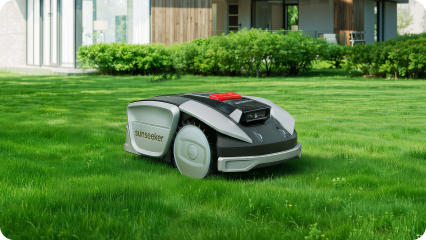
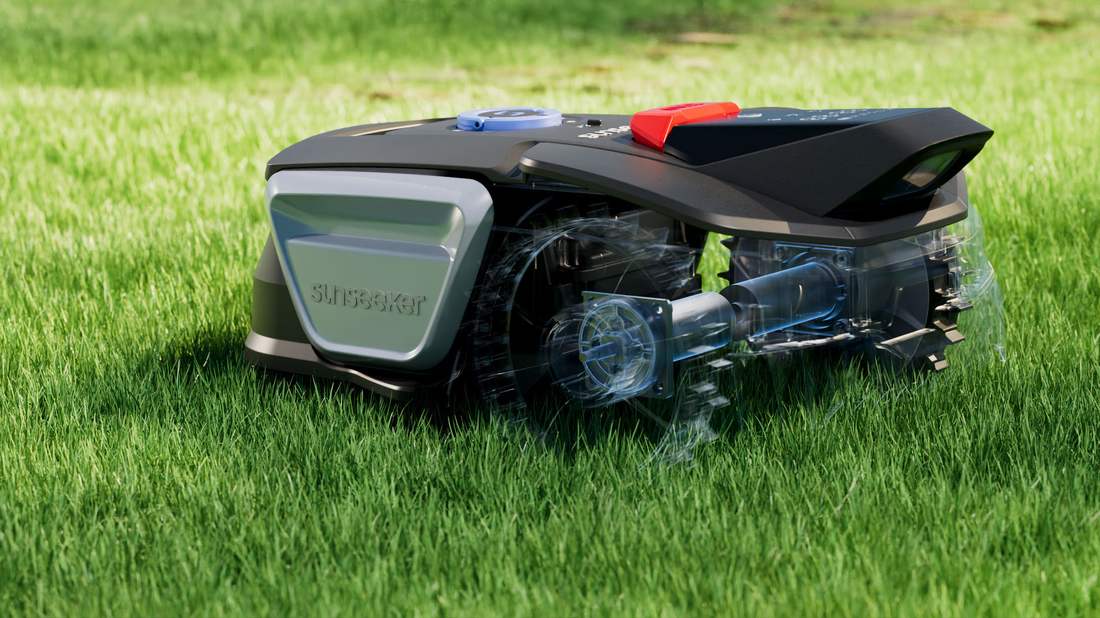
Mow during active growth: Fast-growing grass needs more frequent cutting, while dormant or drought-stressed turf should be left alone. For smaller lawns up to 300 m², the
Sunseeker V1 can support regular light mowing at a quiet 55 dB. Set its routine only after confirming the grass and suitable cutting height.
-
Adjust watering to the soil and species: Water deeply enough to support roots, then let the surface begin drying. Cool-season lawns may need extra support during summer stress, while warm-season grasses still require attention when soil is sandy, compacted, or newly planted.
-
Choose the right repair method: Tall fescue, perennial ryegrass, fine fescue, and Kentucky bluegrass can commonly be repaired with seed. St. Augustinegrass is normally established with sod or plugs, while zoysiagrass and Bermudagrass may be repaired using seed, plugs, sprigs, or sod depending on the variety.
-
Feed during the correct season: Fertilize while the grass is actively growing. Cool-season lawns usually benefit most from fall feeding, while warm-season turf should be fed after full spring green-up. Avoid pushing growth during dormancy, drought, or extreme heat.
-
Confirm herbicide compatibility: Read the turfgrass list on the product label before treating weeds. An herbicide that is safe for tall fescue may harm St. Augustinegrass or another warm-season species. In mixed lawns, base the treatment on the most sensitive desirable grass present.
Conclusion
Grass identification matters because the wrong mowing height, watering pattern, or feeding schedule can weaken an otherwise healthy lawn. Check the growing season first, then confirm with blade shape, texture, tip, and spreading habit. In mixed lawns, those differences can also guide how you set cutting heights and mowing schedules for
robot lawn mowers, rather than treating every area the same. If the clues still conflict, confirm the grass type before changing the care routine.
FAQs
Can a smartphone app accurately identify my lawn grass?
Smartphone apps can provide a preliminary list of potential grass types, but they are not always accurate enough for definitive lawn care decisions. They often prioritize color and surface texture, which can be misleading. Always confirm app suggestions by physically examining blade shape, growth habit, and consulting local experts if needed.
What if my lawn has multiple grass types?
Mixed lawns are common, often due to past overseeding or repairs. If you observe different textures or growth patterns, identify the dominant grass first. Then, treat distinct patches separately, focusing on their specific needs for mowing, watering, and fertilization. Prioritize growth habit over color if traits conflict.
How can I tell two similar-looking grass types apart?
Compare traits that are less affected by weather or lawn stress, such as blade-tip shape, the sheen of the leaf surface, growth habit, and details around the collar or ligule. If those features still overlap, compare a fresh sample with a trusted turf guide or ask a local extension office or lawn specialist to confirm it.