White smoke from lawn mower engines looks alarming, but a lawn mower smokes white situation usually isn't serious. It's the engine burning off oil that's ended up where it shouldn't be. Stop the mower, identify the cause, and most of the time you'll be back mowing within the hour. This guide covers how to identify the cause, fix it, and prevent it from coming back.

Common Causes of White Smoke From a Lawn Mower
White smoke almost always points to an oil problem. Here are the most common reasons a lawn mower white smoke issue develops:
- Too much oil in the crankcase. Overfilling is the most common cause. When the oil level is above the maximum mark on the dipstick, excess oil gets pushed into the combustion chamber and burns off as white or bluish-white smoke.
- Spilled oil on the engine. Oil spilled during a recent oil change or top-up burns off when the engine heats up. The same applies if the mower was tipped the wrong way during maintenance, causing oil to flow into parts of the engine where it burns off during the next run.
- Mowing on steep slopes. When the mower tilts sharply on a slope, oil can shift out of the crankcase and into areas of the engine where it doesn't belong. When that oil reaches the combustion chamber, it burns off as white smoke. Most manufacturers advise against operating on slopes above 15°.
- A blown head gasket. Less common but more serious. When the head gasket fails, oil or coolant enters the combustion chamber and burns off as thick, persistent white smoke, often accompanied by loss of compression or milky oil.
- Valve or solenoid issues. A faulty fuel solenoid or stuck valve can allow fuel or oil to leak into the combustion chamber, usually alongside other performance problems like poor acceleration or backfiring.
How to Fix White Smoke From Your Lawn Mower
The fix depends on what's causing the cloud of smoke from lawn mower. Start with the simplest checks first.
Step 1: Stop the mower immediately. Turn off the engine and let it cool completely before inspecting anything. This is both a safety measure and a practical step, since inspecting a hot engine is harder and more dangerous.
Step 2: Check the oil level. Pull the dipstick and check. If the level is above the maximum mark, drain the excess, then restart and let the mower run for 5 to 10 minutes. The smoke should clear as the residual oil burns off.
Step 3: Inspect for spilled oil. Look for oil on the outside of the engine. Wipe down any visible spill, restart, and let it run. If the smoke clears and doesn't return, spilled oil was the cause.
Step 4: Check the air filter. A clogged or oil-soaked filter restricts airflow and contributes to smoke. Clean a foam filter with warm soapy water, or tap a paper filter gently. Replace it if it's saturated or damaged.
Step 5: If smoke persists, look deeper. If the oil level is correct, no spill is visible, and white smoke continues, the issue may be a head gasket or valve problem. Unless you're comfortable with engine disassembly, have a technician assess it. Continuing to run the mower will cause further damage.
When White Smoke Means It's Time for Repair or Replacement
Most white smoke from lawn mower situations are minor and do not require professional lawn mower repair. However, these signs indicate something more serious:
- Smoke is thick and persistent. A thin haze that clears after a few minutes is usually oil burning off. Continuous thick smoke that doesn't clear after 10 minutes points to a deeper problem.
- The oil looks milky or foamy. This signals coolant mixing with oil, typically a blown head gasket.
- The mower loses power or runs rough. White smoke combined with poor performance suggests a combustion problem, not a simple oil spill.
- Repair cost approaches the mower's value. Gasket and valve repairs can be expensive on older machines. If the estimate is close to replacement cost, an upgrade may be worth considering.
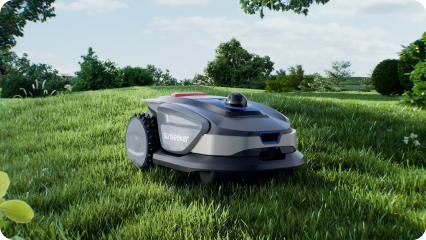
If gas mower repairs are stacking up and the maintenance cycle feels endless, it may be time to reconsider the type of mower altogether. The Sunseeker S4 is a battery-powered robotic mower with no engine oil, no head gasket, and no combustion system. No white smoke, ever. For yards with complex layouts or tree canopy where GPS struggles, the S4's AllSense™ 3D fusion sensing combines 360° LiDAR with Vision AI to map and navigate accurately, avoiding over 360 types of obstacles. It covers up to 0.25 acre, handles slopes up to 42% / 22°, and runs at just 60 dB(A).

How to Prevent White Smoke From Happening Again
Preventing white smoke from lawn mower situations mostly comes down to consistent oil management and a few simple lawn mower maintenance habits before and after each mow.
- Check the oil level before every mow. Pull the dipstick, wipe it, reinsert, and read. Takes 30 seconds and catches overfilling before it becomes a problem.
- Never fill past the maximum mark. If you add too much, drain the excess immediately.
- Tilt the mower correctly. Always tilt with the air filter and carburettor facing up when inspecting the deck or blade.
- Avoid slopes steeper than 15°. Mow across the slope rather than up and down on steep sections.
- Change the oil at least once a season. Old, degraded oil is more likely to cause smoking and engine problems.
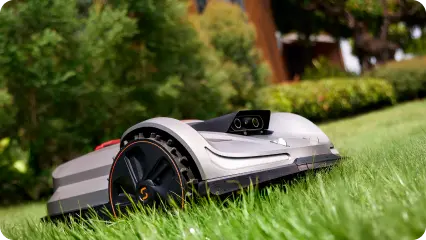
For smaller lawns where those maintenance steps feel like more effort than the mowing itself, the Sunseeker V3 handles it all differently. It's a wire-free robotic mower with no engine oil to check, no tipping risks, and no carburettor to clog. One-click start, automatic recharging, and Vision AI obstacle detection keep it running on its own. Weighing 20 lbs with 55 dB(A) noise level, it works for lawns up to 0.15 acre, navigates slopes up to 42% / 22°, and features adjustable cutting height from 0.8 to 2.5 inches.
What Do Other Lawn Mower Smoke Colors Mean? Black? Blue?
Not all mower smoke means the same thing. The color gives you a useful first clue about where to look.
White smoke is almost always oil-related: overfilling, spilling, or a gasket issue. It's the most common and usually the easiest to fix.
Blue smoke often points to the same cause as white smoke: oil burning in the combustion chamber. The distinction between white and blue can be subtle depending on how much oil is burning and the ambient light.
Black smoke indicates a fuel mixture problem. The engine is running rich, meaning too much fuel relative to air. Common causes include a clogged air filter, a stuck choke, or a faulty carburettor. Black smoke typically comes with poor performance and high fuel consumption.
Any persistent smoke color is a signal to stop using the mower until the cause is found.
Conclusion
White smoke from lawn mower engines is rarely catastrophic. In the large majority of cases, it's overfilled oil or a recent spill, both of which clear up after a few minutes of running once the oil level is corrected. Check the dipstick first, inspect for spills second, and only go deeper if the smoke persists after those checks.
FAQs
How do I fix white smoke from my lawn mower?
Stop the mower and let it cool. Check the oil level with the dipstick. If it's above the maximum mark, drain the excess. If the level is correct, look for spilled oil on the engine and wipe it down. Restart and run for 5 to 10 minutes. In most cases, the smoke clears once the excess oil burns off. If it continues, check the air filter and consider having a technician look at the head gasket.
Is it okay if my lawn mower is smoking?
A brief cloud that clears quickly after startup is generally harmless. Persistent or thick white smoke from lawn mower that doesn't clear after 10 minutes of running is a sign of a more serious issue and the mower should not be used until the cause is identified.
What does it mean when a lawn mower has white smoke?
It almost always means oil is burning inside the engine: an overfilled crankcase, oil spilled during maintenance, or oil that migrated after the mower was tilted too steeply. Less commonly, it points to a head gasket or valve problem. Lawn mower smokes white situations are usually straightforward to diagnose.
Can low engine oil cause white smoke?
Low oil doesn't typically cause white smoke directly. White smoke comes from excess oil burning, not a lack of it. However, damaged gaskets or seals can cause both a low oil level and smoke simultaneously as oil escapes the crankcase.
Is it safe to run a lawn mower that's smoking?
If the cloud of smoke from lawn mower clears quickly and the oil level is correct, it's generally safe to continue. If smoke continues throughout operation, stop the mower. Running it with an ongoing combustion problem risks accelerating internal damage.