Lawn care can feel like a small job, but mowing often takes longer than expected when there is no clear plan. That is why many homeowners want to know how to mow the lawn efficiently and fast without rushing through the work or leaving the yard looking uneven.
A little preparation, a clean mower, and a smart mowing pattern can make each pass easier and save time from start to finish. In this guide, we’ll go through simple tips to help you mow faster while still keeping your lawn neat, healthy, and well cared for.

10 Tips and Tricks to Mow Your Lawn Efficiently and Fast
How long does it take to mow a lawn? The answer depends on the lawn's size, shape, terrain, and the type of mower you use, but a more efficient technique can significantly reduce the time required. The following tips apply whether you're using a push mower, a self-propelled model, or a ride-on. Most require no extra equipment, just a change in approach.
1. Choose the right mowing pattern for your lawn shape
The pattern has a bigger impact on efficiency than most people realise. For rectangular lawns, mowing in straight parallel rows along the longest edge is typically fastest. This gives you the longest possible runs with the fewest turns. For irregularly shaped lawns with obstacles, mowing the perimeter first then working inward in concentric passes is the most efficient way to mow a lawn of that shape.
2. Overlap each pass slightly
Overlapping each row by around 4 inches prevents uncut strips between passes. Skipping the overlap tends to create more work, as you end up making extra passes to catch missed sections.
3. Deal with obstacles before you start
Walk the lawn before mowing and move anything in the way: toys, tools, loose branches, or hose pipes. This removes unplanned interruptions and keeps your lines consistent throughout.
4. Mow obstacles and irregular edges first
If your lawn has trees, raised beds, pavers, or irregular borders, clear those areas before the main run. If you're wondering how to mow grass around pavers, make a careful pass around their edges first before moving on to the open lawn. Dealing with these awkward areas first means you can mow the remaining space in clean straight lines without breaking direction unexpectedly.
5. Keep your blade sharp
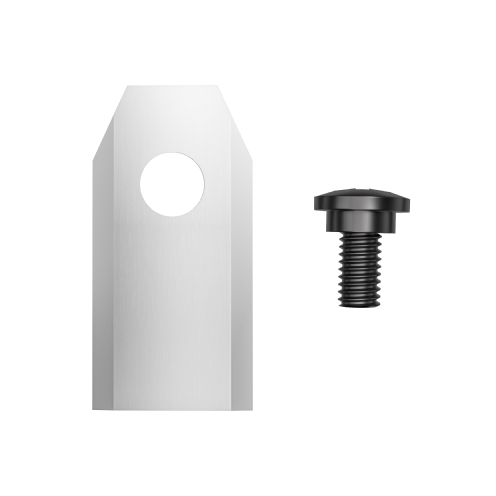
A sharp blade cuts cleanly in a single pass. A dull blade tears the grass instead, which is harder on the mower, leaves a ragged finish, and sometimes requires a second pass. Sharpening at the start of each season improves both speed and cut quality.
6. Mow dry grass
Cutting wet grass clogs the deck, causes clippings to clump rather than disperse, and makes the mower work harder. The result is a slower mow and a messier finish. Mow when the grass and soil are dry whenever possible.
7. Mow at the right height, not too short
Following the one-third rule, never removing more than one-third of the blade height in a single pass, helps the lawn recover quickly and reduces mower load. Cutting too short stresses the grass and leads to patchy regrowth that requires more corrective mowing later.
8. Adjust mowing frequency to the growth rate
Letting grass grow too long before mowing makes each session longer and harder. Mowing more frequently during active growth periods keeps the lawn at a manageable length and makes each individual session shorter. This is how to make a mower faster in practice: not by adjusting the machine, but by not letting the work accumulate.
9. Alternate your mowing direction each session
Mowing in the same direction every time causes grass to lean and can lead to soil compaction in wheel tracks. Alternating between horizontal, vertical, and diagonal passes encourages more upright growth, produces a more even cut, and avoids visible ruts over time.
10. Keep your mower in good working condition
A mower that's well looked after performs consistently throughout the season. One that isn't tends to slow down, lose cutting quality, and require unplanned stops mid-session. A basic check before the season starts goes a long way toward avoiding these issues during the mowing months.
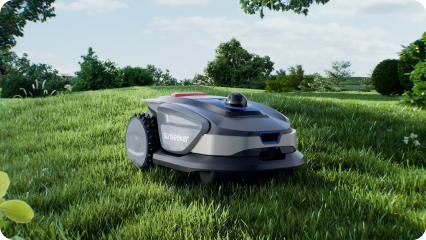
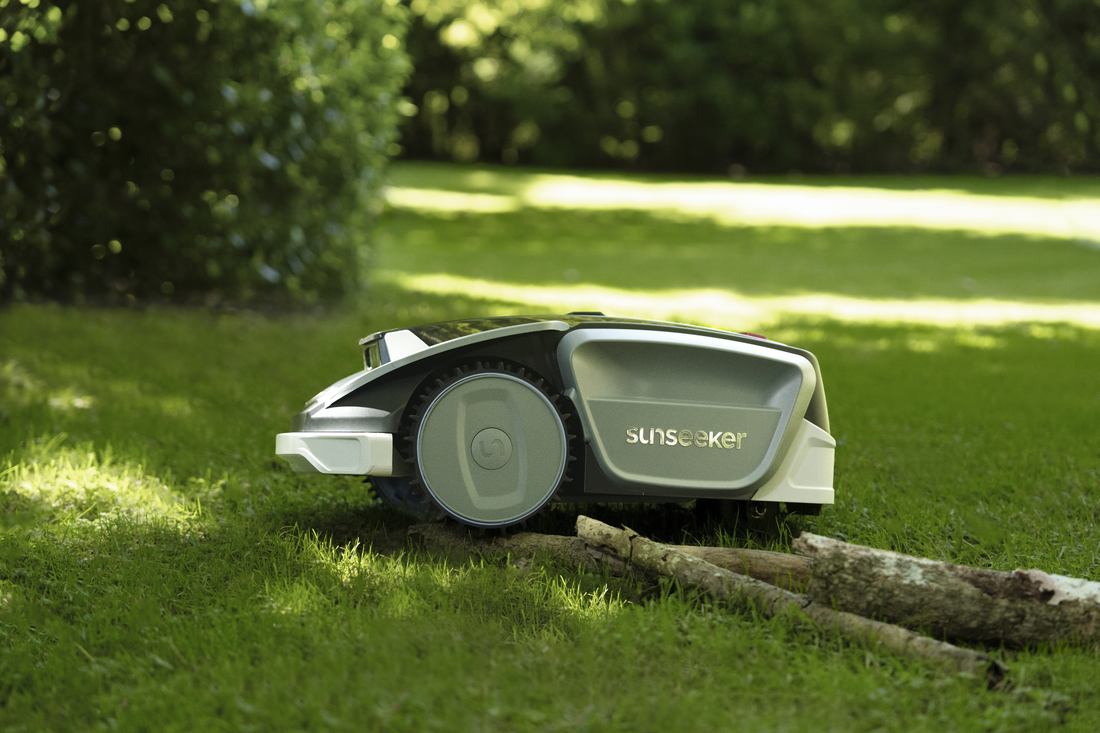
If mowing still feels like too much of a recurring effort despite the right technique, a robotic mower takes it off the list entirely. The Sunseeker S4 uses AllSense™ adaptive sensing to map and mow the lawn on its own. Its Drop & Go setup means no boundary wires, no antenna installation, and no configuration. Place it on the lawn and it figures out the rest. Compatible with Alexa and Google Home, it covers up to 0.25 m² and operates at 60 dB(A).
Common Mistakes That Slow You Down When Mowing the Lawn
Even with the right pattern, a few habits consistently add time to a mowing session.
Mowing too fast. Moving at excessive speed causes the blade to miss sections and tear grass rather than cut cleanly. A steady pace between 1.9 and 3.8 miles per hour
- gives the blade time to work properly and avoids the need for a second pass.
- Changing direction too often. Frequent direction changes on open areas add up quickly. Planning the route before starting reduces unnecessary turns.
- Leaving the grass catcher too full. A full catcher restricts airflow and reduces cutting efficiency. Emptying it before it reaches capacity keeps the mower working properly throughout the session.
- Skipping the pre-mow check. Starting without checking fuel, oil, and blade condition means any issues only show up mid-session. A brief check beforehand prevents unexpected stops.
- Mowing too infrequently. Letting grass grow significantly between sessions makes each mow longer and harder. Keeping up during peak growth is the most efficient way to manage the overall time commitment.
For gardens where complex terrain, slopes, or irregular layouts consistently make mowing slower and more effort regardless of technique, the Sunseeker S5 is worth considering. Its DualFusion™ Positioning, combining RTK and VSLAM, delivers precise navigation across the entire lawn without boundary wires. AWD handles slopes up to 60% / 30°, built-in rain detection pauses mowing automatically in wet conditions, and it covers up to 0.4 acre on its own schedule.
Final Thoughts: A Faster Lawn Without Cutting Corners
How to mow the lawn efficiently and fast comes down to a few core principles: plan the route before you start, keep the machine in good condition, and build habits that prevent grass from getting out of hand between sessions. The tips above don't require any new equipment. They work with whatever mower you already own.
The most efficient mowing pattern for any given lawn is the one that minimises turns and keeps the mower moving in straight lines for as long as possible. For most rectangular gardens, that means parallel rows along the longest edge. For irregular shapes, starting with the perimeter and working inward saves the most time overall.
FAQs
What is the fastest way to mow the lawn?
Preparation makes the biggest difference. Clear obstacles before you start, keep the blade sharp, and mow when the grass is dry. During the session, a steady pace between 1.9 and 3.8 miles per hour is more efficient than going flat out, since it avoids missed sections that need a second pass. How to make a lawn mower faster in practice is mostly about reducing wasted passes, not about the speed setting itself.
What not to do while mowing grass?
A few habits harm the lawn itself rather than just slow things down. Mowing during the hottest part of the day stresses the grass when it's least able to recover. Early morning or late afternoon is gentler. Using a dull blade tears the grass rather than cutting it cleanly, leaving ragged tips that turn brown and invite disease. Cutting too short removes the leaf area the plant needs to photosynthesise, weakens roots, and opens the surface to weeds. Mowing on waterlogged ground compacts the soil and can leave lasting ruts that affect drainage and future growth.
What is the best mowing pattern to save time?
For rectangular lawns, straight parallel rows along the longest edge are the most efficient way to mow a lawn, maximising each uninterrupted run and minimising turns. For curved or irregular lawns, mowing the perimeter first and working inward keeps the awkward edges out of the way so the open area can be done in clean straight lines.
Is it better to mow often or let grass grow longer?
Mowing more frequently during active growth is more efficient overall. It keeps the grass at a manageable height, reduces the load on the mower each session, and allows clippings to decompose naturally. Infrequent mowing makes each session longer and puts more stress on the grass. For how to make a mower faster across a whole season, mowing little and often beats waiting.
Can mowing too fast damage your lawn?
Yes. For push mowers, a steady pace between 1.9 and 3.8 miles per hour gives the blade time to cut cleanly rather than tear through the grass. Going faster causes the blade to miss sections and leaves ragged tips that weaken the turf and increase disease risk. Robotic mowers work at a slower, more consistent pace by design, which is part of why how fast does a robot mower mow is less of a concern. They prioritise cut quality over speed.