Buying seed, fertilizer, sod, or a mower gets much easier when you know how much grass you actually have. The lot size is not enough. Patios, beds, paths, sheds, and odd corners all reduce the area that needs mowing or treatment.
This guide shows how to measure lawn square footage without special equipment. You’ll learn how to split the yard into simple shapes, use the right formula for each section, and check your total before buying anything. A good measurement helps you buy the right amount and avoid wasting product.
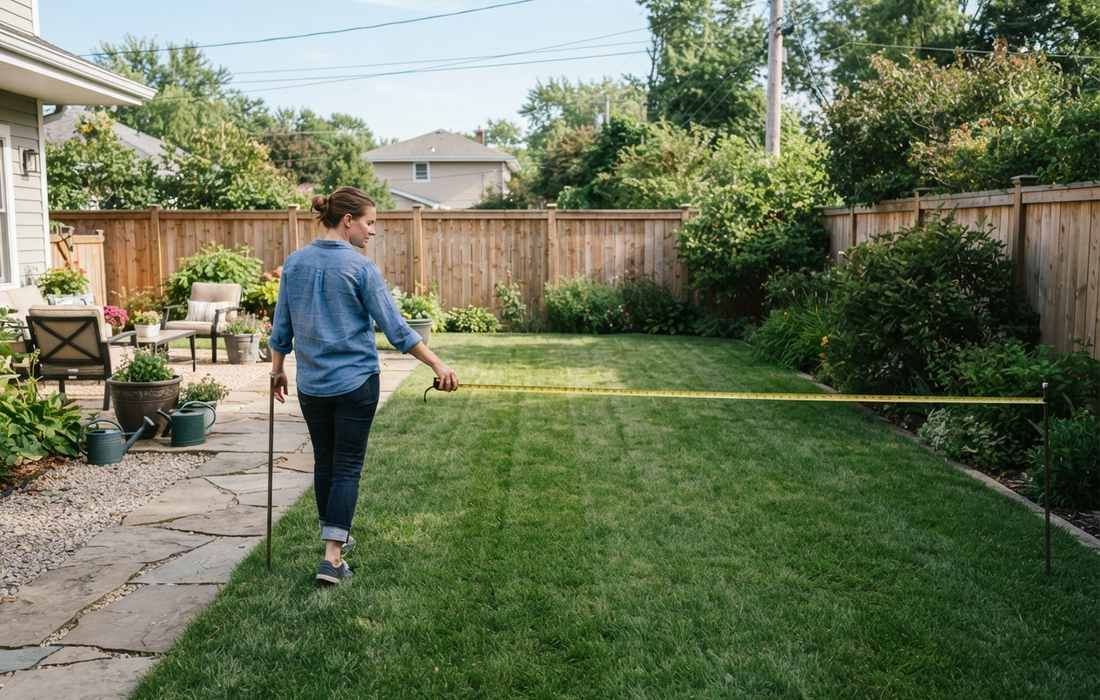
What Counts as Lawn Square Footage?
Lawn square footage is the total area of grass you maintain or plan to establish, rather than the size of your entire property. Include front, back, and side lawns, along with narrow grass strips beside driveways or paths. Even if fences, buildings, or paved areas separate these sections, their measurements should be added together to calculate the total lawn area.
Exclude buildings, patios, driveways, pools, garden beds, and other surfaces that do not require lawn care. Include planting beds only if you plan to convert them into grass. Small obstacles, such as individual tree trunks or posts, can usually be ignored because they have little effect on the total. For irregular lawns, divide the grass into smaller, measurable shapes and combine their areas. Keep these boundaries consistent when calculating seed, fertilizer, topdressing, or mower coverage.
Square Footage Formulas for Common Lawn Shapes
Most lawns can be reduced to a few basic shapes. Measure in feet when the goal is square footage, then use the matching formula and add the sections together.
| Shape |
Measurements |
Formula |
Example area |
| Rectangle |
60 ft × 40 ft |
Length × width |
2,400 ft² |
| Triangle |
50 ft base × 30 ft height |
Base × height ÷ 2 |
750 ft² |
| Circle |
20 ft radius |
3.1416 × radius² |
About 1,257 ft² |
For an irregularly shaped lawn, divide the area into smaller rectangles, triangles, or circles that are easier to measure. Calculate each section using the formulas above, then add the results together. For example, a 40 ft × 30 ft rectangle plus a triangular section with a 20 ft base and 15 ft height gives a total of 1,350 ft². Subtract any large patios, garden beds, or other non-grass areas included in your measurements.
How to Measure Lawn Square Footage Step by Step
The calculation is easiest when the sketch is clear before you begin measuring. Follow the steps below and record each number as you go so you do not have to repeat sections later.
Step 1. Sketch the Lawn and Its Sections
Draw a simple overhead plan showing the house, driveway, beds, paths, and each grass area. The sketch does not need to be to scale. Divide curved or awkward lawns into rectangles, triangles, and circles or semicircles that are easy to measure. Label the sections A, B, C, and so on, leaving space beside each one for dimensions and area.
Step 2. Measure Each Section in Feet
Use a tape measure for small lawns and straight edges. A measuring wheel is faster on long runs if the ground is reasonably smooth. Keep the tape or wheel along the same boundary shown on the sketch. For a triangle, measure the base and the perpendicular height rather than a sloping side. For a circle, measure the radius from the center to the edge.
On curved boundaries, take a few shorter measurements instead of forcing one long rectangle over the whole area. Extra sections take a little more time but reduce the overestimate that occurs when a broad rectangle includes beds or paving.
Step 3. Calculate the Total Area
Apply the correct formula to each labeled section, write the result beside it, then add all grass sections. Keep at least one decimal place while calculating if the measurements are not whole feet, and round the final area to a practical number. For routine lawn products, rounding a 3,487 ft² result to about 3,500 ft² is usually easier to work with than pretending the measurement is survey-grade precise.
Step 4. Subtract Non Grass Areas
If you measured a large outer rectangle that includes a patio or garden bed, calculate those non-grass shapes separately and subtract them. For example, a 4,000 ft² outer area with a 600 ft² patio and 250 ft² bed leaves 3,150 ft² of lawn. This subtraction is often where rough lot-size estimates become much more useful.
Step 5. Double Check the Measurements
Repeat the longest dimensions or measure a second way. A satellite map can provide a useful check on a large property, while a diagonal measurement can reveal a sketch that is not as square as it looked. If two reasonable methods differ by more than about 5 to 10 percent, revisit the boundaries and the largest sections before ordering material.
How to Calculate Product Quantities From Lawn Square Footage
Once the lawn area is reliable, product labels and equipment capacities become much easier to use. The examples below show how the same area figure supports seed, sod, fertilizer, and mowing decisions.
Seed and Fertilizer Rates per 1,000 Square Feet
Convert the measured area into units of 1,000 ft², then multiply by the rate on the bag. A 3,500 ft² lawn is 3.5 units of 1,000 ft². If a seed label calls for 4 lb per 1,000 ft², the total is 14 lb. If a fertilizer label calls for 3 lb of product per 1,000 ft², the same lawn needs 10.5 lb of product.
Do not substitute a generic rate for the product label. Seed rates change by species and by new seeding versus overseeding, while fertilizer rates depend on nutrient analysis and local recommendations. The area calculation is the multiplier; the label provides the correct rate.
Sod Orders and Cutting Waste
Sod must cover the measured grass area plus the waste created by trimming rolls or slabs around curves, beds, and corners. For a simple rectangular lawn, an extra 5 percent may be enough. Irregular layouts often justify around 8 to 10 percent. A 2,000 ft² lawn with 8 percent allowance would therefore be ordered at about 2,160 ft².
That extra material is not the same as deliberately overestimating the lawn. Measure the grass accurately first, then add a separate waste allowance so you can see how much is being purchased for cuts and fitting.
Mowing Time and Equipment Needs Based on Lawn Size
Lawn square footage helps estimate mowing time and choose equipment with enough cutting capacity. A wider mower covers more grass per pass, reducing the time needed for larger lawns. Smaller cutting decks require more passes, while slopes, obstacles, and narrow passages can slow the work. For battery-powered mowers, consider whether one charge can cover the entire area or additional charging time is needed.
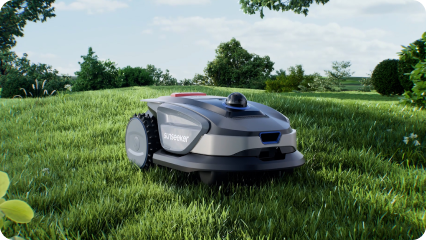
For lawns around 10,000 ft², the Sunseeker S4 offers an automated option designed for areas up to 0.25 acre. Its automatic mapping and planned mowing routes help manage regular cutting across different lawn zones without installing a perimeter wire or antenna station. This reduces the time spent on manual mowing while keeping the grass consistently maintained.
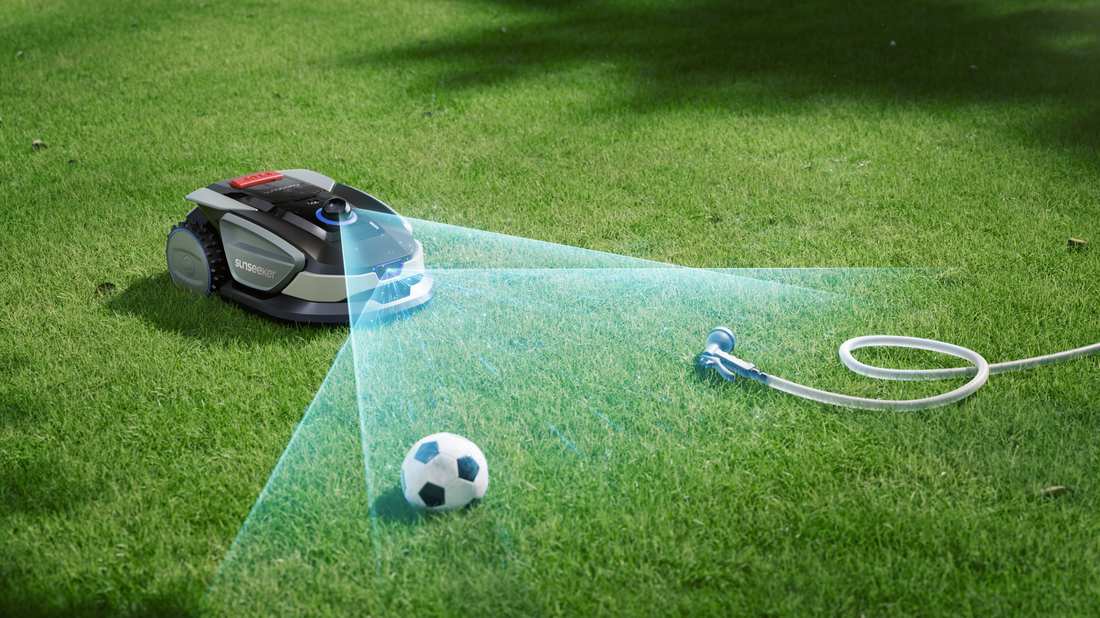
The measurement also helps when comparing Robot Lawn Mowers without Perimeter Wires. Once you know the grass area and the number of separate zones, you can compare coverage ratings and navigation features against the lawn you actually mow rather than the size of the whole property.
Conclusion
Knowing how to calculate lawn square footage makes it easier to plan lawn care and avoid buying more materials than you need. Divide the lawn into simple shapes, subtract non-grass areas, and double-check your measurements before calculating the total.
Keep a simple sketch with the measurements and final area for future reference. You can use it to estimate seed, fertilizer, sod, and topdressing quantities or choose a mower suited to your lawn size. Accurate measurements also make it easier to plan repairs and adjust your lawn care as the garden changes.
FAQs
How can you measure a lawn without a tape measure?
Use a measuring wheel, a satellite area tool, or a calibrated walking pace. To calibrate pacing, walk a known 25 or 50 ft distance several times and calculate your average step length, then count steps across the lawn. Pacing is less precise than a tape or wheel, but it can give a useful planning estimate on open ground.
Should lawn measurements account for sloping ground?
For gentle residential slopes, the difference between horizontal map area and actual surface area is usually small. As slopes become steeper, on-ground distance matters more. A 20° slope has about 6 percent more surface area than its horizontal projection, while a 30° slope has about 15 percent more. Measure steep sections on the ground when product coverage needs to be accurate.
How often should you update your lawn measurements?
Update your lawn measurements whenever you change its layout, such as adding garden beds, extending a patio, or creating new grass areas. For an unchanged lawn, measuring once is usually enough. Review your measurements before major projects like reseeding, fertilising, or installing sod to ensure you calculate the right material quantities.