


30/07/2026
-
Products
-
V Series
-
-
-
-
Explore
- About Us
- Where to Buy
- Support
Products
V Series
Explore
Choosing between vSLAM and LiDAR depends on your yard’s physical layout, lighting conditions, and power constraints. Opt for vSLAM if your lawn features distinct visual landmarks like fences or borders and you primarily mow during stable daylight. Select LiDAR if your yard has variable lighting, requires precise geometric mapping, or demands highly consistent boundary tracking. Ultimately, vSLAM offers a cost-effective, compact solution for standard residential lawns, while LiDAR is the superior choice for complex terrains where positional drift cannot be tolerated.
A robot lawn mower or outdoor navigation system can look perfect on paper and still struggle in a real yard with shade, slopes, patio edges, and changing light. The hard part is that vSLAM and LiDAR are often compared as if one sensor automatically beats the other. For a mid-size garden, the smarter question is fit: what the robot must see, how reliably it must map, and which constraints matter during normal mowing.
A mower crossing patchy afternoon shade needs stable position awareness before it can hold a clean line across the lawn.
vSLAM, or visual simultaneous localization and mapping, estimates position using camera imagery and software-based visual mapping. The camera captures frames, the system identifies visual features, and the navigation software compares those features as the robot moves. When enough reliable landmarks stay in view, the robot can build a map while also working out where it sits inside that map.
Start with the yard, not the acronym. vSLAM works best when the camera can keep seeing useful contrast: fence lines, paving edges, tree trunks, borders, buildings, and texture changes. It becomes less confident when the view is flat, repetitive, dark, wet, or washed by glare. The system may also rely on AI models to interpret obstacles and boundaries.
That makes vSLAM a strong fit when cameras have clear visual information and when hardware size, cost, and flexible object recognition matter. The right choice still depends on your lighting, weather, accuracy demands, budget, and whether the machine combines sensors.
LiDAR SLAM relies on laser distance measurements to map surroundings. Instead of interpreting camera images first, the sensor sends out laser pulses and measures the returned distance from nearby objects. Navigation software turns those distance points into a map, then compares new scans against the stored map to estimate position.
Its main strength is direct geometry. Walls, trunks, posts, raised beds, and buildings can be measured as distance data rather than inferred from pixels. That is why LiDAR is often favored where dimensional consistency matters and lighting changes would punish a camera-led system.
LiDAR is not immune to outdoor problems. Rain, fog, dust, reflective surfaces, low objects, soft vegetation, and blocked sensor windows can reduce the quality of returns. A spinning or exposed sensor also affects packaging, durability, and power draw. For a lawn robot, LiDAR makes the most sense when the yard has reliable physical structure to scan and when navigation drift would create more trouble than added hardware complexity.
Pick the technology by the failure mode your yard is most likely to create.
To understand what vSLAM is in this comparison, focus on its input: camera frames containing edges, textures, color contrast, and recognizable landmarks. It estimates movement by matching those visual features from frame to frame, then uses software to build a usable map. LiDAR SLAM starts with laser distance returns. It measures how far objects are from the sensor and builds geometry from those points. Cameras read visual context; lasers read shape and distance more directly. That difference drives most real-world trade-offs.
LiDAR SLAM usually has the cleaner path to consistent distance accuracy because range is measured rather than inferred from visual change. vSLAM can map well when the scene has enough features and the camera view stays stable, but repeated grass texture, glare, and motion blur can reduce confidence. For a mower, the practical question is not lab precision. It is whether the robot can return to the same edge without drifting.
Lighting is the first fit filter for vSLAM. Cameras need usable contrast, so deep shade, dusk, rain on lenses, low sun, and featureless surfaces can weaken tracking. LiDAR is less dependent on visible light, but rain, fog, dust, reflective surfaces, and blocked sensor windows can still degrade returns. On a lawn with trees and narrow side yards, judge performance by the worst hour of operation, not the best product video.
Cost is not only the sticker price. Cameras are compact and usually easier to package on small outdoor robots, but robust vSLAM needs processing headroom and clean image handling. LiDAR sensors add hardware cost, height, exposure, and power demand. Runtime is where regret shows up: many cordless yard robots are planned around roughly 1–3 hours per charge, so extra sensing load matters if the mower must finish before weather or sprinklers interrupt.
vSLAM leans heavily on software: feature extraction, image matching, loop closure, obstacle recognition, and often AI-assisted interpretation. That can improve with updates, but performance still depends on model quality and the scenes used to train it. LiDAR SLAM also needs strong processing, yet its raw distance data is more structured. Ask how the system behaves when conditions change, not just how it maps once on a clean demo run.
Start with the condition that creates the biggest navigation penalty in your yard. Choose vSLAM when the lawn has good visual landmarks, daylight operation is normal, and compact hardware with object-recognition potential matters. It fits many residential lawns where borders, paths, trees, fences, and structures give the camera enough reference points.
Choose LiDAR SLAM when repeatable geometry matters more than visual context. It is the stronger fit for areas with consistent physical structures, variable lighting, or jobs where positional drift creates a real problem. Do not assume LiDAR fixes every outdoor edge case; vegetation, weather, and sensor blockage still matter.
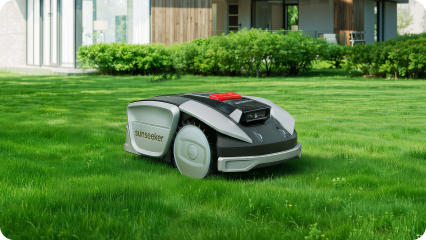
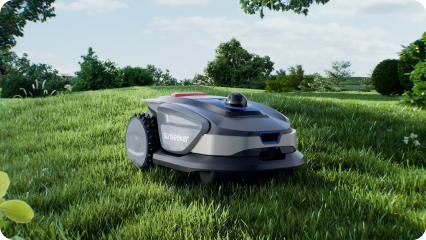
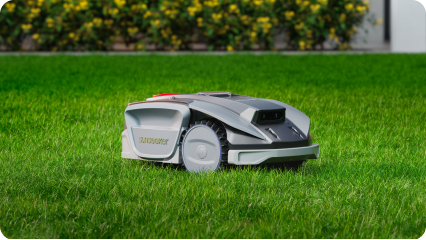
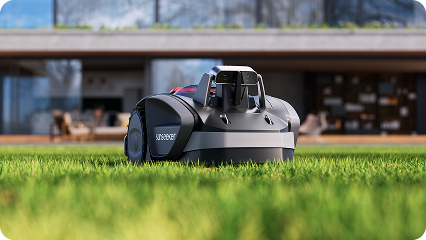
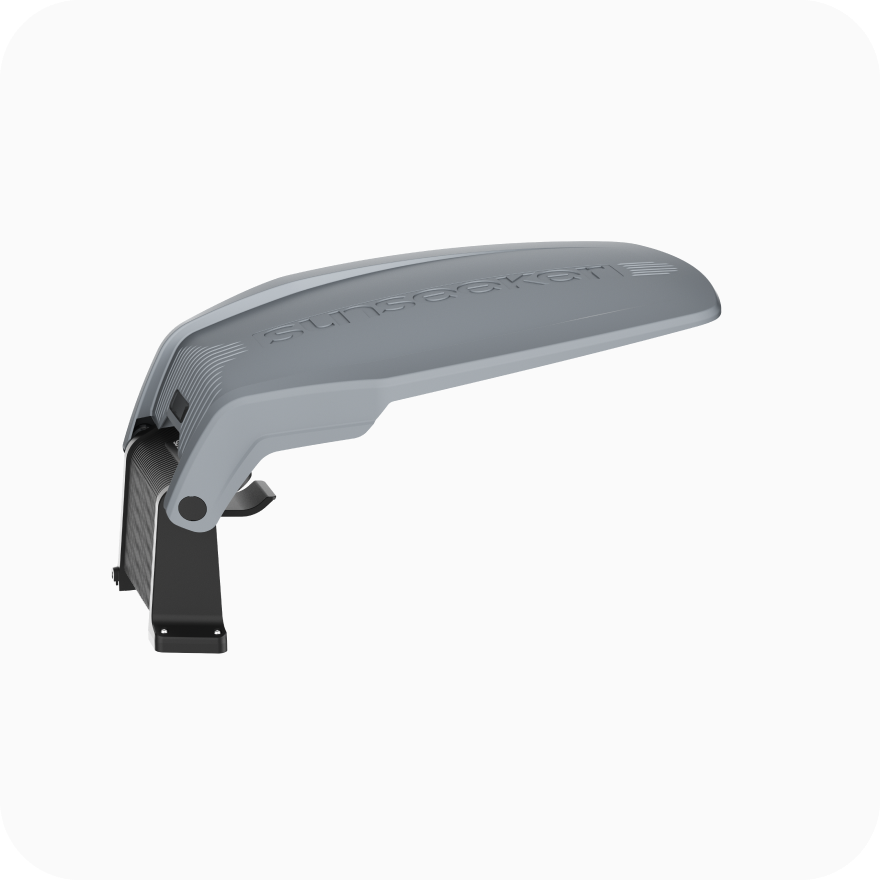
For a wire-free mowing setup where camera-led navigation and residential lawn fit are the priority, the Sunseeker S5 belongs on the shortlist. Treat it as a conditional fit, not proof that vSLAM wins in every yard. If your lawn has frequent dusk mowing, few landmarks, regular wet conditions, or tight accuracy demands near hazards, check how the full sensor package handles those limits before choosing.
Choose vSLAM when your yard offers clear visual landmarks and most mowing happens in stable daylight. Choose LiDAR when repeatable geometry matters more than visual context and drift would cause real problems around edges or hazards. Before deciding, check the worst conditions your mower will face—late-day shade, wet grass, narrow passages, or blocked sightlines—because that is where the wrong navigation system becomes obvious.
LiDAR sensors add hardware cost, height, exposure, and power demand compared to compact cameras. Because many cordless yard mowers are designed to run for roughly 1 to 3 hours per charge, this extra sensing load is critical. If the navigation system draws too much power, the mower may fail to finish its job before weather or sprinklers interrupt.
Visual SLAM relies on cameras that need stable, usable contrast to map a lawn. Consequently, tracking weakens in deep shade, during dusk, under low sun, or when glare washes out the lens. Featureless surfaces and rain on the camera lenses also degrade performance, making stable daylight the ideal condition for this technology.
vSLAM works best in lawns with clear visual landmarks such as paths, fences, trees, flower beds, and defined borders. These features help the camera track movement and maintain a stable map. Performance may be less reliable in large, open lawns with repetitive scenery or in areas where lighting changes sharply throughout the day.