

24/09/2026
-
Products
-
V Series
-
-
-
-
Explore
- About Us
- Where to Buy
- Support
Products
V Series
Explore
A lawn rarely grows at exactly the same speed in every corner. One strip may shoot up after extra irrigation, while the rest still looks freshly cut. Mowing the whole yard again can waste time and remove healthy leaf area that does not need trimming. Spot mowing gives you a more focused option. Used carefully, it can tidy uneven growth without creating short patches, visible rings, or stressed turf. The practical details matter most: cutting height, timing, overlap, and knowing when a full-lawn mow is the better call.
Spot mowing is a targeted maintenance technique rather than a separate mowing season or special grass treatment. It focuses only on noticeably taller areas while leaving the rest of the lawn at its current height.
In practice, you identify a patch that has outgrown the surrounding canopy, set the mower to match the lawn’s established cutting height, and trim that limited area with a small amount of overlap. The goal is visual and physical consistency, not a visibly shorter circle. A difference of roughly 13 to 25 mm can be enough to justify a touch-up if the taller area stands out, especially near irrigated edges, downspouts, shaded moisture pockets, or recently fed turf.
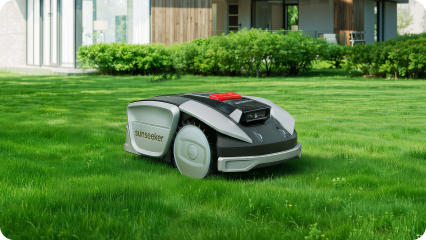
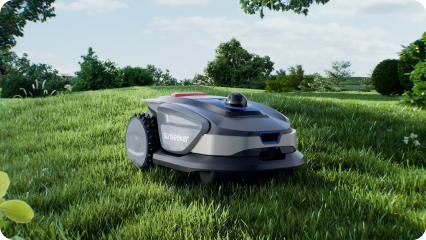
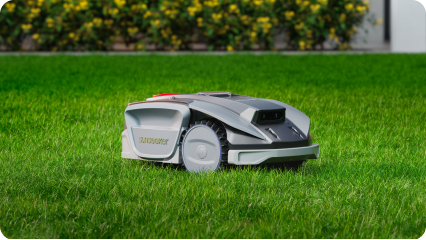
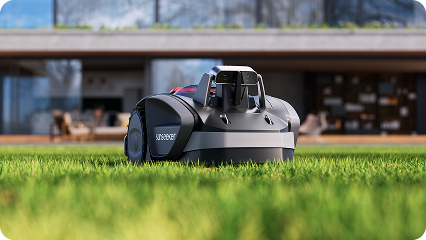
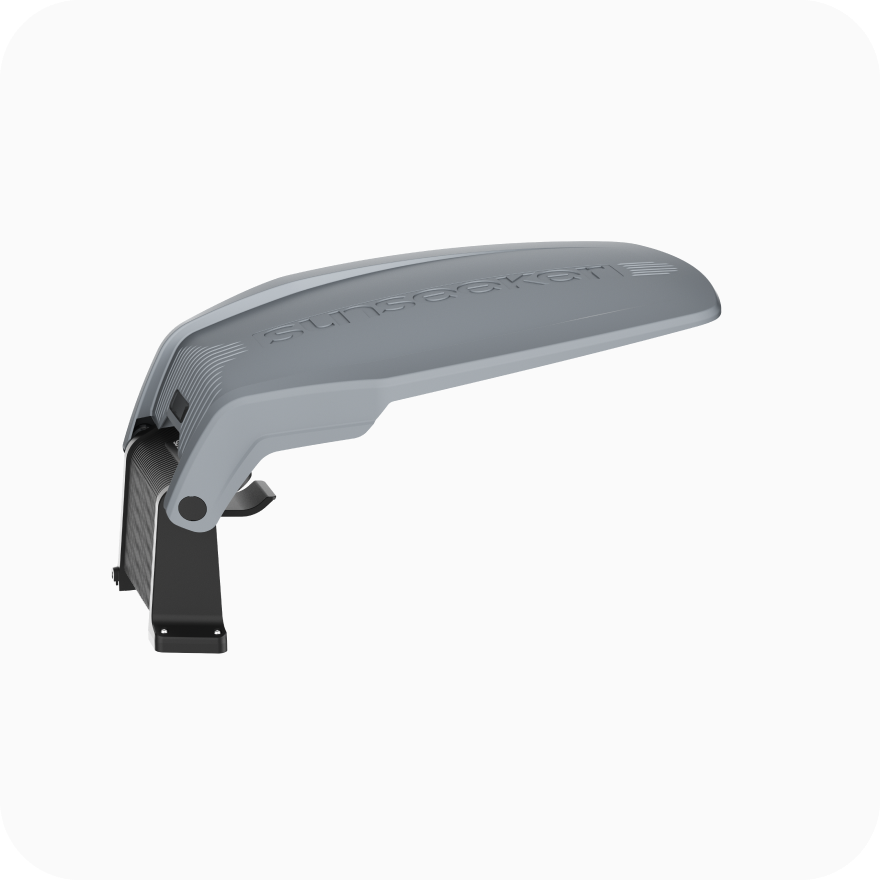
Some automated mowers can make this kind of touch-up easier. The Sunseeker S4 includes spot cutting for precise local mowing, alongside edge-focused cutting modes. That gives established lawns a way to handle a small overgrown patch without treating the whole yard as a new mowing job. Its role is routine maintenance on grass that is already within a normal mowing range.
A targeted cut is useful when the growth difference is local, easy to identify, and small enough that the surrounding lawn still looks even. These common situations are where spot mowing is most practical.
Localized rain, irrigation overspray, runoff, or a heavier fertilizer application can cause one part of a lawn to grow faster than nearby grass. A patch beside a sprinkler head or at the bottom of a gentle grade may become visibly taller several days before the rest of the yard is ready. If the surrounding turf still sits at your intended mowing height, trim only the taller patch once the leaves are dry and firm enough for a clean cut.
Check the actual height before mowing. If the patch is 11 cm tall and your normal maintained height is 9 cm, removing about 3 cm follows the one-third rule. If it has reached 15 cm, one aggressive pass to 9 cm removes too much leaf tissue. Raise the deck and reduce the height over two mowings instead.
Grass seed heads and grassy weeds can appear in isolated pockets, making a lawn look uneven even when most of the canopy is still at a good height. Spot mowing can remove the visible seed stalks before they dominate the appearance of the area. It is especially useful along sunny edges, compacted strips, or thin places where growth habits differ from the main lawn.
Treat mowing as appearance control, not weed eradication. Cutting off seed heads does not remove perennial weed roots, and mowing broadleaf weeds very low can scalp the surrounding turf. Keep the deck at the lawn’s normal height, collect clippings only if mature weed seeds are present in quantity, and address the underlying weed or soil problem separately.
Paths near gates, play areas, pet routes, and strips beside patios often develop their own growth pattern. Some sections stay thin from wear, while nearby grass grows faster after extra water or fertilizer used during recovery. Spot mow only the taller recovery growth and leave shorter, stressed turf alone.
The key is to judge the patch against the target canopy, not against the most worn grass beside it. If newly recovering grass has reached normal mowing height and passes a gentle tug test, a light trim can encourage a tidy surface. If roots still lift easily or the area is sparse, give it more establishment time instead of cutting early.
The cleanest result comes from treating the patch as part of the existing lawn, not as a separate miniature mowing job. A few simple controls keep the repaired-looking area from standing out afterward.
Measure or visually check the surrounding grass before adjusting the mower. Use the same deck setting that produced the current lawn height rather than lowering the blade just because the patch is taller. For example, if the lawn is maintained near 8 cm and a patch has reached 10 cm, return that patch to about 8 cm rather than cutting it to 5 cm.
A consistent height keeps leaf area similar across the lawn and reduces the chance of a pale, scalped-looking spot. On uneven ground, remember that the deck can sit closer to the soil over bumps, so move slowly and avoid forcing the mower across high crowns.
Avoid removing more than about one-third of the grass blade in a single mowing. This rule is especially important during spot mowing because the isolated patch is often taller precisely because it has been growing faster. Cutting too much at once can leave it noticeably lighter or more stressed than the surrounding turf.
If the target area is 15 cm tall and the lawn is normally held at 9 cm, do not cut directly to the final height. First mow near 10 cm, allow a few days of healthy growth, then return to the normal setting. Dry grass and a sharp blade also help produce a cleaner leaf edge.
Hard stop lines can make an otherwise successful spot mow look obvious. Extend each pass slightly into the surrounding lawn rather than turning sharply at the exact edge of the tall patch. A narrow overlap of roughly one mower width is usually enough to soften the visual transition without repeatedly cutting the same large area.
Change direction on the next touch-up if the same patch keeps growing quickly. Repeated wheel traffic on one route can flatten soil and grass, especially when the ground is damp. After mowing, step back and view the patch from several angles; if it blends into the existing canopy, additional passes are unnecessary.
Spot mowing loses its advantage once uneven growth spreads across a large share of the yard or multiple patches begin merging together. At that point, one consistent full-lawn cut usually gives a cleaner result.
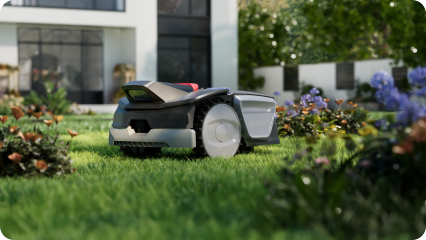
For regular automated maintenance, a robot lawn mower can help keep established grass close to a consistent target height, reducing the size of many growth differences before they become obvious. Local touch-ups still have a place, but the whole lawn should return to a normal mowing rhythm once growth evens out.
Spot mowing is most useful when only a small part of the lawn has outgrown the rest. Match the current cutting height, follow the one-third rule, and blend each pass into nearby grass so the repair does not look obvious. If tall growth spreads across much of the yard, switch back to a full-lawn mow and check irrigation, fertility, or drainage for the cause. Used as a light maintenance tool, spot mowing can keep an established lawn looking even without unnecessary cutting.
Spot Mowing mode is designed for a small area that has grown taller than the rest of the lawn. It is useful after localized rain, irrigation, fertilizer, or uneven regrowth. Use it when the surrounding lawn is still at the desired height and the target patch can be trimmed without cutting more than one-third of the blade.
Mow according to growth rate rather than a fixed calendar. During active growth, many lawns need cutting about every 5 to 7 days; slower periods may stretch to 10 to 14 days or longer. Keep the one-third rule as the main trigger, and avoid mowing wet, heat-stressed, or newly established grass too early.
Leave short, finely cut clippings when they fall evenly into the canopy; they break down and return nutrients to the soil. Use a catch bag when clippings are long, wet, clumped, diseased, or carrying many mature weed seeds. The lawn surface should remain open enough for light and air to reach the grass.