

24/08/2026
-
Products
-
V Series
-
-
-
-
Explore
- About Us
- Where to Buy
- Support
Products
V Series
Explore
Laser geometry helps a lidar robot mower localize when satellite views are blocked by trees or buildings, but mapping alone is not enough. Capacity, cutting range, passages, edges, and obstacle behavior still have to match the property. Clean sensors and updated boundaries keep that local map usable after landscaping changes.
A mower that navigates well in open sky can become less predictable under dense trees or beside tall structures. For yards like these, LiDAR is attractive because it reads nearby geometry instead of relying only on satellite visibility. A lidar robot mower still has to match the lawn’s size, passages, cutting range, edges, and obstacle conditions. This guide compares navigation methods first, then turns those differences into practical buying criteria and setup habits for LiDAR-led mowing.
LiDAR, satellite positioning, and cameras give a mower different kinds of reference information. Understanding what each method observes makes the practical navigation trade-offs much easier to judge.
LiDAR, RTK/GPS, and cameras answer different navigation questions. LiDAR measures surrounding geometry directly and can localize against mapped shapes without a satellite view. RTK uses corrected satellite positioning to provide a global coordinate reference, which is highly repeatable in open sky. Cameras provide visual features and semantic information but depend on lighting and texture. A robot mower can combine these sensors. For tree-heavy or signal-blocked yards, LiDAR-based mapping reduces reliance on satellite reception. For very large open lawns, RTK can provide a strong global anchor. The best architecture matches the yard’s hardest conditions and includes a safe fallback when one signal becomes uncertain.
LiDAR is most useful when its mapping strengths fit the real lawn rather than a clean demo area. Start with the conditions the mower must handle repeatedly during a normal week.
LiDAR range determines how far the mower can perceive geometry, but a longer number is only useful if returns remain dense and reliable on real yard surfaces. Trees, hedges, fences, walls, and lawn edges create different reflection patterns. A 360° sensor can maintain awareness while the mower turns, while vertical field of view affects how it sees low and raised obstacles. Range should be considered with scan density, update rate, and the navigation algorithm. For a small yard, stable close- and mid-range mapping is usually more valuable than an extreme maximum distance that is rarely used.
Coverage should be based on the sum of all mowable areas, not the property lot size. Subtract buildings, beds, ponds, patios, and non-grass surfaces, then add a margin for seasonal growth and inefficient routing. A mower rated close to the exact calculated area may spend more time charging during fast spring growth. For example, if three lawn zones total about 3,238 m², selecting a system comfortably above 3,238 m² provides more schedule flexibility than treating the rating as a daily guarantee. Terrain, grass density, cutting height, and travel between zones all affect real cycle time.
Cutting-height range should match the grass type and the way the lawn is used. A wider adjustment range gives room to keep turf longer during heat or shade and gradually lower it when growth is strong. Avoid removing more than roughly one-third of the leaf blade in a single cut; if grass is overgrown, reach the target height over several sessions. App-controlled height is convenient, while manual adjustment is acceptable when the yard does not need frequent changes. Check the mower’s actual range against the height you normally maintain rather than choosing on range alone.
Wider cutting systems cover more grass per pass, but width should be judged together with maneuverability. A broad deck can reduce the number of lanes on an open lawn, while a narrower mower may move more easily through tight gates, tree clusters, or narrow side yards. In multi-zone properties, use the narrowest required corridor as a constraint before chasing maximum width. Cutting width also interacts with path planning: systematic parallel lanes can make efficient use of a modest deck, whereas random travel can give away some of the theoretical capacity.
Edge performance depends on mower geometry, blade position, boundary behavior, and whether the machine can safely ride over a flush edge. A virtual boundary can guide the mower precisely, but a wall or raised curb still prevents the cutting disc from reaching grass directly beside the obstacle. Lawns that meet paving at the same height are easier to trim closely because the mower may be able to overlap the edge. When evaluating a yard, separate “navigation reaches the boundary” from “blade reaches the grass edge”; they are related but not identical.
Tree cover challenges satellite-based positioning because leaves and branches attenuate and reflect GNSS signals. LiDAR does not need a satellite view; it localizes from surrounding geometry, which can make it attractive for shaded gardens. Dense foliage can still create changing shapes, and very open spaces with few geometric features can be another edge case. A fusion system that combines LiDAR with vision or other motion cues can improve robustness. Test the hardest area at the time of day and season when the canopy is most demanding, not only when leaves are sparse.
Once the yard requirements are clear, the product decision can be narrowed to the navigation, traction, coverage, and cutting features that matter most in that setting.
For a compact or medium garden with tree cover, narrow passages, or inconsistent satellite visibility, prioritize a mower that can build and reuse a local geometric map without an external antenna. Automatic mapping, editable virtual boundaries, systematic route planning, and a practical cutting range matter together because the sensor still has to support the full mowing workflow rather than only produce a strong map.
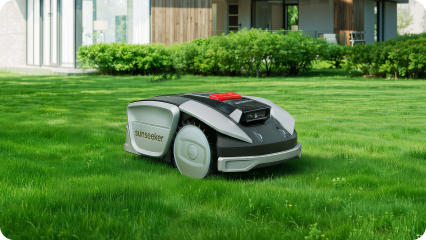
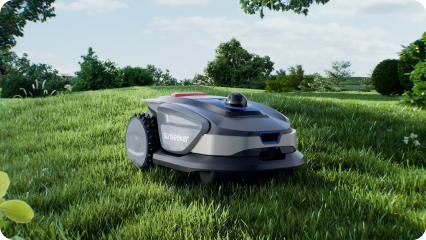
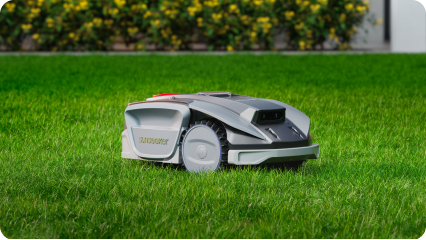
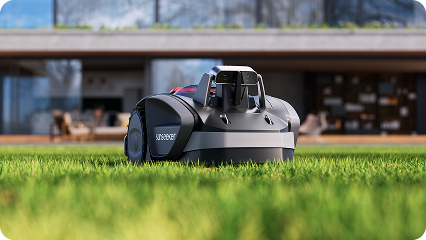
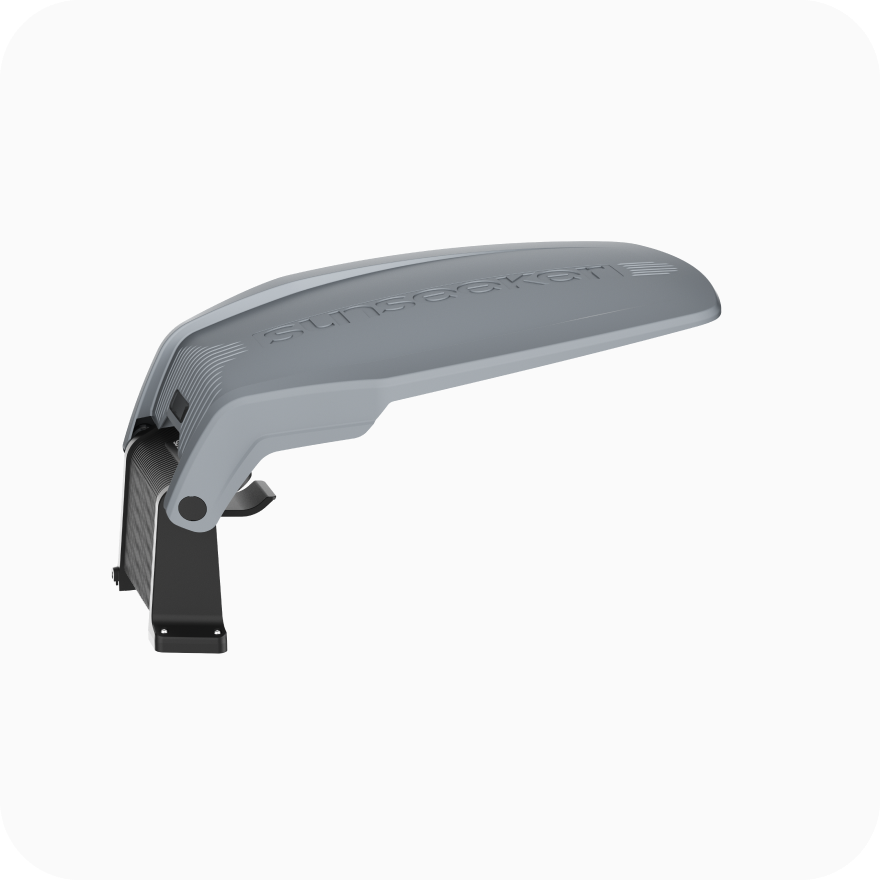
For a current Sunseeker example, Sunseeker S4 brings those requirements together in one platform. 360° 3D LiDAR + AI Vision; max area 1000 m²; 20-60 mm cutting height; 18 cm cutting width; up to 42% / 22° slope; 100 multi-zones; Wi-Fi/Bluetooth; automatic mapping and virtual boundaries. The value of that combination is a more consistent mowing workflow across the yard rather than a single isolated specification.
Good mapping and sensible yard preparation help a LiDAR mower use its sensors consistently. A few routine setup and maintenance habits can keep navigation and cutting performance predictable.
For broader model options, explore Sunseeker’s robot lawn mower range and compare navigation, area, and terrain specifications against the same yard measurements.
A LiDAR mower is most compelling where nearby geometry stays observable but satellite visibility is inconsistent. Mapping range, lawn capacity, cutting dimensions, edge behavior, passages, and tree cover still need to match the yard. Cleaning sensors, updating boundaries after landscaping changes, and testing the hardest shaded areas help preserve reliable navigation. Sunseeker’s LiDAR-led mower options give users a practical route to wire-free mapping in compact and complex gardens without reducing the decision to one sensor specification.
A LiDAR robot mower uses laser scanning to measure surrounding geometry for mapping, localization, obstacle awareness, or a combination of those functions. Because LiDAR does not depend on satellite visibility, it can be useful around trees and buildings. Many systems also combine LiDAR with cameras or bumpers for richer perception.
It depends on the yard. LiDAR is attractive in shaded or satellite-blocked spaces because it localizes from nearby geometry. RTK provides a strong global coordinate reference in open sky. Large mixed properties can benefit from sensor fusion. Compare the hardest areas of the yard rather than choosing solely from a technology label.
LiDAR itself can measure geometry without visible daylight, so it can remain useful at night and under tree cover. The complete mower may still use cameras, lighting, or safety rules that affect nighttime operation. Under trees, LiDAR avoids the satellite-view requirement, but dense vegetation and changing geometry should still be tested in the actual yard.