You finish clearing the lawn, only for another gust of wind to scatter a fresh layer of leaves across the grass. Raking everything away feels wasteful, but leaving the yard covered can create problems once wet leaves begin to settle and block light from the turf.
Whether you should leave leaves on your lawn depends less on a simple yes or no than on how much cover is present and how the lawn is coping with it. This guide helps you judge when leaves can stay, when they should be mulched or removed, and what conditions make cleanup more urgent. Autumn care becomes much easier once that balance is clear.

Is Leaving Leaves on Your Lawn a Good Idea?
Leaves are useful material, but their value depends on how they are managed. A scattered layer and a sealed mat create very different conditions at the grass surface.
Finely chopped leaves can settle between grass blades, break down, and return small amounts of nutrients and carbon to the soil. They also reduce the volume that must be collected. This is why the answer to “is leaving leaves on the lawn good?” can be yes when the pieces are small and the turf remains open. Shredding speeds decomposition and makes the material less likely to blow into streets or neighboring yards.
Whole leaves behave differently. Broad maple, sycamore, magnolia, and similar leaves can overlap like shingles. Rain presses them into a sheet that blocks light and slows evaporation. Even smaller leaves become harmful when several drops accumulate without mowing. The practical goal is not a leaf-free lawn; it is a lawn where grass blades are still easy to see and leaf fragments are distributed rather than piled.
When Do Leaves Start Hurting Your Grass?
Visual coverage is a more dependable warning than a fixed number of leaves. Check the lawn after each major drop and again after rain or strong wind redistributes the material.
Begin removing or collecting excess material when less than about 50% of the grass surface remains visible after mulching. That threshold is a useful field check because dense fragments can still form a mat, even when individual pieces are small. Act sooner on new seed, thin turf, shaded areas, fine fescues under stress, low spots, or lawns entering a wet period. These sites dry slowly and have less leaf area available for photosynthesis.
Do not wait for the final leaf to fall. During peak drop, inspect every 3 to 7 days and mulch or collect before rain turns dry leaves into a heavy layer. If a patch stays flattened for several days, smells sour, looks pale beneath the cover, or holds moisture long after open turf dries, the cover is already too thick. Remove it gently and allow the grass to recover before another mowing pass.
Should You Leave, Mulch, Rake, or Compost the Leaves?
The right destination depends on coverage, moisture, and the condition of the grass. Use this comparison to make a quick, practical choice after each leaf drop.
|
Option
|
Best situation
|
What to do
|
Avoid when
|
|
Leave
|
A few scattered, small leaves
|
Let wind and normal mowing distribute them; recheck after rain.
|
Leaves overlap, hide grass, or collect in drains.
|
|
Mulch
|
Dry leaves in a light to moderate layer
|
Mow into pieces roughly 2 cm across; repeat once if fragments still sit above grass.
|
Leaves are wet, matted, very deep, or mixed with branches.
|
|
Rake / collect
|
Heavy piles, wet mats, delicate or newly seeded turf
|
Lift material with a flexible rake or bagging mower without scraping crowns.
|
Soil is saturated and foot traffic leaves impressions.
|
|
Compost
|
Clean surplus leaves beyond the lawn’s capacity
|
Shred, mix with nitrogen-rich greens, and keep the pile damp, not soaked.
|
Leaves are diseased, chemically contaminated, or locally restricted.
|
How Do You Mulch Leaves Without Smothering the Lawn?
Leaves can feed the soil only if the mower reduces them enough for grass blades to remain exposed. Work in light layers and use turf visibility as the limit.
Step 1. Wait Until the Leaves Are Dry Enough to Mow
Choose a dry day after dew has evaporated. Dry leaves lift into the cutting chamber and break apart; wet leaves clump, clog the deck, and press grass down. Walk the site first and remove sticks, fruit, stones, toys, and hidden debris. If shoes sink or leave deep impressions, postpone mowing until the soil firms. Never mulch when frost makes grass blades brittle.
Step 2. Shred Them Into Small Pieces
Set the mower at the normal seasonal height and make one slow pass. Cross the first direction for a second pass if large pieces remain. Aim for fragments roughly 2 cm across, not intact leaf halves. With a walk-behind or riding mower, use a sharp mulching blade and a closed mulch plug as the manual directs. Process smaller amounts every few days instead of lowering the deck or forcing a machine through a pile.
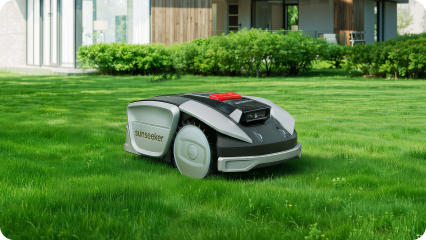
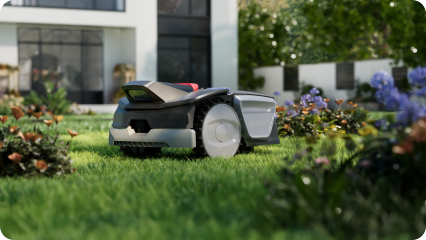
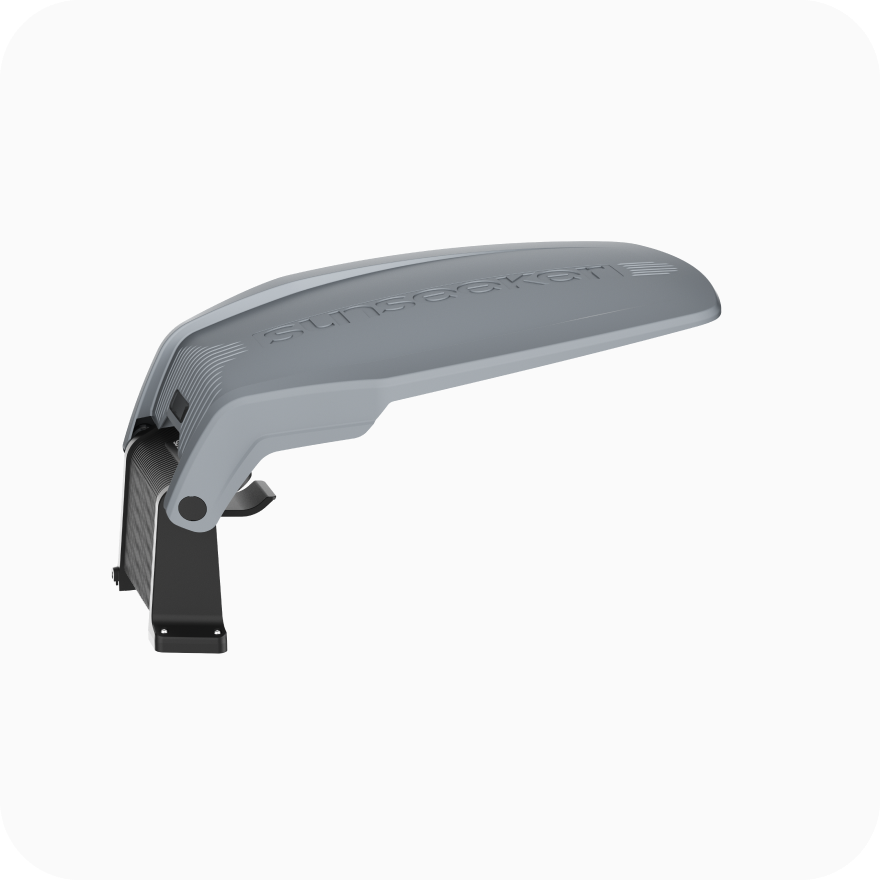
For established turf under regular maintenance, the Sunseeker S5 uses intelligent path planning for systematic coverage and a floating cutting system that follows ordinary surface variation. It can support frequent mowing while leaf fall is light and dry. First rake away thick piles, branches, and wet mats so the mower is working on visible, stable grass rather than an obscured or neglected surface.

Step 3. Check That Grass Is Still Visible
Stop and look straight down after the fragments settle. At least half of the turf surface should remain visible across the area, not only in the easiest sections. Brush apart small windrows with a leaf rake. If the mower leaves clumps, tracks, or a continuous brown layer, collect some material before continuing. Recheck low spots and fence lines the next morning because wind can refill them overnight.
Step 4. Remove Excess or Matted Material
Rake the surplus onto a tarp, collect it with a bagging attachment, or use a leaf vacuum on firm soil. Send clean leaves to a compost pile, municipal collection, or garden beds. A 5 cm layer of shredded leaves can serve as mulch around established plants while staying about 8 to 10 cm away from trunks and crowns. Never blow leaves into streets, storm drains, streams, or natural areas where local rules prohibit dumping.
What Problems Can Thick Leaf Cover Cause Before Winter?
A heavy layer changes the cool, moist zone around grass crowns. Problems become more likely when snow or prolonged rain seals that layer in place.
Dense leaves reduce sunlight while cool-season turf is still storing energy. They restrict airflow, hold moisture against blades, and create favorable conditions for decay and some snow mold problems. Matted cover can also prevent even irrigation, hide vole runways, and keep spring soil cold and slow to dry. Grass beneath it may emerge pale, flattened, or dead, leaving openings for weeds.
There is also a safety and maintenance cost. Wet leaves are slippery on slopes and paths, conceal holes or debris, and can block drains during storms. Thick piles may smother new seedlings in only a few days of damp weather. Complete the final cleanup before lasting snow is expected, but retain finely shredded material that has settled between upright blades. If the lawn is already dormant and saturated, use a light rake and minimize traffic rather than repeatedly driving equipment over soft soil.
Conclusion
A thin layer of dry leaves can stay on the lawn when mowing breaks them into small pieces and plenty of grass remains visible. Clear away wet mats, heavy piles, and leaves covering weak or newly seeded areas so the turf still gets enough light and air. Regular mowing during dry fall weather keeps leaf buildup under control. Once the lawn is clear and growing normally, Robot Mowers with Mulching Blades can help with routine trimming and leave fine clippings behind.
FAQs
Can you just mow over fallen leaves?
Yes, if the leaves are dry or only slightly damp, the soil is firm, and the layer is light enough to mow safely. Remove branches and other debris first, then make one or more passes until the fragments are small enough to settle between the grass blades. Collect the excess if less than roughly 50% of the turf remains visible, or if the shredded leaves form clumps or remain on top of the grass.
Is it OK to leave leaves on your lawn over winter?
A few finely shredded pieces settled between visible grass blades can remain. Do not leave whole, wet, or matted leaves over winter. Dense cover blocks light and airflow, holds moisture, and may increase winter injury or snow mold. Clear low spots and heavy piles before persistent snow arrives, without trafficking saturated soil.
How many leaves should you leave on your lawn?
Use coverage instead of counting leaves. After mulching, at least about 50% of the grass surface should remain visible, and fragments should sit between upright blades rather than forming a sheet. Leave less on thin, shaded, newly seeded, or slow-drying turf. Compost or collect anything beyond the lawn’s visible capacity.