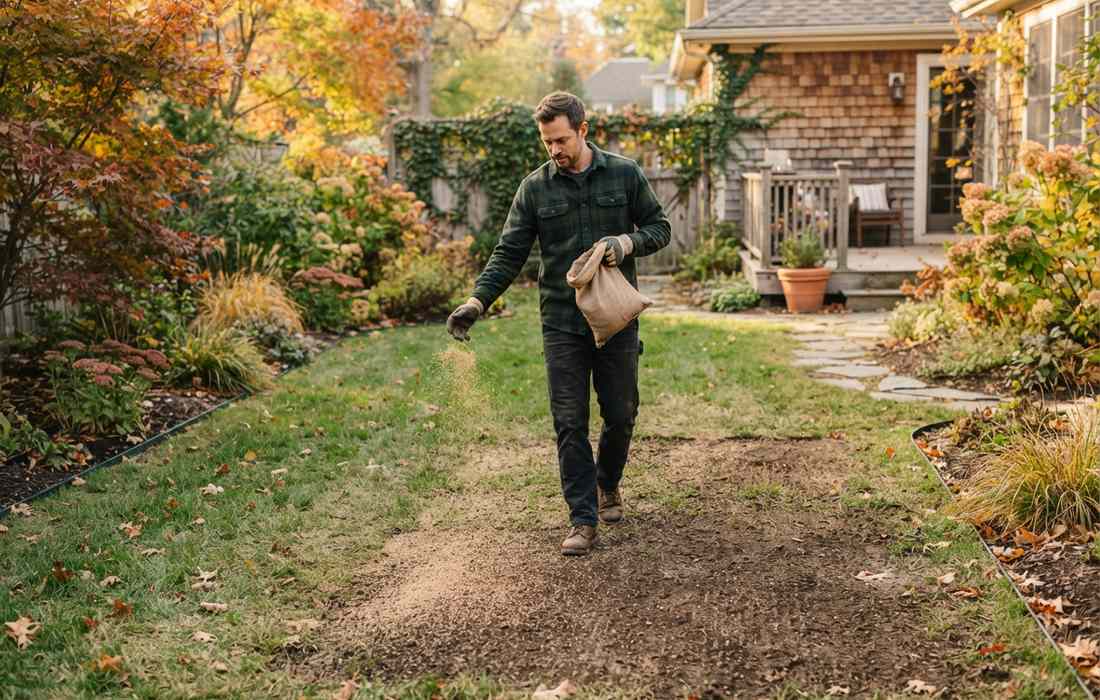
Thin patches often become obvious as summer stress fades and cooler weather returns. The soil may still be warm enough for germination even when the air feels comfortable, giving new grass a useful window to establish before winter. Waiting too late can leave seedlings too small to handle early freezes, while seeding too early can expose them to heat and rapid drying.
Good fall overseeding is mainly about timing, seed-to-soil contact, and steady moisture. This guide shows when to seed, what to prepare, how to spread and settle the seed, and how to protect young grass until cold weather slows growth.
When Should You Overseed a Lawn in Fall?
Fall is most useful when existing grass is still growing and the seed has enough mild weather ahead to germinate and root. The timing guides below separate cool season lawns from warm season lawns.
Timing for Cool Season Lawns
For lawns based on tall fescue, Kentucky bluegrass, fine fescue, or perennial ryegrass, late summer through early fall is usually the strongest window. Aim to seed roughly 6 to 8 weeks before the first hard freeze expected in your area. That gives slower species time to germinate and gives new roots time to develop before winter growth slows.
Local climate matters more than the calendar date. If the surface still dries within hours, wait for a cooler stretch. If frost is already close, a full overseeding may be too late; dormant seeding later is a separate approach intended for spring germination.
Timing for Warm Season Lawns
Warm season grasses such as bermudagrass and zoysiagrass are moving toward dormancy in fall, so autumn is not the main season for seeding more of the same warm season grass. If the goal is to thicken the permanent lawn, late spring or early summer is normally the better period, when active growth can support establishment.
In mild winter regions, some bermudagrass lawns are overseeded with perennial ryegrass for temporary winter colour. That is a separate practice rather than a repair method for the bermudagrass itself. It adds winter mowing and the ryegrass can compete with the warm season turf in spring, so use it only when that seasonal effect fits the lawn and local conditions.
Which Seed and Supplies Do You Need?
Once the timing is right, gather the tools and materials that help seed spread evenly and reach the soil instead of sitting on leaves or thatch. Have everything ready before you begin.
Grass seed: Choose a species or blend suited to your climate, light level, soil, and existing lawn. Match the new seed to the turf you want to keep rather than buying only by colour or price.
Spreader: A broadcast spreader is useful on larger areas, while a hand spreader is easier to control around beds and narrow sections. Calibrate it to the seed label rather than estimating by eye.
Rake, scarifier, or aerator: Use only enough surface preparation to expose soil. A stiff rake can be enough on a thin lawn; compacted soil may benefit from core aeration before seeding.
Watering setup: A sprinkler or hose nozzle should apply a light, even pattern without washing seed into piles. Check that every seeded zone can stay moist during germination.
Measuring tools: Measure the area before buying seed. Knowing the lawn size lets you follow the labelled rate and prevents thin coverage in one zone and excessive seed in another.
Starter nutrients only when appropriate: A soil test and local rules should guide phosphorus or other nutrient use. Do not add a starter fertiliser simply because seed is being spread if the soil already has adequate nutrients.
How to Overseed a Lawn in Fall Step by Step
Overseeding succeeds when each pass improves seed contact without damaging the existing turf. Work on a reasonably dry lawn, then follow the steps below so the seed stays evenly distributed and close to the soil.
Step 1. Mow the Existing Grass
Mow the lawn toward the lower end of its normal healthy range, but do not scalp it. The goal is to reduce leaf cover so seed can reach the surface. Remove heavy clippings and leaves, especially where they form a mat. If the lawn is tall, lower the height over more than one mowing rather than removing more than about one third of the leaf at once.
Step 2. Expose the Soil Surface
Seed that sits on top of dense thatch has a poor chance of establishing. Rake thin areas firmly enough to expose small patches of soil. Where compaction is a real problem, core aeration can create openings and improve air and water movement. A slit seeder is another option because it places seed in shallow grooves rather than leaving everything on top.
Keep preparation shallow around tree roots and irrigation lines. You are opening the seedbed, not cultivating deeply. If thatch is thick enough to feel spongy, correct it before overseeding.
Step 3. Spread the Seed Evenly
Use the rate printed for overseeding, not the heavier rate intended for a completely bare seedbed. Divide the total seed into two equal portions. Spread one half in one direction and the other half at a right angle. This cross pattern is simple and helps reduce streaks, missed corners, and dense bands where the spreader path overlaps.
Step 4. Press the Seed Into the Soil
After spreading, lightly rake or brush the area so seed works down through the existing grass. Small grass seed should remain close to the surface; burying it deeply can slow emergence. If the soil is loose, a light roller can improve contact, but avoid heavy rolling on damp ground because compaction creates another problem just as the seedlings are trying to root.
Step 5. Water Gently
Moisten the upper surface with a fine spray and keep it consistently damp during germination. In dry, breezy weather that can mean one to three short watering cycles in a day; cool, cloudy weather may need much less. The target is moisture around the seed, not puddles. As roots develop, reduce the frequency and allow water to move deeper into the soil.
How to Care for Fall Seedlings Before Winter
New grass still needs a few careful weeks after germination because shallow roots dry quickly and soft leaves are easy to crush. The sections below show how to carry seedlings through the rest of fall without pushing them too hard.
Keep the Seedbed Moist Through Germination
Continue light irrigation until most of the seed has emerged, then gradually shift to fewer, deeper waterings. Do not keep mature turf saturated just to protect a few late seedlings. Check the soil with a finger or small probe: the upper layer should feel evenly moist, while water should not remain on the surface long after irrigation.
Germination speed differs by species. Perennial ryegrass can emerge in about 5 to 10 days under good conditions, tall and fine fescues commonly take around 7 to 14 days, and Kentucky bluegrass can take about 14 to 21 days. Cool soil or inconsistent moisture can extend those ranges.
Mow When the New Grass Is Ready
Wait until the new grass reaches about 8–10 cm and the seedlings are firmly rooted before the first mow. Check that the soil is dry and firm enough to support the mower without leaving tracks. Use a sharp blade and remove no more than one-third of the grass height in a single cut, keeping the finished height suitable for the grass type.
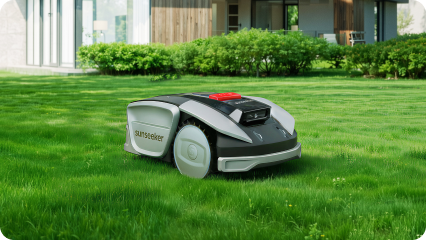
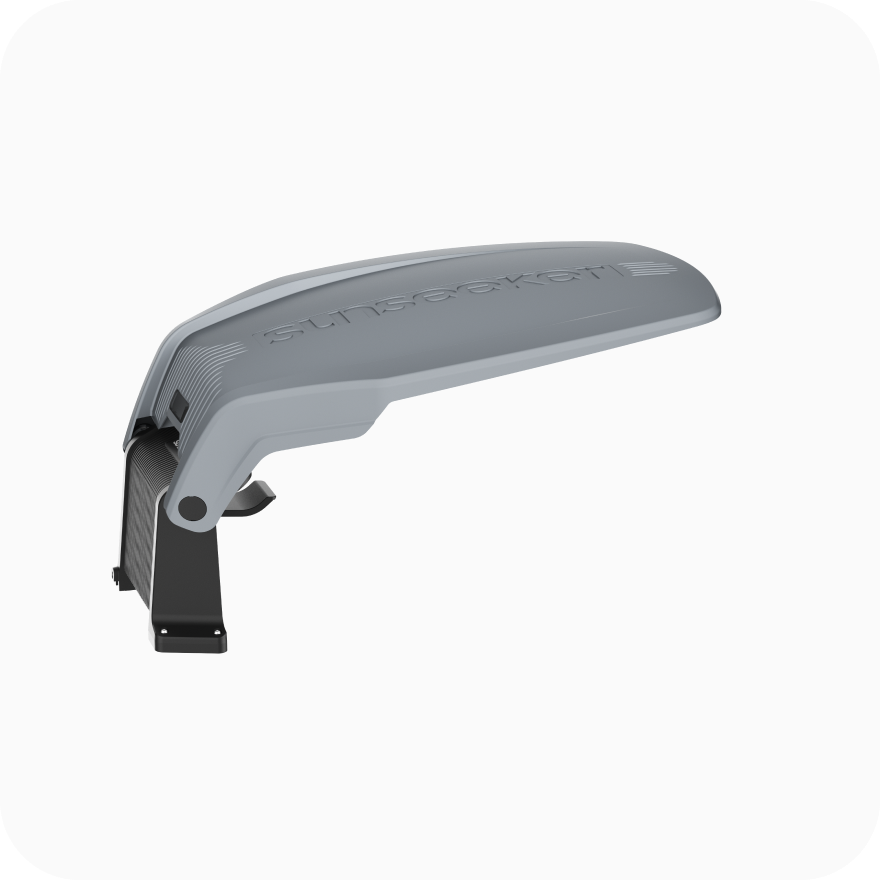
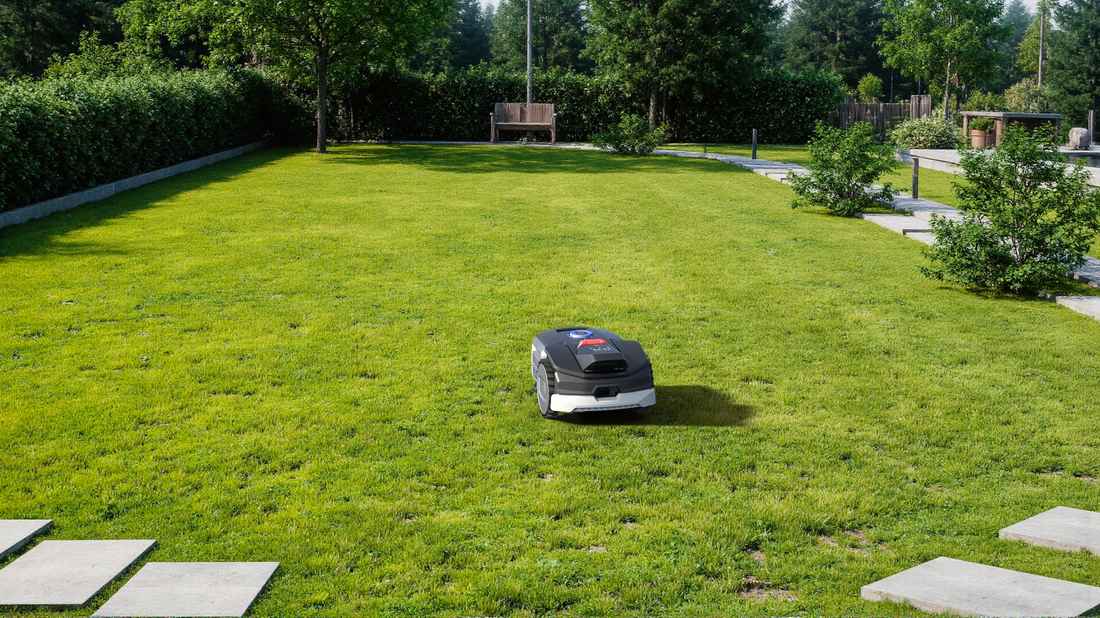
After several successful cuts, the young lawn should be ready for regular maintenance. For smaller gardens, the Sunseeker V1 can handle frequent, light mowing without a buried boundary wire. Its ReadyGo setup and floating cutting system make routine trimming easier while helping maintain a consistent grass height as the lawn matures.
Protect Seedlings From Leaves and Foot Traffic
Do not let a wet layer of autumn leaves sit over new grass for days. Remove leaves gently with a blower on a low setting or a light rake that does not tear seedlings from the soil. Redirect regular walking, play, and heavy equipment away from seeded areas until the plants have rooted and survived a few mowings.
After the lawn is fully established, frequent light mowing can help maintain density. Robot Mowers with Mulching Blades are one option for that routine, returning small clippings during regular mowing instead of leaving heavy piles over the turf.
Conclusion
Fall overseeding works best when there is enough mild weather for germination and early root growth, the seed actually touches soil, and moisture stays steady without waterlogging the lawn. Cool season turf usually gets the greatest benefit, while warm season lawns need a different timing decision. Prepare only as aggressively as the site requires, protect seedlings through their first mowings, and let the new stand mature before returning to normal traffic and automated mowing.
FAQs
How long does grass seed take to germinate in fall?
Under good fall conditions, perennial ryegrass often germinates in about 5 to 10 days, tall and fine fescues in roughly 7 to 14 days, and Kentucky bluegrass in about 14 to 21 days. Cooler soil, drying seed, deep burial, or poor seed-to-soil contact can extend those ranges, so keep the surface evenly moist.
Can you overseed without aerating first?
Yes. Aeration is useful when soil is compacted, but it is not mandatory for every overseeding job. If the lawn is open enough that raking exposes soil and seed can settle between the existing plants, that may be sufficient. Aerate when compaction, a sealed surface, or heavy traffic is limiting water and root movement.
Can you use weed killer after fall overseeding?
Only after the new grass has reached the stage allowed on the herbicide label. Many broadleaf products require newly seeded turf to be established and mowed more than once, while many pre-emergent herbicides can stop grass seed from germinating. If weed control is urgent, check the exact product label before seeding or treating the new lawn.