








13/11/2026
FAQs
How to Fix a Patchy Lawn: A Step-by-Step Repair Guide
13/11/2026
FAQs


Products
V Series
Explore
Thin strips, scattered tufts, and uneven colour tend to form a pattern linked to foot traffic, irrigation gaps, shade, or mixed grass species. Fix that cause first, then repair only the weak sections with matching seed, sod, or plugs. Keeping the healthy turf between patches speeds recovery and gives a more even finish.
A lawn can look uneven even when it has no completely bare patch. Some areas grow thick and dark, while others stay pale, open, or dotted with small clumps. The pattern may follow a sprinkler zone, a footpath, a shaded edge, or the route a mower takes around obstacles.
Treating the entire yard as if it has the same problem can waste seed and fertilizer. A better approach is to assess the affected areas, identify what makes each one different, and repair only where the existing grass cannot recover on its own.
What Is Causing the Patchy Grass?
Compare the location and shape of the thin areas. Repeating patterns often reveal more than the color of the grass itself.
Thin bands along the same route
repeated foot traffic, mower wheels, or a shortcut across the lawn may be compacting the soil.
Patches near sprinkler heads
uneven water distribution can leave some areas dry while others remain wet. Run the irrigation system and compare output with catch cans.
Weak grass under trees
shade and tree-root competition can reduce growth even when the rest of the lawn receives enough water.
Scattered circles or expanding patches
disease, insects, pet damage, or localized soil problems may be involved. Inspect roots and leaf blades before treating.
Different-looking clumps
the lawn may contain several grass species with different colors, textures, and growth rates.
Thin areas on slopes or low spots
runoff, erosion, or standing water can remove soil or stress roots.
Check the soil in both a healthy and a weak area. Compare moisture, compaction, and root depth. A screwdriver or soil probe should enter moist soil more easily than a compacted dry patch. If the same zone remains wet after the rest of the lawn has dried, look for a drainage or irrigation issue before reseeding.
Should You Repair Lawn Patches With Seed, Sod, or Plugs?
Choose a method that matches the grass already growing in the yard and the size of the affected area. The table gives a practical comparison; the best option also depends on whether you need immediate cover or can wait for the lawn to spread.
| Repair option | When it fits | What to expect |
| Seed | Cool-season lawns, broad thin areas, or patches where the existing grass type is available as seed | Lowest material cost; requires consistent moisture and several weeks before mowing |
| Sod | Larger patches, areas needing quick cover, or species that are commonly installed as sod | Immediate surface cover; roots need time to connect with the soil below |
| Plugs | Warm-season spreading grasses such as bermudagrass or zoysia | Individual plants expand into surrounding soil; spacing and active growth determine fill-in speed |
If more than half of the lawn consists of desirable grass and the problem is mainly localized thinning, targeted repairs and overseeding may be enough. However, if most of the area is covered with weeds, unwanted grass, or dead turf, a full lawn renovation may be more efficient.
Avoid replacing healthy grass simply to make the lawn look more uniform. The goal is to restore coverage while preserving as much existing healthy turf as possible.
How Do You Fix a Patchy Lawn Step by Step?
Work in sections so each repair receives the right preparation. A patchy lawn often contains more than one cause, so the first step is to stop the condition that created the thin grass.
Step 1. Correct the Cause of the Damage
Before planting, adjust the traffic route, repair irrigation, improve drainage, or change the mowing pattern as needed. If the patch is caused by a disease or insect, identify it and use a treatment that is appropriate for the lawn species. Do not spread seed into a spot that will immediately receive the same stress. For shade-related thinning, decide whether a shade-tolerant grass can survive there or whether a lawn alternative is more practical.
Step 2. Remove Dead Grass
Rake out dead blades, loose thatch, and debris from the affected section. Keep healthy grass at the edges. If the patch contains living but weak turf, do not pull it out automatically; it may recover once the cause is corrected. Remove only material that blocks seed-to-soil contact or prevents sod and plugs from touching the soil.
Step 3. Prepare the Exposed Soil
Loosen the upper 3 to 5 cm of exposed soil with a hand rake or cultivator. Break up compacted crusts and remove stones. If the area is hard, core-aerate before adding organic topdressing. Use a soil mix that is compatible with the existing profile; avoid filling a clay patch with a thick layer of pure sand. Level the surface without creating a bowl that collects water.
Step 4. Plant the Repair Areas
For cool-season grass, spread matching seed at the labeled repair rate and lightly rake it into the top 3 to 6 mm of soil. For warm-season grasses that are spread by runners, place plugs at the spacing recommended for the variety or fit sod pieces tightly into the prepared area. If the patch is large, preserve healthy grass between repair sections rather than stripping the whole lawn. Press sod or plugs into contact with the soil so roots can establish.
Step 5. Water the New Grass
Keep new seed moist at the surface during germination, using light applications that do not wash it away. Sod and plugs need enough water to keep the root zone moist while roots connect with the soil. After establishment, reduce frequency and water more deeply. Adjust for rainfall, soil texture, and shade; a sunny sandy patch dries faster than a shaded clay area.
Step 6. Protect the Repair From Traffic
Mark the repaired sections and route people, pets, and equipment around them until roots hold. Seeded areas should resist a gentle tug before regular use. Sod should feel anchored rather than sliding underfoot, and plugs need time to spread beyond their original footprint. Avoid parking equipment or turning a mower on wet, newly repaired turf.
When Can You Mow the Repaired Lawn Patches?
The repaired area is ready when the grass has enough root strength to stay in place, and the soil can support the mower without rutting. For seed, wait until the new blades reach about one-third above the intended mowing height; many cool-season seedlings are ready for a first light cut around 9 to 10 cm tall. For sod, check rooting after roughly two to three weeks, although cool weather or poor contact can extend the wait. Plugs may need several weeks to spread before the area tolerates regular traffic.
Set the mower to the normal height for the grass type and use a sharp blade. Remove no more than one-third of the leaf at a time. If the repaired section is much taller than the rest of the lawn, make a gradual cut rather than lowering the deck sharply in one pass. Keep turns wide until the turf is firm enough to resist wheel scuffing.
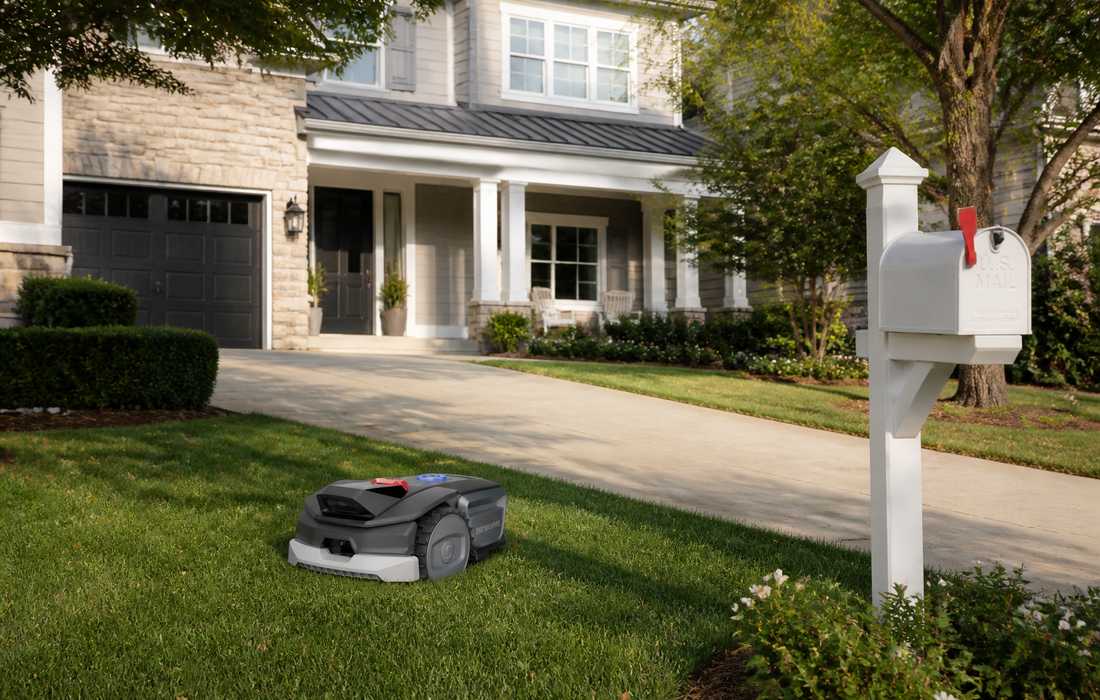
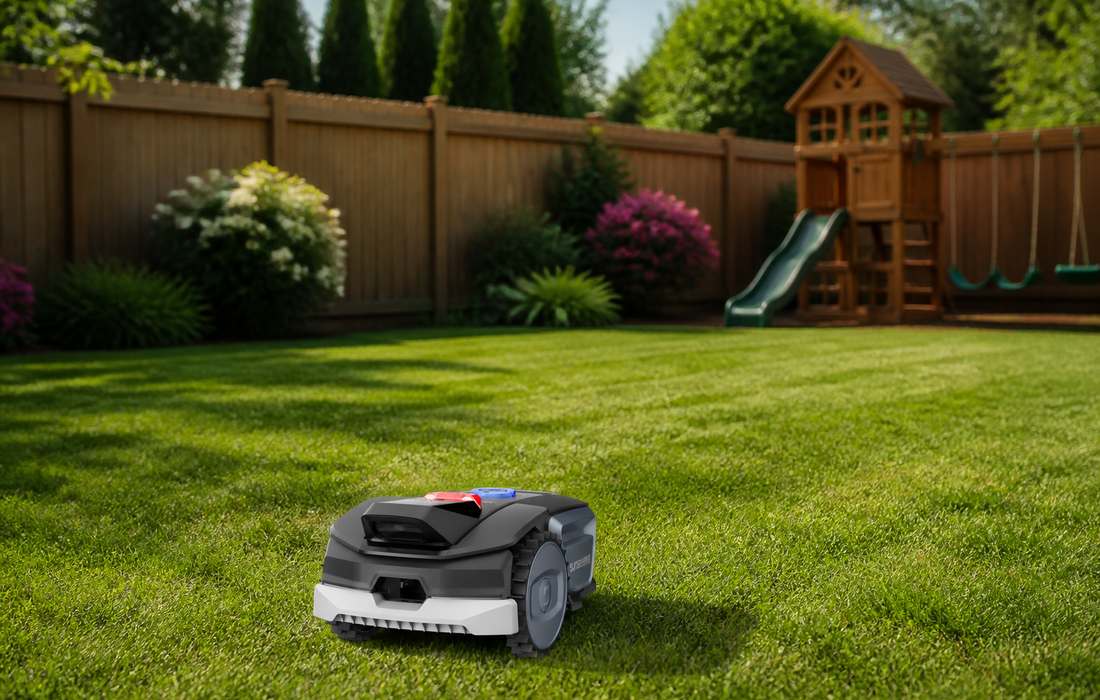
Once the repaired grass is established, a mower simplifies routine maintenance and can help keep the lawn in good condition. For homeowners interested in wire-free options, the Robot Lawn Mowers without Perimeter Wires collection features models that use virtual work areas instead of traditional boundary wires.
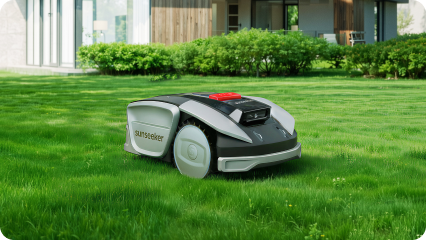
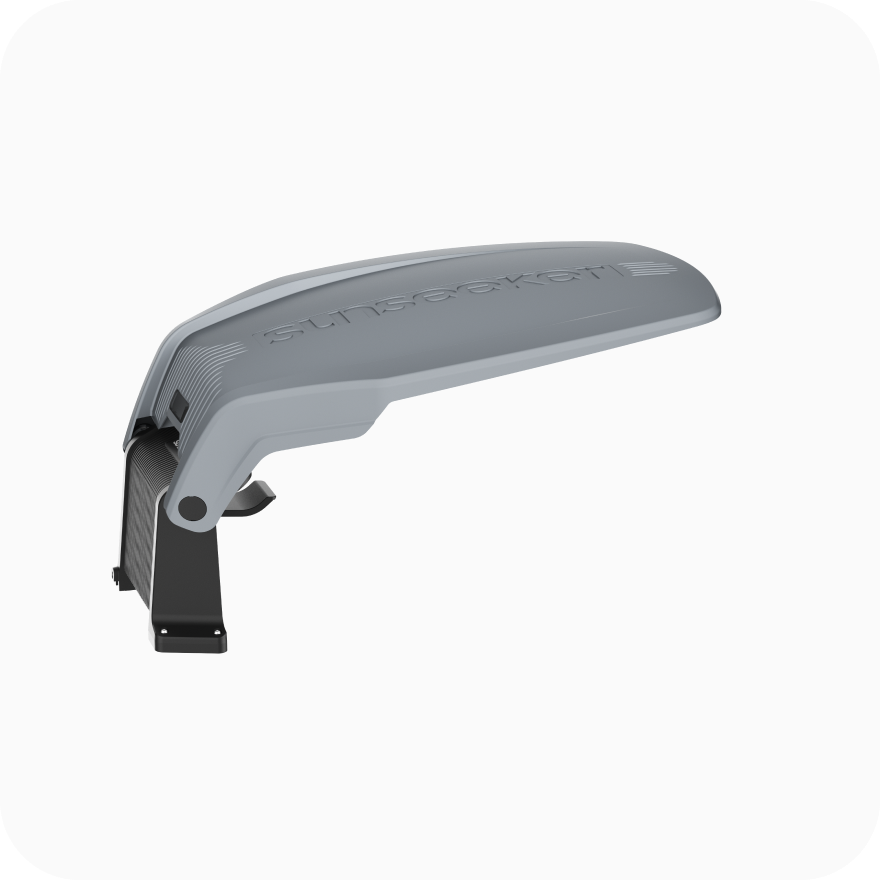
For smaller properties, the Sunseeker V1 is designed for lawns up to about 300 square metres. It weighs 6.7 kg and operates at a stated 55 dB sound level. Its ReadyGo system enables wire-free mowing without manual mapping, while Vision AI recognizes lawn edges and obstacles, making it a convenient option for regular lawn maintenance.
How Can You Keep the Same Lawn Patches From Returning?
Once the grass has filled in, keep the conditions that caused the original problem from repeating. Focus on the site-specific pattern rather than adding a generic maintenance step to every part of the yard.
Change traffic habits
Add stepping stones or a defined route where people repeatedly cross the same strip.
Correct irrigation coverage
Clean clogged nozzles, adjust spray direction, and compare output across zones. Avoid both dry gaps and persistently saturated areas.
Manage shade and roots
Prune selectively where appropriate, choose grass that tolerates the available light, and avoid piling soil over tree roots.
Keep mowing height consistent
Follow the height range for the grass type and remove no more than one-third of the leaf in a single cut.
Test before feeding
Use soil results to guide lime and fertilizer, rather than trying to darken every pale patch with extra nitrogen.
Recheck repaired sections after seasonal stress
Inspect them after summer heat, heavy rain, or the first period of active spring growth and correct small problems before they spread.
Conclusion
A patchy lawn improves when you repair the pattern behind the damage, not just the visible gaps. Correct traffic, water, shade, or soil issues first; then use seed, sod, or plugs that match the existing turf. Preserve healthy grass, protect new growth, and return to mowing gradually. If the same areas thin again, reassess the site conditions before repeating the repair. Once your lawn recovers, regular mowing helps maintain an even, healthy appearance. Sunseeker robotic lawn mowers offer smart, convenient mowing solutions that make routine lawn maintenance easier, helping you keep your lawn looking neat with less manual effort.
FAQ
Will a Patchy Lawn Fill In Without Seed?
Sometimes. If the surrounding grass is healthy and the cause of thinning has been corrected, spreading grasses may fill small gaps on their own. Cool-season bunch grasses such as tall fescue are less likely to spread into a bare area quickly. If soil remains exposed or the gap is larger than a few centimetres, seed, plugs, or sod will usually provide a more reliable repair.
Why Does Repaired Grass Look Different From the Rest?
The new grass may be a different species or cultivar, or it may be younger and growing at a different rate. Color also changes with sunlight, fertilizer, and water. Use seed or sod that matches the existing lawn as closely as possible, then maintain the same mowing height and feeding program as the surrounding turf.
When Is Full Lawn Renovation Better Than Patching?
Consider renovation when less than about half the lawn contains the grass you want, when weeds or unwanted species dominate, or when widespread compaction and drainage problems prevent patches from establishing. If most of the lawn is healthy and damage is localized, targeted repair usually preserves more existing turf and requires less disruption.