Buying grass seed by the size of the bag can leave you short halfway through a project or with several kilograms left over. The problem often begins with using an overseeding rate on bare soil, or choosing a mixture without checking the rate printed on the bag. Different species have different seed sizes and establishment habits, so one rate does not fit every lawn.
So how much grass seed for a new lawn is the right amount? The label and an accurate area measurement give the answer. The sections below compare typical species rates, explain what changes coverage, and work through the arithmetic from square metreage to bag count.
How Much Grass Seed Do You Need per 100 m²?
The label for the exact seed mixture is the final reference, but common cool-season turf rates give a useful planning range. Kentucky bluegrass is often seeded at about 1.0–1.5 kg per 100 m² when used alone, and turf-type tall fescue at about 3.0–4.0 kg; fine fescues sit at roughly 2.0–3.0 kg, and perennial ryegrass around 2.0–2.5 kg. University extension tables such as Maryland’s new-lawn rates publish the same ranges. Mixtures may carry their own rate based on the percentage of each species and the seed producer’s testing.
| Grass type |
Example new-lawn rate per 100 m² |
Why the rate differs |
| Kentucky bluegrass |
1.0–1.5 kg |
Smaller seed; slower establishment and tillering |
| Perennial ryegrass |
2.0–2.5 kg |
Larger seed and faster establishment |
| Fine fescue |
2.0–3.0 kg |
Rate varies with species and mixture |
| Turf-type tall fescue |
3.0–4.0 kg |
Larger seed and a different plant density |
These are example ranges for planning, not instructions to override the package. Regional varieties, purity, germination percentage, coating, and mixture composition can change the recommended rate. The new-lawn rate is also higher than the overseeding rate because bare soil needs enough plants to establish a continuous stand.
For example, a 50/50 mixture is not necessarily applied at the simple average of two single-species rates. The manufacturer may have formulated the blend to achieve a target plant population and account for seed size. Use the blended product’s own rate whenever it is provided.
What Changes the Seed Rate for a New Lawn?
A seed label gives the starting rate, but the product and site conditions explain why two bags of the same weight can cover different areas. Check the guaranteed analysis and instructions before comparing price per bag.
Grass Species
Seed size and growth habit decide how much seed weight it takes to establish a dense stand. Kentucky bluegrass produces many small seeds per kilogram and spreads through rhizomes once established, so a little goes a long way; tall fescue seed is much larger and is commonly applied at a higher weight rate.
Seed Mixture
A mixture may include species for sun, shade, wear, or drought tolerance. The percentage of each species influences the overall rate. Choose a mixture suited to the site rather than increasing the amount to compensate for a poor match. A shade mixture in full sun or a high-maintenance blend in a dry low-input yard can perform poorly even when the correct weight is applied.
Coatings and Added Materials
Some seed is coated with materials intended to aid handling, moisture retention, or nutrient delivery. Coating adds weight but does not mean every kilogram contains the same amount of pure seed as an uncoated product. Compare the label’s seed content and coverage rate, not only the gross bag weight. Follow the manufacturer’s rate for coated products.
How Do You Calculate Seed for Your Lawn Area?
Measure the actual planting surface and apply the label rate to that area. Exclude patios, garden beds, paths, and existing turf that will not be seeded. For an irregular lawn, divide it into simple shapes and add the results.
Step 1. Measure the Planting Area
For a rectangular lawn, multiply length by width. A lawn measuring 10 m by 22 m has an area of 220 m². For triangles, multiply the base by the height and divide by two. For circles, multiply 3.14 by the radius squared. Add the results for irregular areas.
Step 2. Subtract Non-Lawn Areas
Subtract patios, driveways, garden beds, and other surfaces that will not be seeded. If the 220 m² lawn includes 20 m² of patio and garden beds, the actual planting area is 200 m².
Step 3. Apply the Package’s New-Lawn Rate
Suppose the seed mixture recommends 3 kg per 100 m² for a new lawn. For a 200 m² planting area, calculate:
(200 ÷ 100) × 3 = 6 kg
Use the actual new-lawn rate printed on your seed package.
Step 4. Convert the Total Into Bags
If the seed is sold in 3 kg bags, you will need two bags, giving you exactly 6 kg. This covers the calculated requirement without leaving excess seed to apply. If the package size is larger, keep any remaining seed sealed for future repairs.
How Do You Spread the Calculated Amount Evenly?
Even distribution matters as much as the total weight. A lawn with heavy seed in one strip and thin coverage in another can emerge unevenly, even when the total amount is correct. The table compares common spreading approaches; choose the method that fits the seed and area.
| Method |
Suitable area |
How to improve coverage |
| Hand broadcasting |
Small or awkward patches |
Divide seed into small portions and apply in two directions |
| Drop spreader |
Narrow lawns and edges |
Walk at a steady pace with measured overlap |
| Broadcast spreader |
Larger open areas |
Calibrate, then use perpendicular half-rate passes |
| Slit seeder |
Renovation where seed must enter existing turf |
Follow the machine’s depth and rate settings |
Weigh the seed before filling the spreader and calibrate according to the label. If you are working in two directions, split the total into two equal portions so each pass applies half the planned rate, then rake lightly to improve seed-to-soil contact and water gently. Do not bury seed deeply; many lawn grasses germinate best near the surface. Seal and store any leftover seed promptly to protect it from moisture.
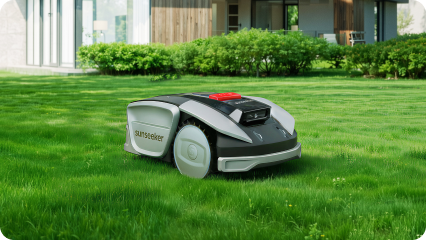
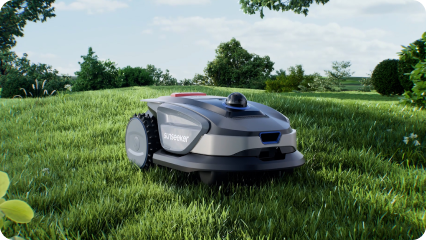
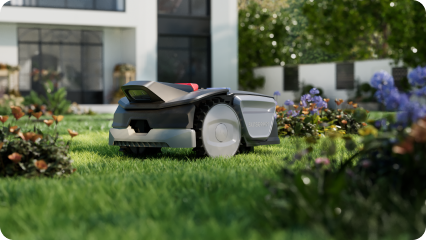
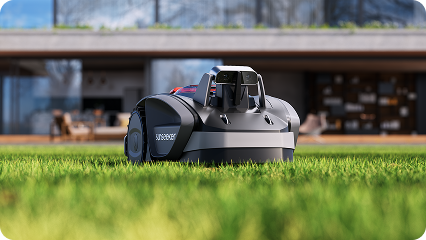
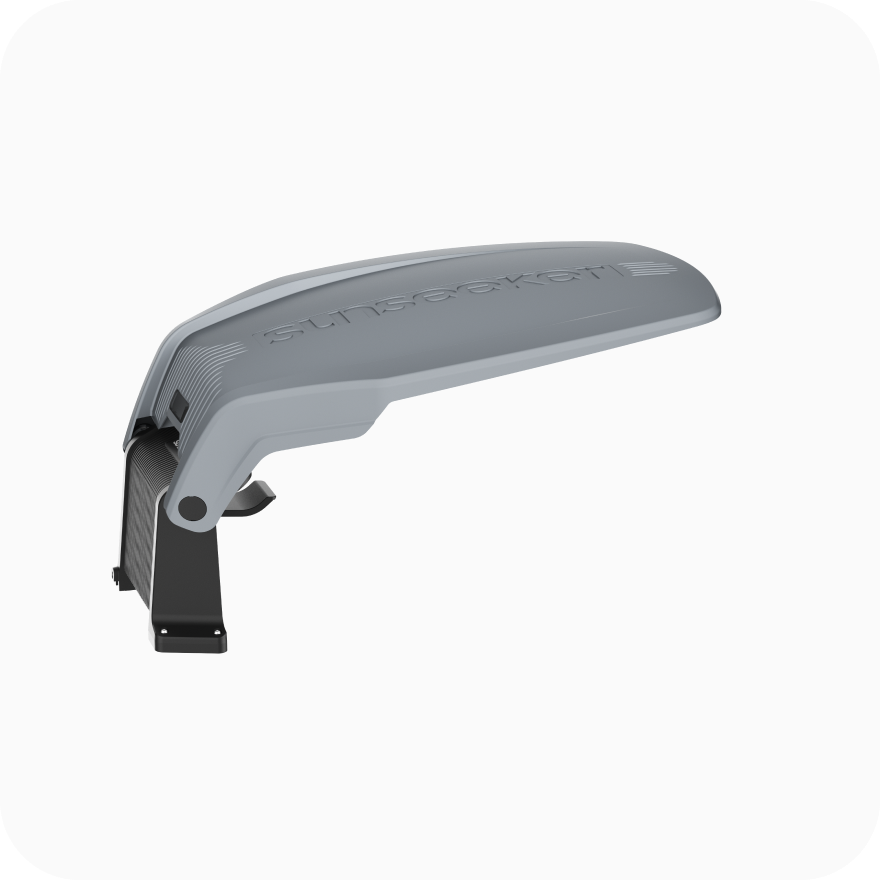
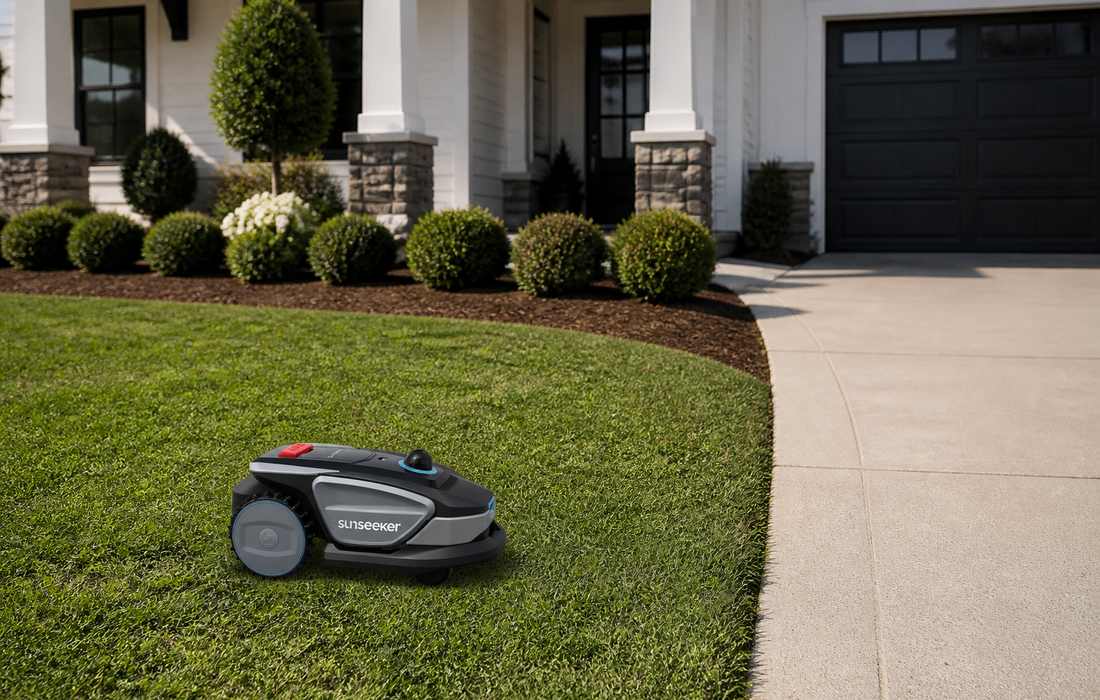
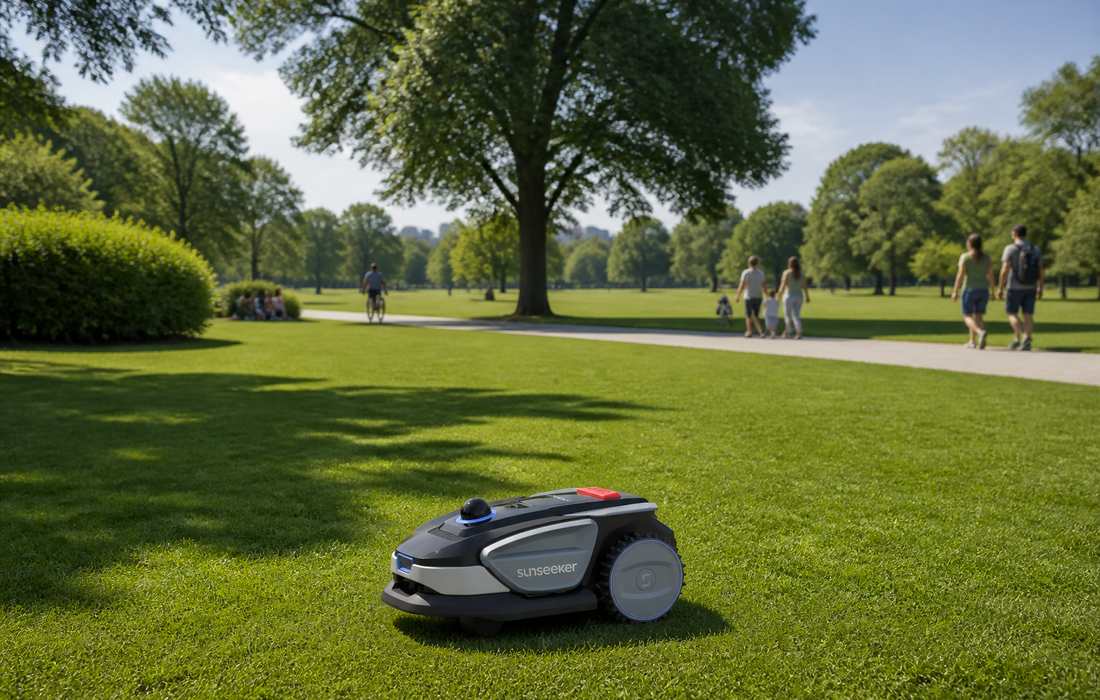
For irregular lawns, divide the planting area into smaller sections and plan your passes around curves and garden beds to keep seed coverage even. Once the grass is established, the same layout can make routine mowing more time-consuming. The Sunseeker S4 automatically maps the yard and plans systematic mowing routes through irregular areas, helping reduce missed patches and repeated passes. With no perimeter wire to install, it also simplifies the transition to automated lawn care.
Conclusion
To calculate how much seed you need for a new lawn, measure the actual planting area and use the recommended new-lawn seeding rate on the package. Exclude patios, paths, and garden beds, then divide the calculated amount into two portions for even spreading in opposite directions.
Once the new grass is firmly established, regular mowing will help maintain its appearance and growth. Robot Lawn Mowers without Perimeter Wires can simplify ongoing care, while virtual no-go zones help protect any patches that still need time to grow.
FAQ
Will Extra Seed Make a New Lawn Thicker?
Not necessarily. Crowded seedlings compete with each other for light and water, and the result is a thin stand of weak plants rather than a thick one. Follow the label rate for the mixture you bought. A level seedbed, even spreading and steady moisture do far more for density than an extra layer of seed.
Can You Save Unused Grass Seed for Repairs?
Yes, if it is kept dry, cool, and sealed. Store the bag off a damp concrete floor and protect it from rodents. Germination can decline over time, especially in warm or humid storage. Check the package date and use a small germination test if the seed has been stored for more than one season.
Can You Divide a Large Seeding Job Across Several Weekends?
You can, as long as each section gets prepared, seeded and watered on the same schedule. Avoid leaving prepared soil bare for weeks, where erosion and weeds take hold before the grass does. Calculate each section separately, and keep the same mixture and the same label rate across the whole lawn so the finished surface matches.