Lime is most useful when a soil test shows that the lawn’s pH needs to be raised. The test result gives you a target amount to work from, which is far more useful than judging by grass colour, moss, or appearance alone.
To calculate how much lime to add to your lawn, you need three things: the soil test recommendation, the size of the lawn, and the type of lime you plan to use. Once those numbers are clear, you can work out the amount for your yard and adjust it to match the product label.
Does Your Lawn Need Lime?
Lime is used to raise soil pH when the soil is too acidic for the grass and nutrient plan. It is not a general green-up treatment. A laboratory soil test is the reliable way to establish whether the pH needs changing and how much limestone is required.
Collect a representative sample from the lawn rather than taking soil from one unusual patch. Remove surface debris, then use a clean probe or trowel to take several cores from the area being managed, mix them in a clean bucket, pick out stones and roots, and submit the amount the laboratory asks for. Sample separate lawn areas independently if their soil, exposure or previous treatment differs.
The report should include soil pH and a lime recommendation. Some laboratories also report buffer pH or buffer capacity, which helps estimate how strongly the soil resists a pH change. Two lawns with the same measured pH can require different lime amounts because clay content, organic matter, and exchange capacity differ.
Do not use moss as a substitute for a soil test. Moss and acidic soil often occur together, but lime corrects neither the shade nor the compaction that usually lets moss spread in the first place. Treat what the test and a site inspection actually point to.
How Do You Calculate the Amount of Lawn Lime to Buy?
Use the laboratory's recommended rate as your starting point, then adjust it to the actual lawn area. Make sure the soil report and product recommendation refer to the same type of limestone and neutralizing-value basis.
Formula:
Total lime (kg) = recommendation (kg per 100 m²) × lawn area (m²) ÷ 100
For example, suppose a laboratory recommends 17 kg of limestone per 100 m² and your treatable lawn area is 400 m²:
17 × 400 ÷ 100 = 68 kg
This is the total recommended amount, not necessarily a single application. Virginia Tech's lime guidance advises splitting applications above 50 lb per 1,000 sq ft (about 24 kg per 100 m²) into separate treatments of up to that rate, spaced one to six months apart. Follow your soil laboratory's recommendations and the product label.
Measure the lawn rather than the entire property. Divide irregular sections into rectangles or triangles, calculate each area, and add them together. Then subtract patios, garden beds, paths, and other surfaces that will not receive lime. For example, a 15 × 18 m lawn contains 270 m², while a 6 × 9 m side lawn adds 54 m², giving a total treatment area of 324 m².
If the product has a different effective neutralizing value from the limestone assumed in the laboratory recommendation, ask the laboratory or supplier how to adjust the application rate rather than estimating from the bag weight.
What Changes the Lime Amount for Your Lawn?
The soil report provides the target rate, but several properties explain why the recommendation differs from one yard or product to another. These are the details to check before buying bags.
Soil Test Lime Requirement
Use the report's lime requirement rather than converting pH into a rate yourself. A pH number tells you how acidic the sample is at the time of testing; it does not fully describe the soil's resistance to change. Buffer measurements and the laboratory's calibration are used to calculate a practical application rate.
Soil Buffering Capacity
Clay-rich soil and soil with greater cation-exchange capacity generally need more lime to change pH than a sandy soil with low exchange capacity. Organic matter can also affect buffering. This is why a single chart cannot give an accurate amount for every lawn. A soil test recommendation incorporates these differences more reliably than a generic per-area rule.
Product Neutralizing Value
Limestone products vary in purity and fineness. A finely ground product reacts faster because more surface area contacts the soil. Pelletized products are easier to spread with a rotary or drop spreader, but the label's neutralizing value still matters. Match the product to the basis of the laboratory recommendation and keep the label for future reference.
Lawn Area
A correct rate applied to the wrong area is still wrong. Measure the actual turf footprint, break complex shapes into simple sections and keep the arithmetic written down. If only one section needs correction, work that section out on its own rather than treating the whole yard.
Which Type of Lime Matches Your Soil Test?
The soil report can help determine whether the lawn needs calcium carbonate, magnesium as well, or simply a form that is easy to distribute. The table compares common turf products by composition and handling.
| Lime type |
Main composition |
When it fits |
Practical note |
| Calcitic agricultural limestone |
Primarily calcium carbonate |
Soil needs pH correction and magnesium is already adequate |
Check the label for neutralizing value and fineness |
| Dolomitic limestone |
Calcium carbonate plus magnesium carbonate |
The soil test shows a need for both pH correction and magnesium |
Do not add magnesium without a soil-based reason |
| Pelletized limestone |
Ground limestone formed into pellets; may be calcitic or dolomitic |
A spreader-friendly product is useful for an established lawn |
Pellet form does not by itself tell you its neutralizing value |
The deciding factor is the soil report, not the product name. Dolomitic lime is not automatically the better buy because it contains magnesium, and too much magnesium creates its own nutrient imbalance; pelletized lime, meanwhile, is just limestone in a different physical form, not a different treatment. Read the analysis before choosing a bag.
When Is the Best Time to Apply Lime?
Lime can be applied in several seasons when the soil and turf can be accessed without damage, but fall is often convenient for cool-season lawns. In many regions, September through November offers active root growth and time for rainfall to move fine material toward the soil. Spring applications can also be made when the ground is workable and the grass is growing.
Avoid spreading on frozen, snow-covered or waterlogged turf. The material will not distribute evenly and may move off the lawn altogether. Lime reacts gradually; it does not produce an immediate color change, so there is nothing to gain from rushing it.
If a soil test is several years old, retest before repeating an application. Lime can remain effective for years, and adding more without a new recommendation can raise pH beyond the preferred range.
How Should You Apply the Recommended Lime?
Applying lime evenly helps correct soil pH without leaving some areas overtreated. Choose a calm, dry day when the ground is firm, and use your soil test results to determine the appropriate application rate.
Confirm the lime type and rate. Check your soil test recommendation and product label to make sure you're using the correct material and amount for your lawn.
Measure the treatment area. Calculate the area that needs lime, then weigh out the required amount. If different sections need different rates, treat them separately.
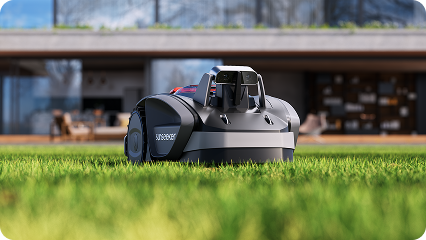
Prepare the lawn. Mow if necessary and remove leaves or heavy grass clippings so lime can reach the soil. If you use a robotic mower such as the Sunseeker S5, pause its mowing schedule during application and any required watering.
Calibrate the spreader. Test your spreader over a measured area and adjust the setting to deliver the recommended amount. This helps prevent uneven application or running out of lime halfway through.
Spread the lime evenly. If the product instructions allow, divide the measured lime into two equal portions. Apply one portion in parallel passes, then spread the second in a perpendicular direction for more consistent coverage.
Clean up and water as directed. Sweep stray granules off sidewalks, driveways, and other hard surfaces, keeping them away from storm drains. Follow the product label for watering after application.
Record the application. Write down the date, lime type, amount applied, and treated area. Keep this information for your next soil test so you can track changes in soil pH and adjust future treatments.
Conclusion
The right amount of lime comes from your soil test results and the actual lawn area. Check the product's neutralizing value, choose calcitic or dolomitic lime according to the soil report, and split large applications when recommended. Record the amount applied and retest the soil before adding more.
After application, follow the watering instructions and allow the lawn to dry before resuming mowing. If certain areas need extra protection, Robot Lawn Mowers without Perimeter Wires allow you to set temporary no-go zones without installing boundary wires.
FAQ
Does Moss Automatically Mean Your Lawn Needs Lime?
No. Moss is a symptom, and low pH is only one of its possible causes. Confirm with a test before buying lime, because if the reading is already in range the moss will come straight back once the lime is spread. In that case the fix is more light or better water movement, not a pH change.
Can You Apply Lime and Fertilizer on the Same Day?
Sometimes, but let the soil report and both product labels decide the timing. Some products can go on in the same maintenance window; others should be separated by days or weeks. Avoid mixing materials in one spreader unless both labels allow it, and keep the nutrient rate and the lime rate independent of each other.
What Happens If You Apply Too Much Lime?
Soil pH can rise above the range preferred by the grass, reducing the availability of nutrients such as iron and manganese. A high rate may also leave visible residue on turf. Stop further applications, retest the soil, and use the laboratory's correction advice rather than trying to counteract the excess with another amendment.