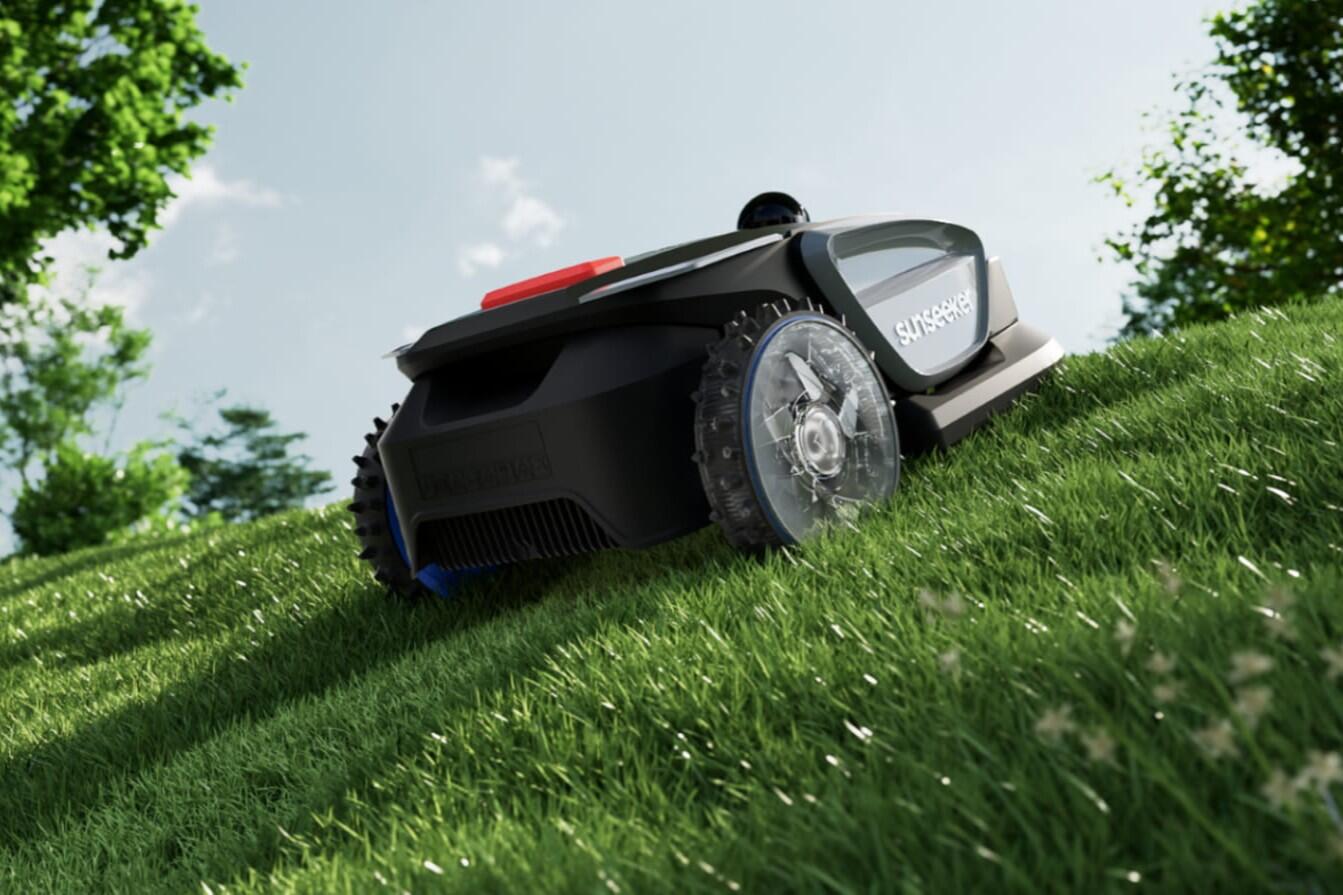
Why Slope Performance is a Critical Metric
Understanding a mower's ability to handle slopes is fundamental to selecting the right model for your property. This capability directly impacts safety, cutting quality, and the longevity of the machine itself.
Understanding Slope Gradients
Slopes are quantified using two primary measurements: degrees and percentage grade. The percentage grade represents the vertical rise over a horizontal distance. For instance, a 25% slope indicates a one-foot rise for every four feet of horizontal travel.
If you prefer viewing slopes in degrees, use the handy converter here or check the simplified table below. Knowing how these measurements translate makes it easier to compare mower capabilities and choose a model that fits your lawn’s real-world terrain.
Common Slope Conversion Table
|
Percentage (%)
|
Degrees (°)
|
|
27%
|
15°
|
|
36%
|
20°
|
|
47%
|
25°
|
|
58%
|
30°
|
|
70%
|
35°
|
|
84%
|
40°
|
Safety and Operational Implications
A mower operating near or beyond its stated slope limit risks losing traction, which can lead to wheel slippage, uneven cutting, and potential damage to the turf from spinning wheels. Consistent operation on excessive inclines places undue strain on the drive motors and battery, potentially shortening the equipment's lifespan. Selecting a model with an appropriate slope rating ensures both the safety of the device and the preservation of your lawn's health.
Residential Slope Classifications
Lawn slopes generally fall into three categories:
-
Moderate Slopes (15% - 35% / 8.5° - 19°): Found in properties with terraced gardens, rolling hills, or significant drainage grading. Success here requires models with enhanced traction and more robust drive systems.
-
Steep Inclines (Over 35% / 19°): Characteristic of hillside homes or rural properties. Navigating these demands specialized equipment with all-wheel drive, high-torque motors, and sophisticated navigation to maintain stability and coverage.
Technical Challenges of Mowing Sloped and Uneven Terrain
Robotic mowers face distinct physical and navigational obstacles when operating on non-flat ground. Recognizing these challenges clarifies why specific engineering solutions are necessary.
Traction Loss and Wheel Slippage
The primary mechanical challenge is maintaining grip. On wet grass, loose soil, or steep angles, standard wheels can slip. This slippage is inefficient, causes irregular mowing patterns, and can tear up grass, creating unsightly ruts. Soils with high clay content or newly laid sod are particularly susceptible.
Inconsistent Cutting Results
On uneven ground, a rigid cutting deck will tilt, scalping the grass at the high point and potentially missing it at the low point. This results in an unattractive, uneven lawn surface and can stress the grass plants. A consistent cut height is difficult to achieve without a deck designed to articulate independently of the chassis.
Obstacle Detection in Complex Environments
Slopes often feature natural obstacles like exposed tree roots, rocks, and sudden drop-offs. Basic collision sensors may cause the mower to retreat unnecessarily from minor undulations, leaving patches uncut. Advanced systems must differentiate between traversable ground variations and true obstacles that require avoidance.
Increased Energy Consumption
Climbing inclines requires significantly more power than moving on level ground. A mower with insufficient battery capacity may exhaust its charge before completing a sloped section, leading to incomplete mowing cycles and the need for more frequent charging interruptions.
Key Features for Success on Sloped Lawns
When evaluating robotic mowers for sloped terrain, prioritize models that incorporate the following technologies designed to overcome the challenges outlined above:
1. Enhanced Climbing Capability
Robotic mowers differ significantly in their ability to tackle slopes. Basic models typically manage inclines of around 20%, while more advanced hillside-ready units can confidently handle 35% or higher. These upgraded systems offer improved traction, stability, and consistent performance on demanding terrain.
2. Robust Traction and Drive Systems
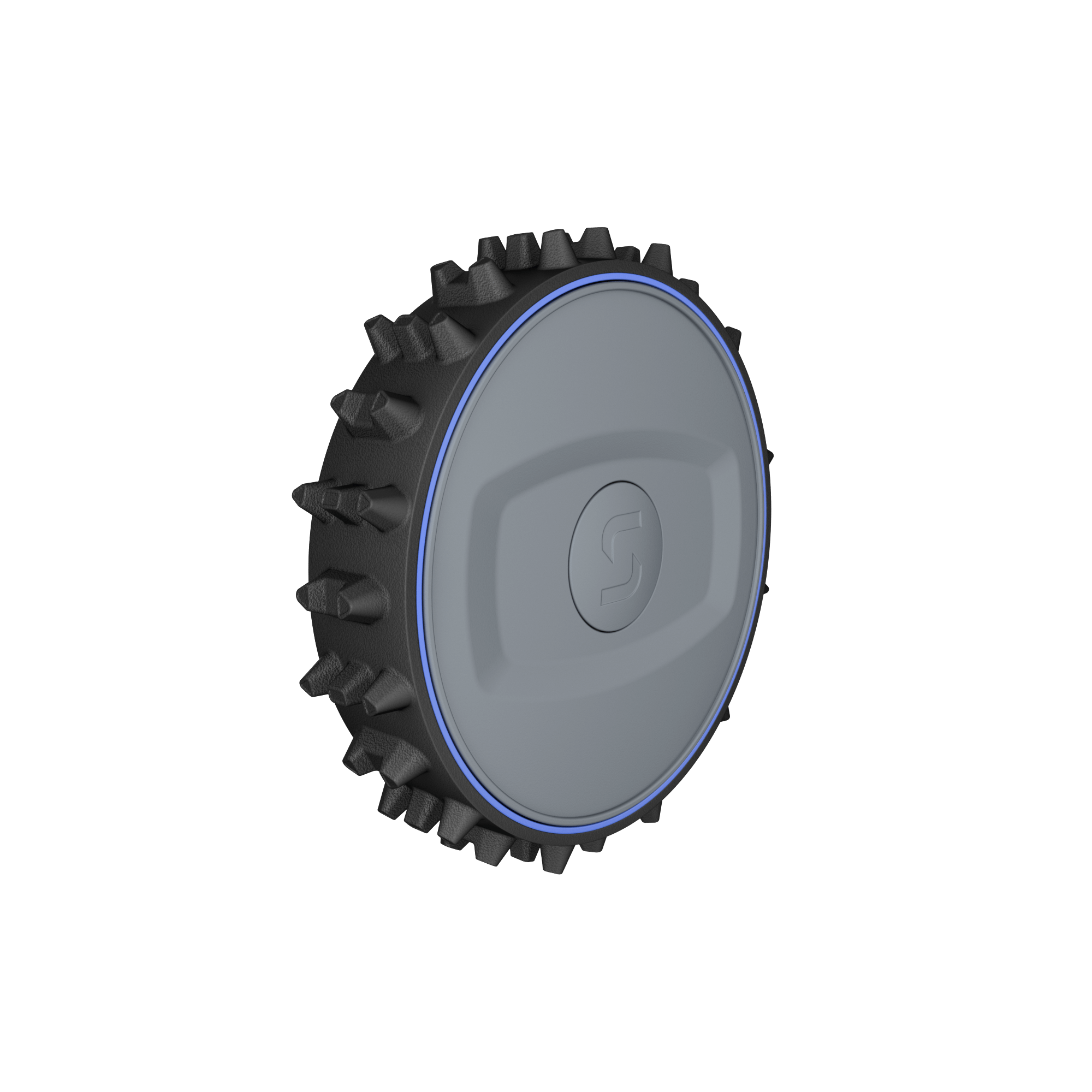
Look for mowers equipped with all-wheel drive (AWD), which powers all wheels simultaneously to maximize grip and prevent wheel spin on slippery inclines. Complementing this, deep-tread, all-terrain tires provide far superior traction to smooth plastic wheels, especially in damp conditions.
3. Adaptive Cutting Deck
A "floating" or pivoting cutting deck is essential. This design allows the deck to tilt independently from the mower's body, maintaining a consistent distance between the blades and the ground contour. This technology ensures an even cut across rolling or uneven surfaces.
4. High-Capacity Battery
Operating on slopes demands a powerful, long-lasting battery. Look for models with ample amp-hour (Ah) ratings to ensure sufficient runtime. Intelligent software that optimizes mowing routes to minimize unnecessary climbing can also conserve energy and extend operational time between charges.
5. Comprehensive Setup and Zoning Software
Flexible, app-based setup is highly advantageous. The ability to create virtual boundaries and define specific mowing zones wirelessly is much simpler than installing physical perimeter wires on a slope. This software also allows you to designate no-mow areas (like steep embankments or garden beds) and schedule different zones according to their growth rate and sun exposure.
Why the Sunseeker S4 Excels on Sloped Lawns
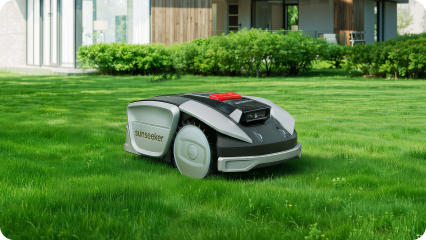
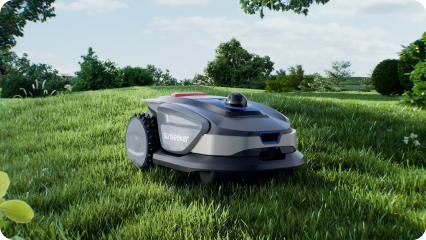
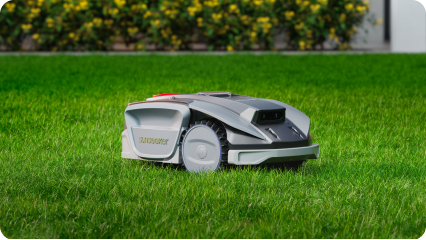
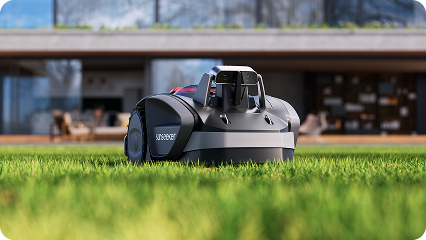
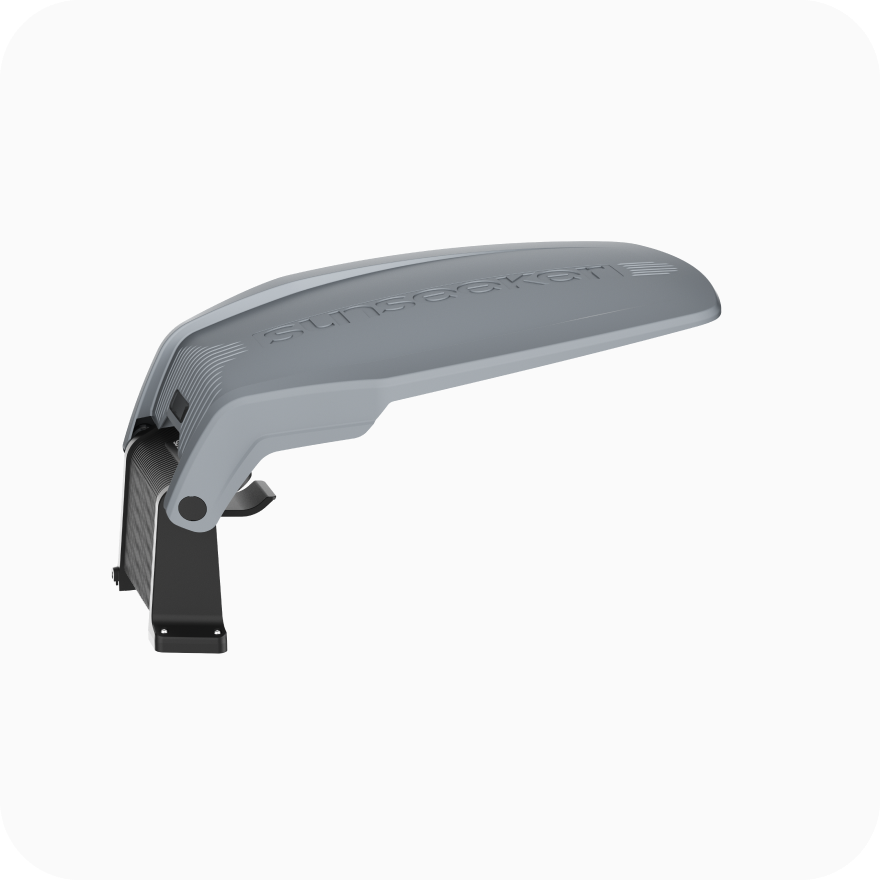
The Sunseeker S4 is engineered to master challenging terrain through its rear-wheel drive system and robust design, making it a reliable choice for uneven or hilly yards. Key performance features include:
-
360° 3D LiDAR and AI Vision for Smart Navigation: The hybrid system recognizes over 360 obstacles and continuously learns your yard's layout. This advanced perception allows it to safely navigate uneven ground and distinguish between traversable terrain and true obstacles, preventing unnecessary stops.
-
Smart App Control: Manage schedules, zones, and cutting settings via an intuitive smartphone app, with Over-the-Air updates keeping the system current.
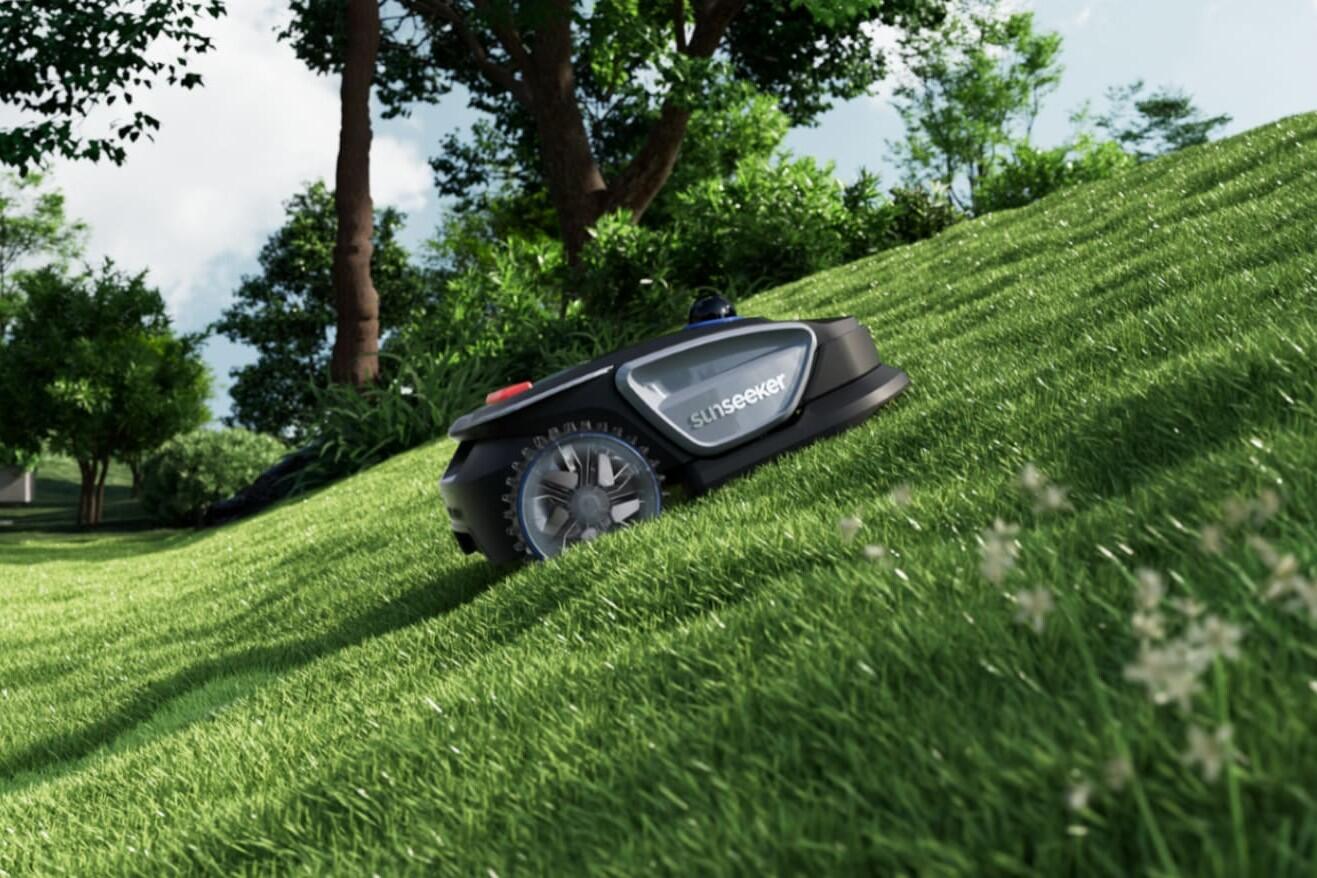
Sunseeker S4 Robot Mower Climbing on a Sloped Lawn
Best Practices for Setup and Maintenance on Slopes
Proper installation and routine care are especially important for mowers working on demanding terrain. These steps will ensure reliable performance and durability.
-
Keep the Slope Clear of Obstacles: Remove branches, toys, and decorative items from steep sections before each mowing session. Objects on an incline can cause the mower to slip, pivot unexpectedly, or lose traction. A clear path ensures stable movement and accurate alignment while operating on slopes.
-
Strategic Placement of the Charging Station: Always install the charging base on a firm, level surface. An uneven base can lead to docking failures and poor electrical connection. Ensure the approach to the base is clear of obstacles that could hinder the mower's return, especially in wet conditions.
-
Utilize Zone Management: For lawns with varying slopes, use the app to divide the area into logical zones. You can create a separate zone for a particularly steep section, allowing you to control its mowing schedule and pattern independently, which can improve efficiency and safety.
-
Regular Traction and Undercarriage Checks: Frequently inspect the tire tread for wear, as slopes accelerate tire degradation. Clean the underside of the mower after each use to prevent grass and mud buildup, which can add weight, impede wheel movement, and affect sensor accuracy. Ensure the cutting blades are kept sharp to reduce motor strain.
Conclusion
In summary, robotic lawn mowers can successfully manage sloped and uneven terrain when equipped with the right technology. The key lies in selecting a model with a verified slope rating that matches your property's incline, alongside essential features like all-wheel drive for traction, an adaptive cutting deck for consistency, and reliable navigation. Careful setup, such as strategic charging station placement and smart zone management, further ensures smooth and efficient operation season after season.
For homeowners seeking an accessible solution for moderate to steep slopes, the Sunseeker S4 offers an economical path to effortless lawn care, combining vision-based navigation, reliable performance, and intuitive control.
FAQs
How steep of a slope can a robotic mower handle?
Most standard residential models handle slopes of 20-30% (approx. 11-17°), while premium all-terrain mowers can manage up to 35-70% (19-35°). The exact limit depends on the mower's drive system, wheel design, and weight distribution. Always check the manufacturer's stated slope rating before purchase.
Can robotic mowers navigate uneven or hilly terrain safely?
Yes, with proper selection. Models designed for slopes include traction control, tilt sensors, and obstacle detection for safe, stable operation.
Do robotic mowers require special setup for hilly or uneven lawns?
Yes, setup on slopes often requires extra care. The charging station must be placed on level ground, and virtual boundaries or zones may need adjustment to account for elevation changes. Some models also benefit from calibration runs to map the terrain accurately before regular use.