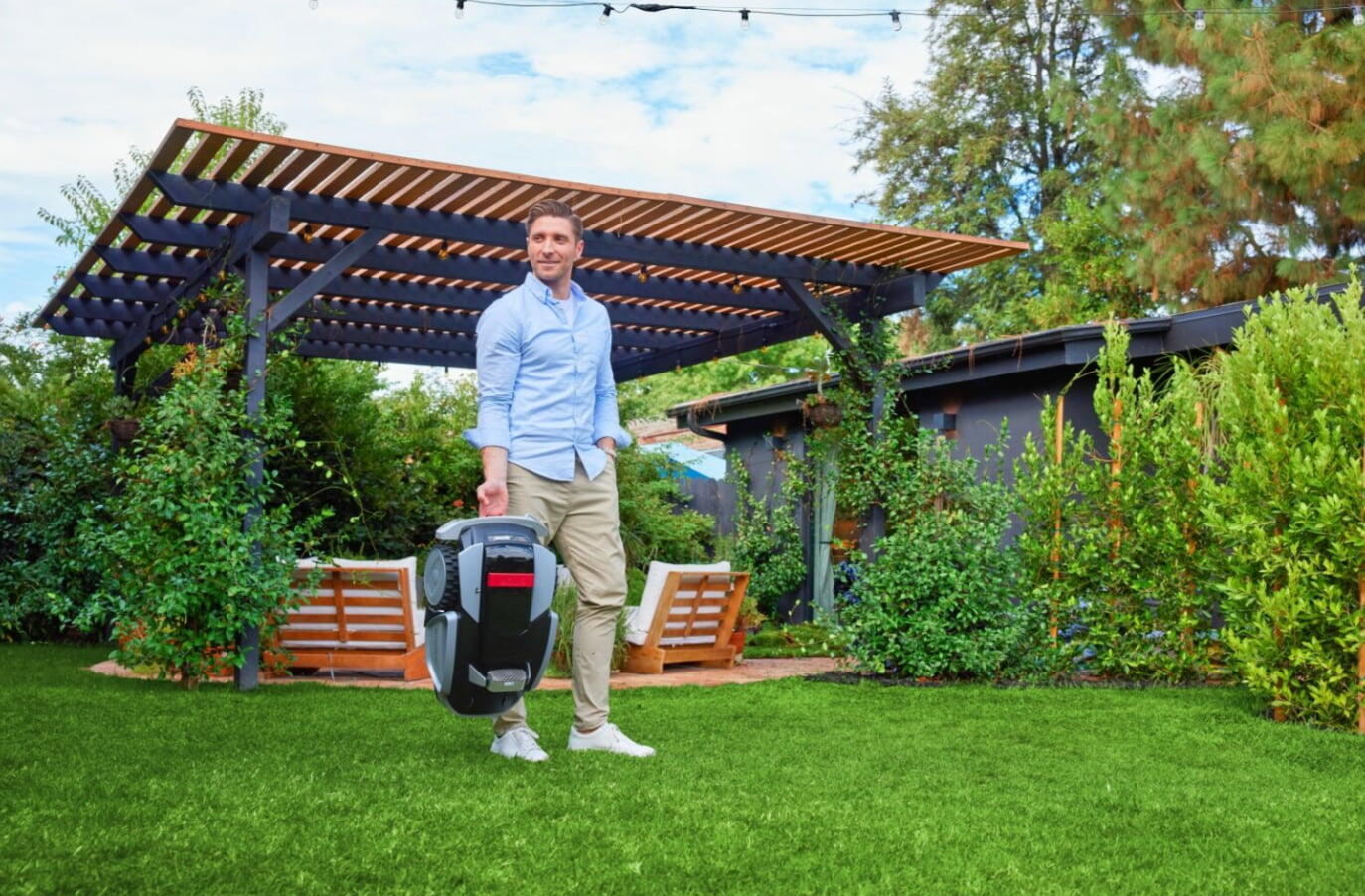
Why Opt for a Wire-Free Robotic Mower?
The decision to choose a wire-free model centers on convenience, adaptability, and long-term reliability. These systems eliminate the most labor-intensive aspect of traditional robotic mowing, replacing it with smart, software-driven control.
1. Simplified Installation and Dynamic Adjustability
The most immediate advantage is the elimination of the boundary wire installation process. There is no need to spend hours staking or burying wire around the entire property. Setup primarily involves a digital mapping process via a smartphone app.
Furthermore, adjusting your lawn's boundaries or creating new zones is as simple as redrawing lines on a digital map. This flexibility is invaluable for homeowners who redesign their landscape or add new garden features.
2. Ideal for Complex and Multi-Zone Lawns
Wire-free mowers are specifically engineered to handle the architectural diversity of contemporary landscapes. Their advanced navigation systems can digitally map and manage multiple independent lawn sections as distinct operational zones. Users can define these zones through an intuitive app interface, assigning individual schedules and cutting parameters to each area.
This allows a single device to automatically transition between, for example, a sun-drenched front lawn requiring frequent cuts and a shaded backyard area with slower growth, all while navigating connecting pathways with precision.
3. Elimination of Physical Wire Maintenance
The absence of a buried perimeter wire fundamentally enhances the long-term reliability of the mowing system. Physical wires are vulnerable to degradation from environmental factors and human activity, including corrosion, accidental severing during landscaping projects, or damage from burrowing animals.
Each break necessitates time-consuming diagnostics and repair, often requiring a wire tracer to locate the fault. A wire-free system eliminates this entire category of failures. The operational integrity depends instead on software and sensors, leading to a more stable system with fewer unforeseen interruptions.
How Do Wire-Free Robot Mowers Navigate?
Wire-free robot mowers no longer depend on buried perimeter cables to stay on course. The most common wire-free systems can be grouped into three main categories. Different models rely on different navigation approaches, each with its own strengths.
RTK-GPS Navigation: Pinpoint Satellite Precision
RTK-GPS (Real-Time Kinematic Global Positioning System) represents the gold standard for outdoor positioning accuracy in wire-free navigation.
This system operates through a fixed base station installed in your yard and a receiver on the mower itself. The base station provides real-time correction signals to the mower, allowing it to calculate its position with centimeter-level precision, far surpassing standard GPS. This enables the mower to create an extremely accurate digital map of your property and follow efficient, systematic mowing patterns like parallel lines.
Its performance is optimal in open areas with a clear view of the sky, making it ideal for large, unobstructed lawns. However, signal reliability can diminish under dense tree canopies or near tall structures.
Vision AI Navigation: Learning Through Sight
Vision-based navigation equips mowers with cameras and artificial intelligence to perceive their environment visually.
These systems process live image data to distinguish between grass, pavement, garden beds, and various obstacles. Using machine learning algorithms, the mower builds and continuously refines a map of your lawn, learning the layout over time. This method provides excellent adaptability to complex landscapes with numerous obstacles and can accommodate changes in garden design.
Its effectiveness is closely tied to visual conditions; performance may be challenged in very low light, heavy rain, or situations with extreme glare, requiring robust software to handle varying environmental factors.
LiDAR Navigation: Laser-Based Environmental Mapping
LiDAR (Light Detection and Ranging) navigation employs rotating laser sensors to scan the surrounding environment, creating a highly detailed and accurate 2D or 3D point-cloud map of the yard.
By measuring the time it takes for laser pulses to return, the system builds a precise model of distances and shapes. Models like the Sunseeker S4 with this technology offers exceptional obstacle detection and consistent performance regardless of lighting conditions—functioning equally well in bright sunlight or total darkness. It is particularly well-suited for complex gardens with many permanent fixtures, tight spaces, and intricate borders.
The primary considerations are the higher cost associated with the sophisticated sensor technology and ensuring the laser lenses remain clean for optimal operation.
Key Considerations for Choosing a Wire-Free Model
Selecting the right wire-free mower requires careful evaluation of several technical specifications to ensure it matches your property's characteristics.
Navigation Accuracy and Signal Reliability
Assess the primary navigation technology and its suitability for your yard. For large, open lawns, RTK-GPS systems offer excellent precision. For yards with many trees, buildings, or complex borders, a model with a hybrid or vision-based system may be more reliable. Consider potential sources of signal interference during your evaluation.
Obstacle Detection and Safety Systems
Comprehensive safety is non-negotiable. Look for mowers equipped with a multi-sensor approach to obstacle detection. This typically includes bump sensors, ultrasonic sensors, and AI-powered cameras. These layers of detection ensure the mower can safely avoid children, pets, garden furniture, and other unexpected objects, stopping the blades instantly upon impact.
Battery Performance and Slope Capability
Operating advanced navigation and drive systems consumes power. Choose a model with a high-capacity lithium-ion battery (often measured in Amp-hours, Ah) to ensure sufficient runtime to complete your lawn. For properties with slopes, verify the manufacturer's stated maximum slope grade (expressed as a percentage or degrees). Models with all-wheel-drive (AWD) and geared motors provide superior traction and climbing ability on inclines, often handling grades of 35% (approximately 19°) or more.
Smart Application and Zoning Features
The companion smartphone app is your control center. A high-quality app should allow for intuitive virtual map creation, the establishment of no-mow zones, and the scheduling of different areas. Features like real-time location tracking, mowing history, and cutting height adjustments from your phone are standard in advanced models. Ensure the app's functionality meets your desire for control and monitoring.
Top 4 Wire-Free Robot Mowers for 2026
Below are the top models for 2026, selected for their well-rounded combination of precise navigation, reliable cutting performance, and user-friendly operation. The lineup includes options built on different navigation technologies and suited to a wide range of lawn sizes.
Sunseeker S4
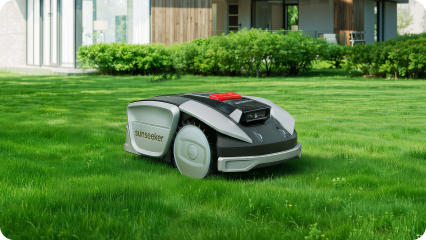
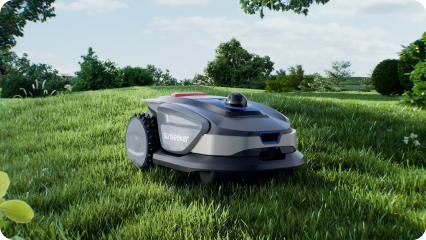
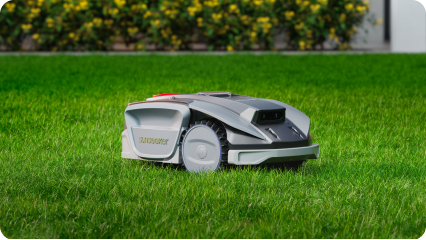
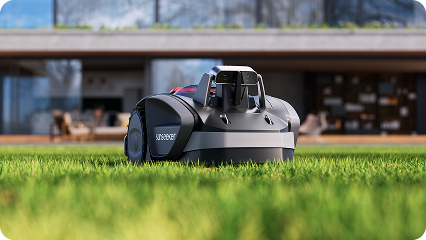
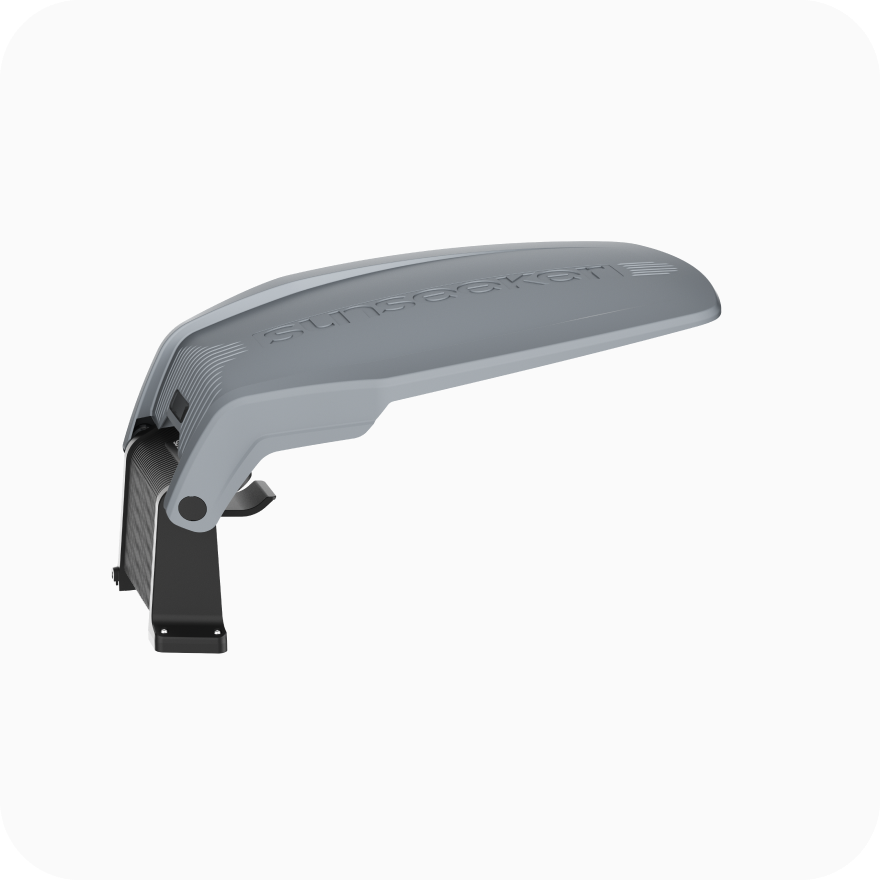
The Sunseeker S4 is designed for homeowners who want precision without complexity. Its advanced 3D LiDAR rapidly maps the lawn in fine detail, working alongside AI-powered visual sensing to understand obstacles and boundaries with impressive accuracy. Setup stays refreshingly simple—no boundary wires or antenna stations required, just a quick Wi-Fi connection. Built to manage slopes up to 42% (22°), the S4 delivers reliable, intelligent mowing on real-world lawns with minimal effort.
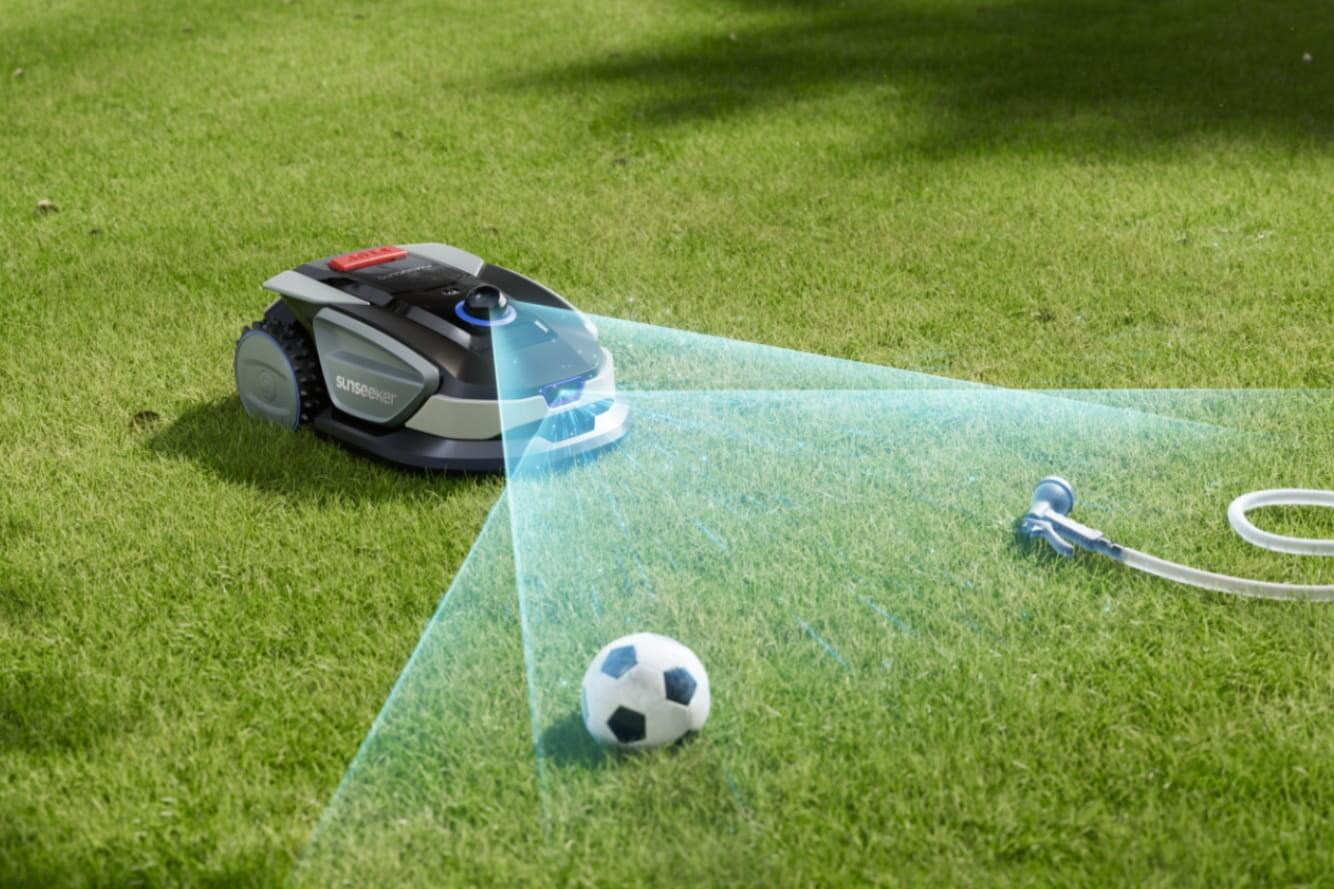
Sunseeker S4 robotic mower with 3D obstacle avoidance
Segway Navimow H1500N
Drawing on its background in personal mobility, Segway applies that engineering know-how to the Navimow H1500N. The mower uses its Enhanced Fusion Locating System (EFLS) to achieve accurate, wire-free navigation and operates at a remarkably low noise level of just 54 dB.
Designed to handle lawns up to 1500m², it features an IP66 weather-resistance rating and a streamlined app that makes creating virtual boundaries straightforward. The result is a dependable, easy-to-manage option for small to medium lawns that offers strong performance without the cost of a high-end model.
Ecovacs GOAT A3000
The Ecovacs GOAT A3000 leverages advanced Dual-LiDAR technology to build a highly accurate 3D map of your yard, enabling exceptionally precise, systematic mowing and reliable obstacle avoidance. For superior lawn finishing, its innovative TruEdge technology allows the mower to cut as close as 2 inches to borders, virtually eliminating the need for manual trimming. Its durable 5Ah battery ensures extended runtime, supporting this demanding navigation with remarkably fast 45 minute recharge cycles, making it an excellent fit for medium-sized lawns.
Mammotion LUBA 2 AWD 5000X
The LUBA 2 AWD 5000X is designed to handle challenging, uneven landscapes, using a robust all wheel drive system to manage slopes of up to 80 percent or 38.6 degrees. Its sophisticated iNavi Service™, which integrates NetRTK positioning with Vision AI, provides swift automatic mapping, precise obstacle recognition, and responsive safety controls. Combined with app based multi zone scheduling and distinctive 3D lawn printing that allows custom mowing patterns, it delivers a highly personalized approach to maintaining larger lawns.
Comparison of Top Wire-Free Robot Mowers for 2026
|
Model
|
Lawn Coverage
|
Slope Capability
|
Navigation System
|
Special Features
|
|
Sunseeker S4
|
Up to 1000m²
|
42% / 22°
|
360° 3D LiDAR + AI Vision
|
Intelligent obstacle recognition, easily tackling various complex outdoor environments, effortless wireless setup
|
|
Segway Navimow H1500N
|
Up to 1500m²
|
45% / 24°
|
EFLS (RTK+Vision)
|
Remarkably quiet operation, weather-resistant (IP66), intuitive app mapping
|
|
Ecovacs GOAT A3000
|
Up to 3000m²
|
50% / 27°
|
Dual-LiDAR technology
|
Precision 3D mapping, TruEdge near-border trimming, fast charging
|
|
Mammotion LUBA 2 AWD 5000X
|
Up to 5000m²
|
80% / 38.6°
|
iNavi Service™ (NetRTK+Vision)
|
All-wheel drive, 3D lawn printing, multi-zone app control
|
(Data sourced from publicly available websites as of 17/12/2025 and provided for reference only)
Limitations of Wire-Free Robot Mowers
While the technology delivers impressive performance, it does not suit every situation. Understanding its limitations is essential for forming realistic expectations.
Dependence on Digital Systems and Signal Stability
Wire-free robotic mowers rely heavily on digital positioning, sensors, and software algorithms. When these systems experience temporary signal drift, sensor misinterpretation, or software glitches, navigation accuracy may be affected. Although rare, such issues can lead to missed areas or inefficient coverage, requiring occasional user intervention to recalibrate or update the system and restore optimal performance.
Challenges with Extremely Complex Boundaries
While generally excellent, virtual boundary recognition can struggle with certain ultra-complex edges, such as irregular transitions between gravel paths and lawn areas or uneven borders with mixed materials. In rare cases, supplemental physical markers, like temporary magnetic strips, may be recommended by the manufacturer for particularly tricky sections during initial setup.
Higher Initial Cost and Precise Setup Requirements
The sophisticated technology in wire-free mowers commands a higher price compared to basic wire-guided models. Additionally, the initial setup, particularly for RTK systems requiring a well-placed base station, demands careful attention to detail. The base station must be positioned on stable, level ground with a relatively clear view of the sky to function optimally.
Conclusion
Wire-free robotic lawn mowers represent a definitive step toward a more intelligent, flexible, and user-friendly approach to lawn maintenance. They transform a manual, repetitive chore into a seamlessly managed automated process. While considerations around signal reliability and cost exist, their advantages in convenience, adaptability, and reduced physical maintenance are compelling.
We recommend carefully matching your lawn's specific conditions—its size, slope, complexity, and potential signal obstructions—with the appropriate navigation technology and feature set. By doing so, you can confidently invest in a system like the Sunseeker S4 that will deliver a perfectly manicured lawn with minimal effort, freeing you to enjoy your outdoor space rather than labor in it.
FAQs
How long does the initial setup take for a wire-free robot mower?
Setup typically takes 30-90 minutes, primarily for digital mapping via the app. Time varies based on lawn complexity and technology. GPS models may require base station positioning, while vision systems focus on boundary learning.
Will a wire-free robot mower still work if my yard has trees or partial shade?
It depends on the navigation system. GPS-based models may struggle under dense canopies, while Vision AI or LiDAR systems handle shade better. For mixed conditions, a hybrid navigation model offers the most reliable performance.
How much does a robot lawn mower without a perimeter wire cost?
Prices range from $1,000 for basic models to over $3,500 for advanced systems. Cost depends on navigation technology, lawn capacity, and brand. Mid-range models with core features typically cost between $1,500 and $2,500.