Is the Investment Justified?
Let's address the elephant in the room directly: are robotic mowers worth the substantial upfront expense? The resounding conclusion for a significant segment of homeowners is yes. This affirmation isn't based on novelty, but on a tangible return that manifests in saved currency, conserved time, and enhanced quality of life.
If your current lawn care routine feels like a repetitive, time-consuming burden that eats into your leisure hours, a robotic mower represents more than a gadget—it's a strategic lifestyle upgrade. It delivers the elusive goal of a consistently manicured lawn without the manual labor, effectively purchasing back your most precious resource: time.
Who Are Robot Mowers Really For?
The effectiveness of this investment hinges entirely on alignment between the technology and the user's context. Robotic mowers are not a universal panacea, but for the right profile, they are transformative.
The Time-Strapped Professional or Parent
For individuals whose schedules are maxed out, the value proposition is clear. This technology automates a non-negotiable chore, functioning as a silent, reliable groundskeeper. By delegating the task, you gain back hours each month—time that can be redirected toward family, hobbies, or simply rest. The ability to schedule mowing via a smartphone app means your lawn is maintained on your terms, without ever needing to be present.
The Detail-Oriented Homeowner
If you derive satisfaction from a flawlessly maintained property and appreciate integrated smart-home ecosystems, a robotic mower fits seamlessly. It offers surgical precision, often surpassing the consistency of manual mowing. The ability to monitor, control, and optimize your lawn's care from your phone fulfills both a practical need and a technological desire for orderly, automated management.
When to Consider Alternatives
It's equally important to recognize when this technology is a mismatch. Very small, simple lawns may not justify the investment. Extremely complex landscapes with dense obstacle courses, steep tiers, or multiple isolated zones can challenge the navigation limits of some models. Most critically, a tight budget that makes the initial outlay a significant strain is a valid reason to postpone or opt for a traditional mower. The technology will continue to evolve and become more accessible.
How It Achieves Autonomy
Instead of functioning as simple bump-and-go devices, they operate as structured, smart automated systems.
Advanced Navigation and Mapping
Modern robot mowers rely on one or a combination of several advanced navigation systems, each with distinct strengths that define their setup and operation.
-
GPS-Based Systems (including RTK): These models use satellite positioning, sometimes enhanced with Real-Time Kinematic (RTK) correction for centimeter-level accuracy. They excel in creating precise virtual boundaries and systematic mowing patterns without any perimeter wires. Their performance is highly dependent on a clear view of the sky and strong signal reception.
-
LiDAR (Laser Radar) Systems: Utilizing rotating lasers to scan the environment, LiDAR creates a highly detailed 2D or 3D map of the yard. It offers excellent obstacle detection and consistent navigation in varied lighting conditions, making it reliable for complex gardens. This technology often enables sophisticated, pre-planned mowing routes.
-
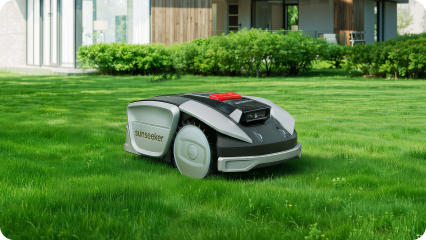
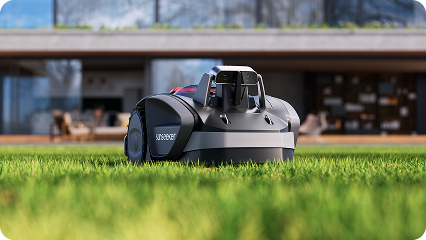
Vision (AI Camera) Systems: Equipped with one or more cameras, these mowers use computer vision and artificial intelligence to "see" and interpret their surroundings. For instance, the Sunseeker V3 can recognize lawns, over 160 obstacles, and boundaries by sight, learning the layout over time. This allows for a completely wire-free setup and adaptive navigation, though performance can be influenced by lighting and weather.
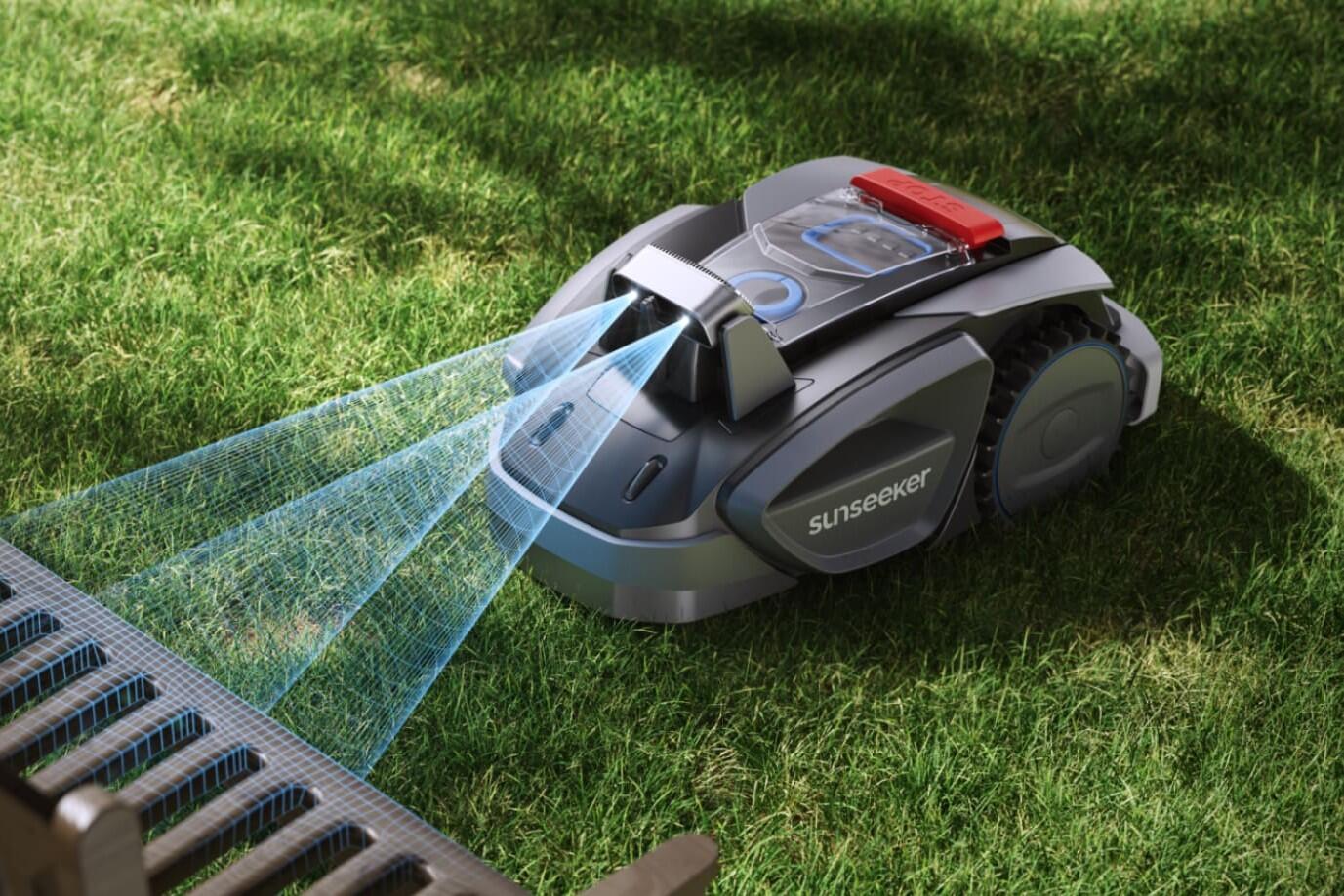
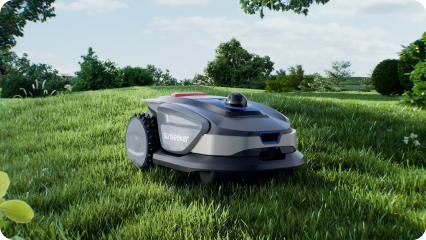
Sunseeker V3 navigating lawn with advanced obstacle avoidance
A Health-First Cutting Strategy
The operational philosophy differs fundamentally from traditional mowing. Instead of weekly or bi-weekly "scalping," robotic mowers cut more frequently, taking off only a small amount of grass each time—a practice known as "grasscycling." This method is less stressful for the grass, promoting denser, healthier root growth and a lusher appearance. The tiny clippings are left on the lawn to decompose rapidly, acting as a natural fertilizer and completely eliminating the chore of bagging and disposing of grass.
Resilience and Integrated Safety
Designed for outdoor autonomy, quality robotic mowers are built to be weather-resistant, with many featuring rain sensors that automatically pause operation and return to the charging station during a downpour. Safety is engineered into the core design. Lift and tilt sensors instantly stop the cutting disc if the mower is picked up or overturned. Furthermore, the blades themselves are typically short, lightweight, and recessed, posing a fundamentally lower risk profile than the heavy, spinning blade of a traditional mower, making them inherently safer in environments with children and pets.
Calculating True Long-Term Cost
To move beyond sticker shock, we must analyze the total cost of ownership over a typical 3-5 year lifespan and compare it to traditional methods.
The Five-Year Total Cost of Ownership Analysis
The true cost of any tool isn't its purchase price, but its purchase price plus all expenses incurred while using it. Let’s compare the projected 5-year costs for a representative robotic model versus a traditional gas and electric mower for a small-sized (600 m²) lawn.
Five-Year Cost Comparison: Gas, Electric & Robotic Lawn Mowers
|
Cost Item
|
Gasoline Mower
|
Electric Mower
|
Sunseeker V3
|
|
Initial Price
|
€200 – €500
|
€300 – €600
|
€999
|
|
Installation
& Setup
|
Requires physical assembly (attaching handles, wheels, and deck components)
|
Corded models require outlet access and cord management; battery models require charging before first use.
|
No wires, no base stations, primarily self-guided digital mapping via app
|
|
Annual Operating Costs
|
€100 – €150
(Gasoline, oil, spark plugs, air filters)
|
€20 – €40
(Electricity for charging)
|
€10 – €15 (Electricity for charging)
|
|
Annual Maintenance
|
€100 - €200 (Annual tune-up, blade sharpening, engine maintenance)
|
€30 - €80 (Blade sharpening/replacement, potential battery degradation over time)
|
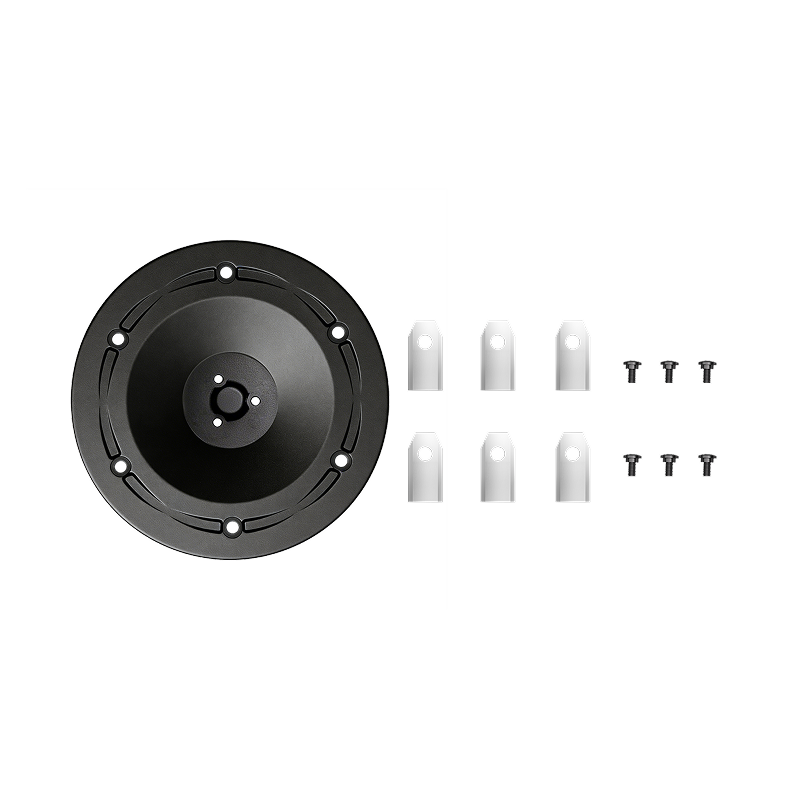
€20 - €50 (Blade replacement kits, occasional sensor cleaning)
|
|
Major Replacement
|
€200+
(Potential engine repair)
|
€100 - €300
(Battery replacement every 3-5 years)
|
€150 - €300
(Battery replacement every 3-5 years)
|
|
Annual Time Cost
|
€300 – €500 (30–50 hrs/year)
|
€300 – €500 (30–50 hrs/year)
|
€40 – €60 (4–6 hrs/year for setup & oversight)
|
|
5-Year Total
|
≈ €3,700 – €5,800
|
≈ €2,300 – €4,000
|
≈ €1,500 – €2,300
|
(All figures are estimates based on small residential lawn use (<800 m²). Actual costs vary by region, terrain, and mowing frequency.)
Interpreting the Data
The table outlines the financial comparison across different mower types. While the initial cost of the Sunseeker V3 robotic mower is higher than traditional gas and electric mowers, its significantly lower annual operating and maintenance costs cause the total cost lines to intersect within just a few years.
After this crossover point, the Sunseeker V3 becomes the more economical option. The key savings come from eliminating gasoline, the need for extensive engine maintenance, and professional tune-ups. The primary ongoing costs for the robotic mower are minimal electricity usage and occasional blade and battery replacements.
The Intangible ROI: Property Appeal and Lifestyle Value
Beyond the numbers, it’s important to consider the added value. A consistently well-maintained lawn can dramatically improve your home’s curb appeal. For potential buyers, it signals a property that has been cared for meticulously, potentially making your home stand out on the market and improving your sales prospects.
The greatest return on investment, however, is personal. The time saved by eliminating the regular chore of lawn care and gaining back dozens of hours each season for other activities is invaluable and, for many, a priceless benefit.
Conclusion: Verdict on Value
So, is a robotic lawn mower worth the investment? For homeowners with moderate-sized lawns seeking long-term efficiency, convenience, and better lawn health, the answer is a clear "yes." The savings on fuel and maintenance, combined with the time and peace of mind it restores, make it a smart investment.
The choice ultimately depends on your priorities—time, lawn needs, and budget. If you're ready to shift from being a lawn laborer to a lawn manager, the Sunseeker V3 offers a financially sound, low-maintenance path to a greener, effortless outdoor space.
FAQS
Do robot mowers work on uneven or sloped lawns?
Yes, many modern models are designed for varied terrain. High-performance units like the Sunseeker V3 handle moderate slopes (42% / 22°) and uneven ground well, though very steep or rugged landscapes may require specific all-terrain models.
How do robot mowers handle obstacles like trees and garden beds?
Modern robot mowers use a combination of sensors, bumpers, and virtual boundaries to navigate around obstacles. Advanced models with AI vision or LiDAR can detect and map permanent fixtures like trees and flower beds, avoiding them automatically without physical barriers.
Do robot mowers work on wet grass?
Yes. Most robot mowers are equipped with lift and tilt sensors that stop the blades instantly if disturbed. Their low cutting height and enclosed design minimize exposure, making them safe to operate even when pets or children are nearby.