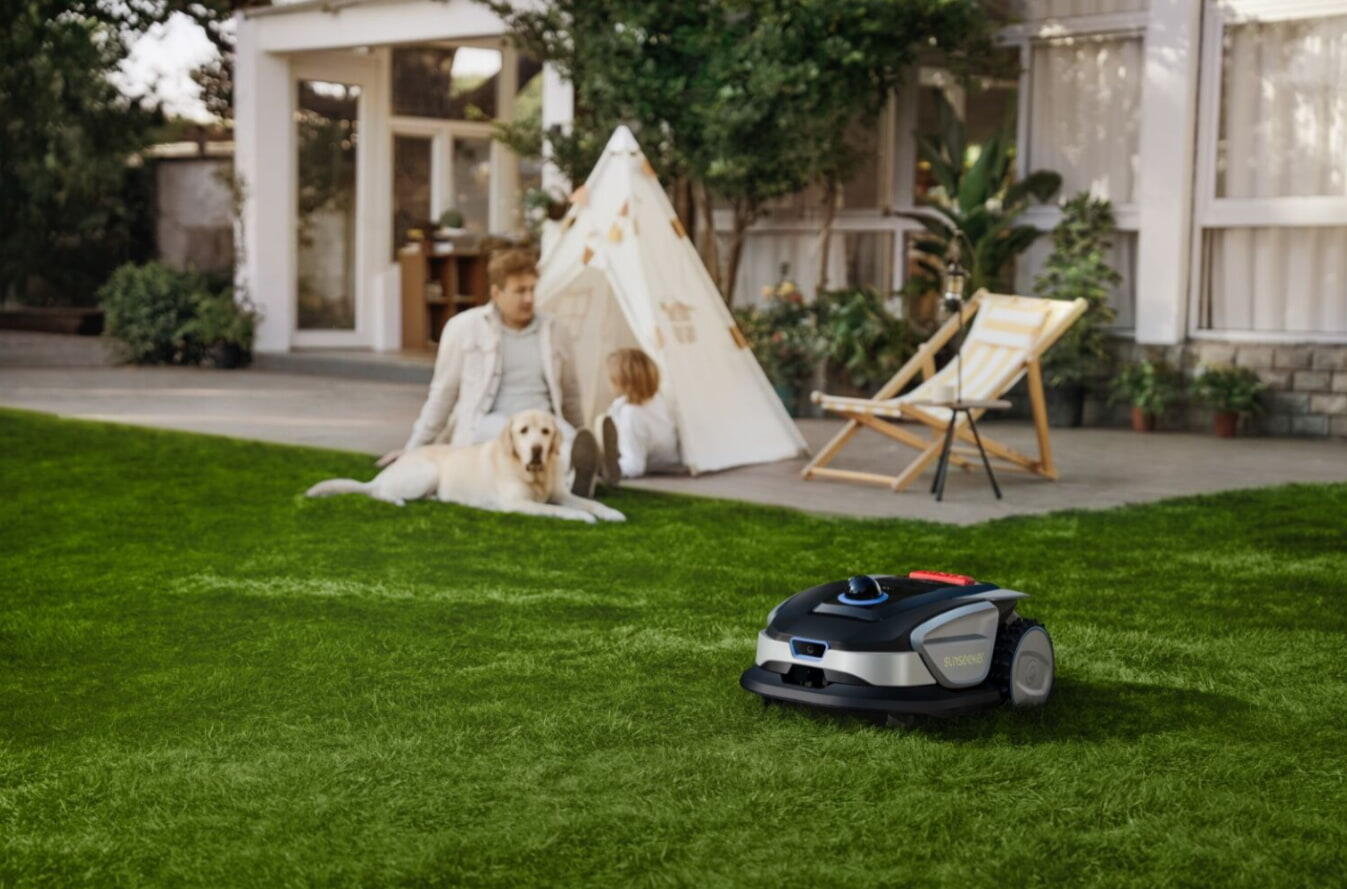
Are Robot Mowers Any Good?
For time-conscious homeowners seeking a pristine, quiet lawn, the answer is yes. This revolutionary tool automates mowing, saving you a few hours each week. It delivers consistent results and eco-friendly operation, transforming a tedious chore into effortless convenience.
Why a Robot Mower Might Be Your Next Best Investment
Robot mowers have emerged as a sophisticated solution, blending automation, intelligence, and environmental consciousness. Here’s a breakdown of the compelling benefits they offer.
Save Time with Automated Lawn Care
The most transformative benefit is the sheer amount of time you reclaim. A robot mower turns the tedious process of mowing—from setup to cleanup—into a fully automated task.
Simply define a schedule via a smartphone app, and the mower takes over. Using intelligent navigation, it systematically covers your lawn, dodging obstacles while delivering an even trim. You can even leave for a holiday and return to a perfectly cut lawn, all without any physical effort.
Achieve a Healthier, Lush Lawn
The benefits of a robot mower extend far beyond convenience—they actively enhance lawn health. Unlike traditional mowers that cut too much at once and stress grass, robot mowers adopt the "grasscycling" method: frequent, light trims that promote thicker and denser turf. The fine clippings left behind decompose rapidly, returning natural nutrients to the soil and acting as an organic fertilizer.
Enjoy Peaceful, Eco-Conscious Operation
Robot mowers operate with a quiet hum, a stark contrast to the disruptive noise of gas-powered models. This allows for early morning or evening mowing without disturbing anyone. Environmentally, they are a clear advantage: producing zero direct emissions and eliminating the need for gasoline.
Their electricity consumption is minimal, typically adding just a few euros to your monthly utility bill. This blend of near-silent operation and eco-friendly performance makes them an ideal choice for the conscious homeowner seeking a quieter, cleaner approach to lawn care.
Enhanced Safety Features
Safety is a fundamental advantage of modern robot mowers. They are equipped with advanced safety mechanisms that immediately halt the blade rotation if the unit is lifted, tilted, or encounters an obstruction. This instant response, combined with built-in collision sensors, creates a reliably safe operating environment.
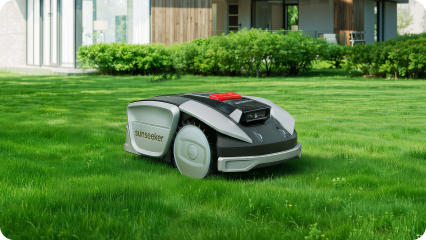
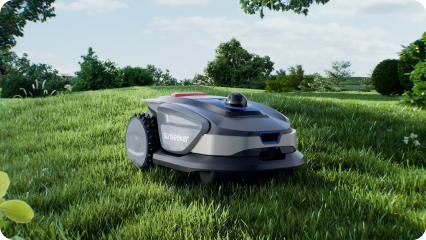
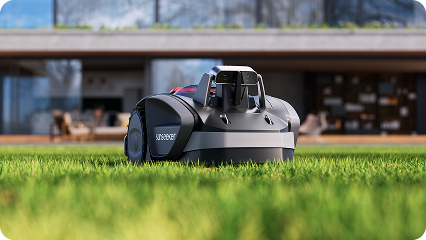
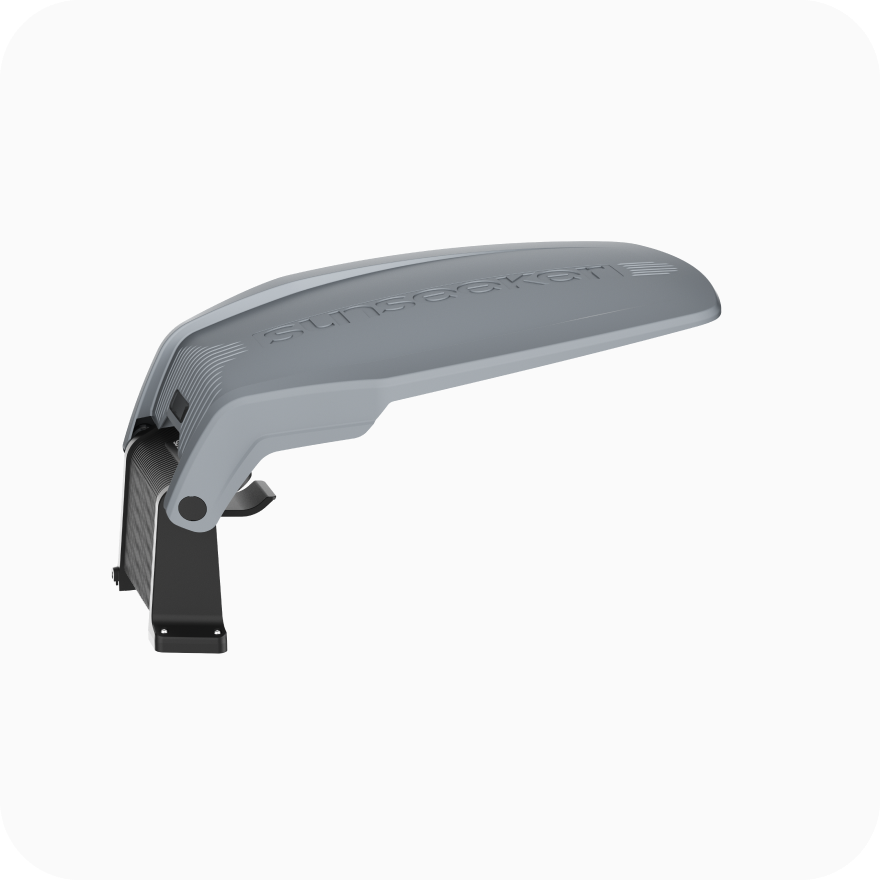
These robust safety protocols make robotic mowers a trustworthy and secure choice for households with children, pets, and intricate garden layouts, providing significant peace of mind for the user. Models like the Sunseeker S4 take this further by combining 3D LiDAR, Vision AI, and responsive bumper sensors to scan the lawn in a full 360° field with a 70° vertical range, intelligently identifying and avoiding more than 360 types of obstacles.
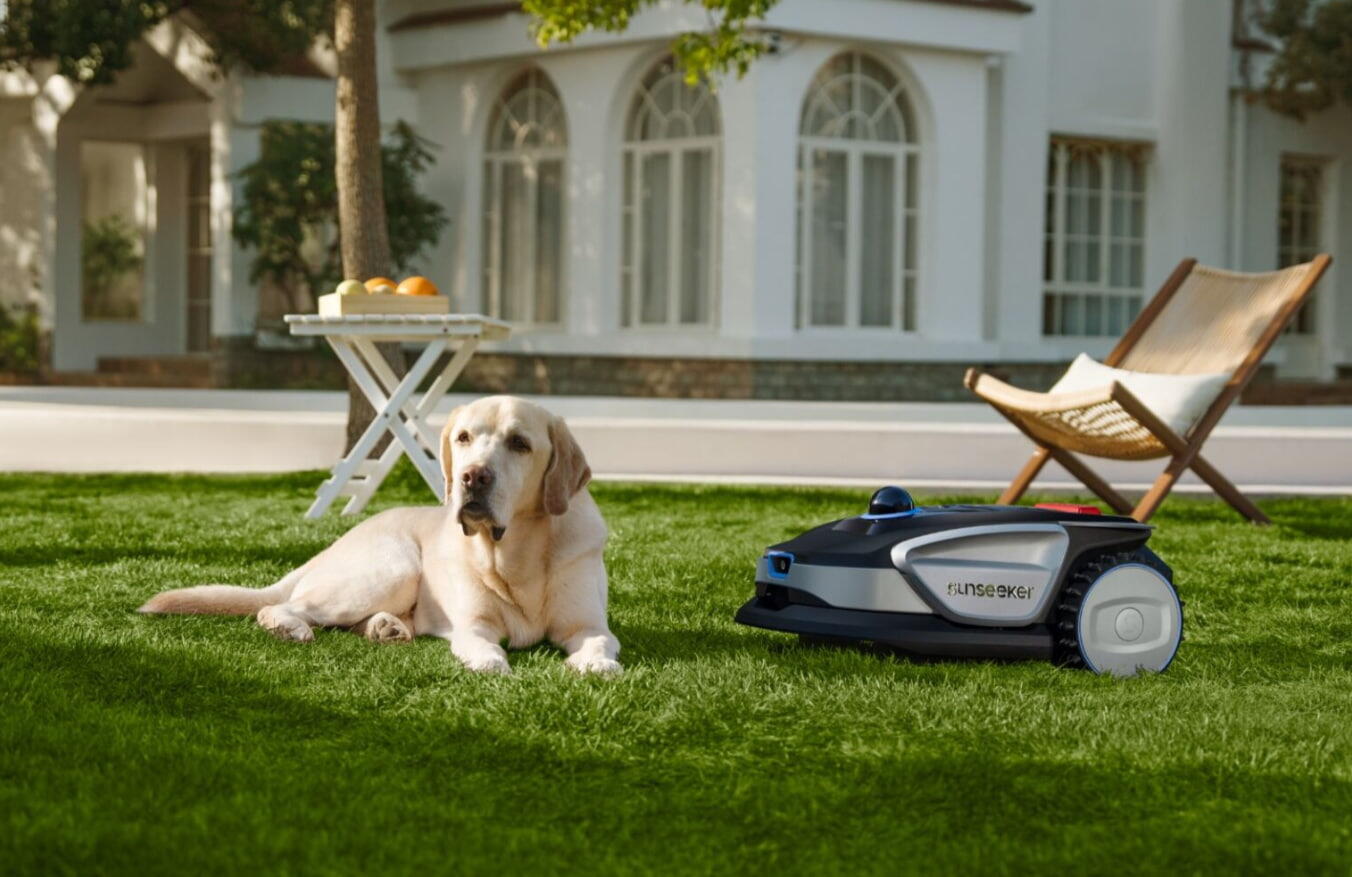
Sunseeker S4 pet-friendly robotic lawn mower in garden
Realize Long-Term Savings
While the upfront cost of a robot mower is higher, it proves to be a cost-efficient long-term investment. Traditional mowers incur recurring expenses for fuel, oil, and blade maintenance.
In contrast, robot mowers run on affordable electricity and require minimal upkeep—primarily occasional cleaning and periodic blade replacement. Features like GPS virtual boundaries also eliminate the need for physical wire maintenance. This significant reduction in ongoing costs makes a robot mower a financially savvy choice over its lifespan.
Understanding the Limitations of Robot Mowers
To make an informed decision, it's crucial to consider the potential drawbacks. Robot mowers are impressive, but they are not magical, and understanding their limits is key to satisfaction.
A Substantial Upfront Investment
The most significant barrier for many is the initial cost. Advanced technology commands a higher price, and a capable robot mower represents a larger one-time investment than a traditional walk-behind mower. For some models, this cost may also include the purchase of a dedicated charging station. For those on a tight budget, this initial outlay can be a deciding factor.
Setup Can Require Patience
The setup experience varies significantly based on the navigation technology. Models requiring a physical boundary wire demand the most effort, as you must manually stake the perimeter around your entire lawn—a precise and time-consuming task, especially around complex garden beds or trees.
In contrast, models with virtual boundaries offer a streamlined, wire-free process. They use GPS and sensors to digitally map your yard via a smartphone app, enabling quick setup and allowing you to easily adjust zones as needed.
Weather and Terrain Present Challenges
Robot mowers are designed for maintenance mowing, not for conquering wilderness. They can struggle under certain conditions:
-
Heavy Rain: Operating on soaking wet grass can lead to wheel slippage, soil ruts, and clumping of wet clippings that clog the machine.
-
Very Tall Grass: Most are not designed to cut down grass that has been neglected for weeks. An initial cut with a traditional mower is often necessary.
-
Extreme Slopes and Rough Terrain: While high-end models excel on slopes, entry-level units may lose traction or have difficulty navigating steep, uneven ground.
Maintenance and Ongoing Technical Demands
While robotic mowers require significantly less maintenance than their gas-powered counterparts, they are not entirely maintenance-free. Regular attention is necessary to maintain optimal performance. Grass clippings and debris tend to accumulate around the cutting blades and wheel mechanisms, which can impair movement and cutting efficiency if not cleaned periodically.
Beyond physical maintenance, these smart devices introduce technical considerations. Users may need to manage software updates to access new features and maintain security, while occasional connectivity issues with the companion app can disrupt scheduled mowing sessions and require troubleshooting.
The following table breaks down the core pros and cons at a glance, helping you quickly assess if a robot mower aligns with your priorities:
Robot Lawn Mower Pros and Cons
|
Category
|
Pros
|
Cons
|
|
Time & Effort
|
• Fully automated operation
• Smart scheduling via app
• Works while you're away
|
• Initial setup can be complex
• Requires periodic maintenance
|
|
Lawn Health
|
• Promotes thicker, healthier turf
• Even, consistent cutting
• Natural fertilization through grasscycling
|
• May struggle with very tall grass
• Entry-level models might miss some spots
|
|
Operation & Environment
|
• Quiet operation
• Zero emissions
• Low energy consumption
• Automatic blade stop and obstacle detection
|
• Performance affected by heavy rain
• Limited slope capability on basic models
|
|
Cost
|
• Low operating costs
• Minimal maintenance
• Long-term savings
|
• Higher initial investment
• Potential additional accessory costs
|
|
Technical Aspects
|
• Advanced navigation systems
• Wireless boundary options available
• Smart features via app
|
• Requires software updates
• Potential connectivity issues
• Regular cleaning needed
|
Who is the Ideal Candidate for a Robot Mower?
This technology is a perfect fit for homeowners who:
-
Have a small to medium-sized lawn that requires regular upkeep.
-
Have busy schedules and value their free time.
-
Appreciate a consistently well-kept lawn but dislike the chore of mowing.
-
Prioritize quiet, emission-free operation.
-
Own a property with slopes or irregular shapes that are tedious to mow manually.
Conclusion: The Future of Lawn Care is Automated
So, are robot mowers any good? The evidence strongly suggests they're an excellent solution for a wide range of homeowners. While they may not be suited for tackling heavily overgrown lawns or highly complex landscapes, today's models excel at handling typical residential lawns with impressive efficiency.
This technology revolutionizes lawn care by replacing physical labor with intelligent automation. The initial cost is outweighed by significant long-term rewards: reclaimed free time, a healthier lawn, and the satisfaction of a self-maintaining yard.
If you're ready to step into the future of home landscaping, a robot mower like the Sunseeker S4 represents a compelling and deeply rewarding investment. It brings together intelligent navigation, robust slope-handling capabilities, and precise app control, delivering advanced automation technology to your yard at a remarkably competitive price.
FAQs
What is the life expectancy of a robot lawn mower?
A well-built robot mower typically lasts 5 to 10 years with proper maintenance such as blade changes and battery care. The battery may need replacement sooner (2–5 years) depending on use and conditions.
Do robot mowers work on wet grass?
Yes—but with caution. Many robot mowers can handle damp or slightly wet grass, but heavy rain or soggy turf can cause clumping, traction issues and strain on the machine. For best results, mow when grass is only mildly damp and choose a model with rain sensors or waterproofing if you live in a wet climate.
How often should I cut grass with a robot mower?
Mowing frequency with a robot mower depends on lawn size, grass growth and season. Many owners run their robot several times each week during the growing season to keep the turf neat and consistent. In slower seasons or for smaller yards, cutting once or twice a week may be sufficient — just avoid letting the grass grow too long before the robot goes back out.